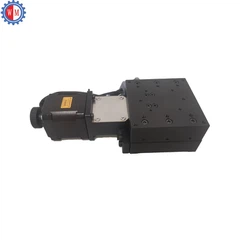
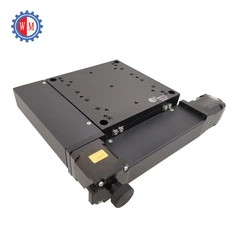
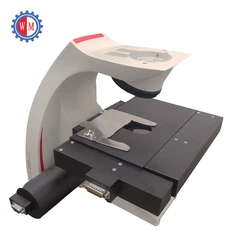
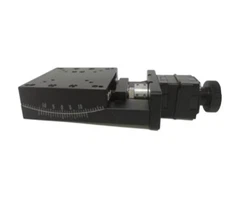
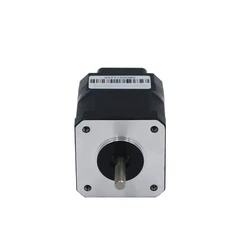


In the dynamic landscape of motion control technology, integrated stepper motors have emerged as a game - changer. As a supplier of integrated stepper motors, I've witnessed firsthand the numerous advantages these motors bring to a wide range of industries. This blog post aims to delve into the key benefits of integrated stepper motors and why they are becoming the preferred choice for many applications.
Compact Design and Space - Saving
One of the most significant advantages of integrated stepper motors is their compact design. Unlike traditional stepper motor systems that require separate drivers and controllers, integrated stepper motors combine the motor, driver, and often a controller into a single unit. This integration eliminates the need for additional space to house the driver and wiring between the motor and the driver.
For applications where space is at a premium, such as in robotics, medical devices, and small - scale automation equipment, the compact size of integrated stepper motors is a major plus. For example, in a robotic arm, every inch of space matters. An integrated stepper motor allows for a more streamlined and efficient design, enabling the robotic arm to have a smaller footprint and greater flexibility in movement.


Simplified Installation and Wiring
Integrated stepper motors simplify the installation process significantly. With traditional systems, installing a stepper motor involves mounting the motor, the driver, and then carefully wiring them together. This can be a time - consuming and error - prone task, especially for complex setups.
In contrast, an integrated stepper motor comes pre - assembled with the driver and controller. This means that the installation process is as simple as mounting the single unit and connecting it to the power source and the control signal. The reduced number of components also means fewer wiring connections, which reduces the risk of wiring errors and makes troubleshooting easier.
For instance, in a factory automation line where multiple stepper motors are required, using integrated stepper motors can save a considerable amount of installation time and labor costs. Workers can quickly install the motors without having to spend hours on wiring and setup.
Cost - Effectiveness
Cost is always a crucial factor in any business decision. Integrated stepper motors offer significant cost savings in several ways. Firstly, the combined nature of the motor, driver, and controller means that you only need to purchase one unit instead of multiple separate components. This reduces the overall purchase cost.
Secondly, the simplified installation process and reduced wiring requirements lead to lower labor costs during installation. Additionally, the compact design can also result in savings on the overall system design, as less space is needed for the motor and associated components.
Over the long term, integrated stepper motors can also be more cost - effective in terms of maintenance. With fewer components, there are fewer parts that can fail, reducing the likelihood of breakdowns and the associated repair costs.
Enhanced Performance and Precision
Integrated stepper motors are designed to work in harmony, with the driver and controller optimized for the specific motor. This results in enhanced performance and precision compared to traditional systems. The integrated design allows for better communication between the motor, driver, and controller, enabling more accurate control of the motor's movement.
Stepper motors are known for their ability to move in precise steps, and integrated stepper motors take this precision to the next level. They can achieve higher torque at lower speeds, which is ideal for applications that require slow and precise movements, such as 3D printers and CNC machines.
In a 3D printer, for example, the precision of the stepper motor is crucial for creating detailed and accurate prints. An integrated stepper motor can ensure that the printer head moves precisely to the right position, resulting in high - quality prints with sharp edges and fine details.
Improved Energy Efficiency
Energy efficiency is becoming increasingly important in today's world, both from an environmental and a cost - saving perspective. Integrated stepper motors are designed to be more energy - efficient than traditional stepper motor systems.
The integrated design allows for better control of the motor's power consumption. The driver can adjust the current supplied to the motor based on the load and the required speed, reducing energy waste. This is particularly beneficial for applications that run continuously, such as conveyor belts in a factory.
By using an integrated stepper motor, a factory can reduce its overall energy consumption, leading to cost savings on electricity bills and a smaller environmental footprint.
Versatility and Compatibility
Integrated stepper motors offer a high degree of versatility and compatibility. They are available in a variety of sizes, torque ratings, and control options to suit different applications. Whether you need a small motor for a consumer electronics device or a high - torque motor for an industrial automation system, there is an integrated stepper motor that can meet your requirements.
Moreover, many integrated stepper motors support multiple communication protocols, such as Modbus RS485 Integrated Motor, Integrated Dc Motor, and CAN Bus Control Integrated Stepper Motor. This allows them to be easily integrated into existing control systems, making them a suitable choice for retrofitting projects as well as new installations.
Reduced Electromagnetic Interference (EMI)
Electromagnetic interference can be a major problem in electronic systems, especially in applications where sensitive electronic components are used. Traditional stepper motor systems, with their separate drivers and long wiring, can generate significant EMI.
Integrated stepper motors, on the other hand, have a more compact and enclosed design, which helps to reduce EMI. The shorter wiring between the motor, driver, and controller also minimizes the chances of EMI being generated and interfering with other components in the system.
This is particularly important in applications such as medical equipment, where EMI can disrupt the operation of sensitive sensors and monitoring devices. An integrated stepper motor can ensure the reliable and interference - free operation of medical equipment, improving patient safety and the accuracy of diagnostic results.
Easier Maintenance and Troubleshooting
As mentioned earlier, the reduced number of components in an integrated stepper motor makes maintenance and troubleshooting easier. With a traditional system, identifying the source of a problem can be challenging, as it could be the motor, the driver, or the wiring.
In an integrated stepper motor, since all the components are integrated into one unit, it is easier to isolate and diagnose problems. Many integrated stepper motors also come with built - in diagnostic features that can provide information about the motor's status, such as over - temperature warnings and error codes. This allows for quick and efficient troubleshooting, minimizing downtime.
Conclusion
In conclusion, integrated stepper motors offer a wide range of advantages that make them an attractive choice for various applications. From their compact design and simplified installation to enhanced performance and energy efficiency, these motors can provide significant benefits in terms of cost, space, and functionality.
If you are in the market for a stepper motor solution, I encourage you to consider an integrated stepper motor. Our company offers a wide range of high - quality integrated stepper motors that are designed to meet the diverse needs of different industries. Whether you are looking for a Modbus RS485 Integrated Motor, an Integrated Dc Motor, or a CAN Bus Control Integrated Stepper Motor, we have the right product for you.
Contact us today to discuss your specific requirements and start a procurement洽谈. We look forward to working with you to find the best integrated stepper motor solution for your application.
References
- "Motion Control Handbook", published by Industrial Press Inc.
- "Stepper Motor Technology" by Peter R. Gray, a technical report on stepper motor principles and applications.


