
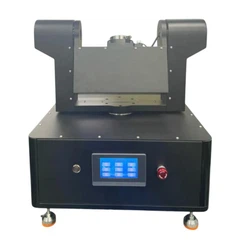
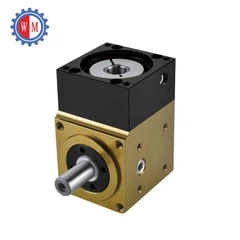
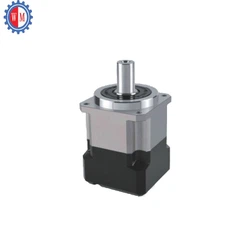
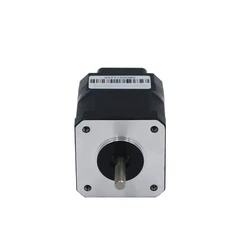


Hey there! As a supplier of planetary actuators, I often get asked about how to select the right size of a planetary actuator. It's a crucial decision because getting the size wrong can lead to all sorts of problems, from poor performance to premature wear and tear. So, in this blog post, I'm gonna walk you through the key factors you need to consider when choosing the size of a planetary actuator.
1. Torque Requirements
The first and most important factor is the torque requirements of your application. Torque is basically the rotational force needed to turn something, and it's measured in units like Newton - meters (N·m) or foot - pounds (ft - lb). You need to figure out the maximum torque that your actuator will need to handle.
For example, if you're using the planetary actuator in a robotic arm, you have to consider the weight of the payload, the length of the arm, and the acceleration and deceleration forces. The more weight and the longer the arm, the higher the torque required.


To calculate the torque, you can use some basic physics formulas. But if you're not into that, you can also look at similar applications and see what torque values they use. Once you have an estimate of the required torque, you can start looking at planetary actuators that can handle that amount of torque. Our High Torque Spur Gear Speed Reducer is a great option if you need high torque capabilities.
2. Speed Requirements
Another important factor is the speed at which the actuator needs to operate. This is usually measured in revolutions per minute (RPM). You need to know the maximum speed that your application requires.
If your application needs to move quickly, you'll need a planetary actuator that can handle high speeds. However, keep in mind that as the speed increases, the torque capacity of the actuator may decrease. So, you have to find a balance between speed and torque.
For instance, in a conveyor belt system, the speed of the belt determines how fast products are moved. You need to select an actuator that can drive the belt at the required speed. Some of our High Precision Spiral Gear Planetary Reducer models are designed to operate at high speeds while maintaining good torque performance.
3. Backlash
Backlash is the amount of play or free movement between the gears in the planetary actuator. It's measured in degrees or arc - minutes. A low backlash is important in applications where precision is crucial, such as in CNC machines or robotic systems.
If there's too much backlash, it can lead to inaccurate positioning and reduced repeatability. So, depending on your application's precision requirements, you need to choose an actuator with an appropriate level of backlash. Our Solid Shaft Planetary Actuator offers low - backlash options for high - precision applications.
4. Mounting and Space Constraints
You also have to consider the physical space where the planetary actuator will be installed. You need to make sure that the actuator fits into the available space and can be mounted properly.
Some applications may have limited space, so you'll need a compact actuator. Others may require a specific mounting configuration, such as flange - mounted or shaft - mounted. Make sure to measure the available space and determine the mounting requirements before selecting an actuator.
5. Duty Cycle
The duty cycle refers to the amount of time the actuator will be in operation compared to the amount of time it will be at rest. If your application requires the actuator to run continuously, you'll need an actuator that can handle a high - duty cycle.
Actuators that are designed for continuous operation usually have better cooling and heat dissipation capabilities. On the other hand, if the actuator will only be used intermittently, you may be able to get away with a less - robust model.
6. Environmental Conditions
The environmental conditions where the actuator will be used also play a role in the selection process. If the actuator will be exposed to dust, moisture, or extreme temperatures, you need to choose an actuator that is suitable for those conditions.
For example, in a food processing plant, the actuator may need to be resistant to washdowns and corrosion. In a high - temperature industrial environment, the actuator should be able to operate without overheating.
7. Cost
Last but not least, cost is always a factor. You need to balance your budget with the performance requirements of your application. Sometimes, a more expensive actuator may offer better performance and reliability, which can save you money in the long run.
But if your application doesn't require high - end performance, you can look for more cost - effective options. We offer a range of planetary actuators at different price points to meet various budget needs.
Making the Final Decision
Once you've considered all these factors, you can start narrowing down your choices. Look at the specifications of different planetary actuators and see which ones meet your requirements. You can also reach out to us for more information and advice.
We have a team of experts who can help you select the right size and type of planetary actuator for your application. We understand that every application is unique, and we're here to make sure you get the best - fitting solution.
If you're interested in purchasing a planetary actuator or have any questions about the selection process, don't hesitate to contact us. We're ready to assist you in finding the perfect planetary actuator for your needs. Let's have a chat and get your project on the right track!
References
- Machinery's Handbook: A comprehensive reference for mechanical engineering, which provides in - depth information on gears, torque calculations, and actuator selection.
- Industrial Automation Textbooks: These textbooks cover various aspects of industrial automation, including the use of planetary actuators in different applications.


