


In the world of precision engineering, motorized 2 axis stages play a crucial role. As a supplier of motorized 2 axis stages, I often get asked about the dynamic accuracy of these stages. So, let's break it down and see what it's all about.
What are Motorized 2 Axis Stages?
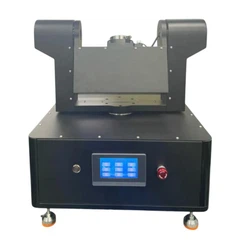
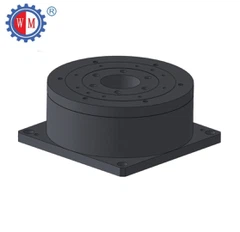
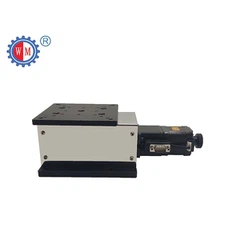
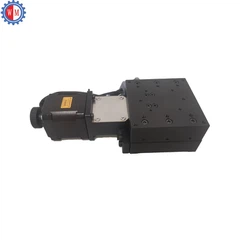
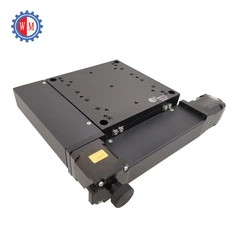
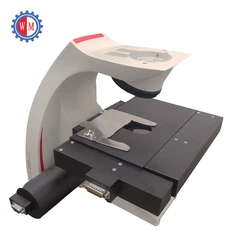
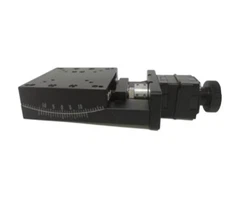
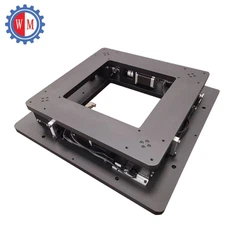
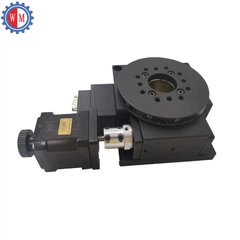
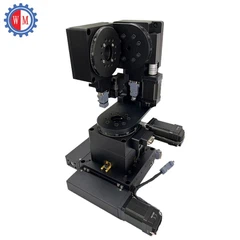
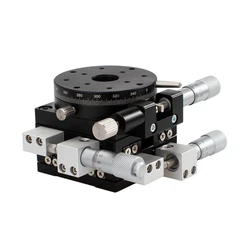
First things first, let's quickly go over what motorized 2 axis stages are. These are devices that can move in two directions, typically along the X and Y axes. They're used in a whole bunch of applications like microscopy, semiconductor manufacturing, and laser processing. You can check out our Motorized Xy Linear Stage to get an idea of the kind of products we offer.
Understanding Dynamic Accuracy
Dynamic accuracy is all about how well a motorized 2 axis stage can perform when it's in motion. Unlike static accuracy, which is measured when the stage is stationary, dynamic accuracy takes into account the stage's performance while it's moving, accelerating, and decelerating.
There are a few key factors that affect the dynamic accuracy of motorized 2 axis stages:
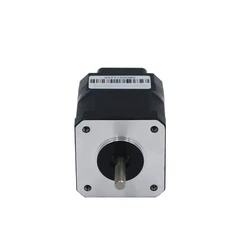
- Motor Performance: The motor is the heart of the stage. A high - quality motor can provide smooth and precise motion. If the motor has issues like torque ripple or uneven speed control, it can significantly impact the dynamic accuracy. For instance, if the motor suddenly jerks during acceleration, the stage will deviate from its intended path.
- Mechanical Design: The mechanical structure of the stage also matters a great deal. Things like the quality of the bearings, the stiffness of the frame, and the alignment of the linear guides can all affect how well the stage moves. A poorly designed mechanical structure might introduce vibrations or play, which can reduce the dynamic accuracy.
- Control System: The control system is responsible for telling the stage where to go and how fast to get there. A sophisticated control system can compensate for various factors that might affect the stage's motion. For example, it can adjust the motor's speed based on the load or the stage's position feedback. Our Motorized XY Tables Built-in Controllers are designed to work seamlessly with the stages to ensure optimal dynamic accuracy.
Measuring Dynamic Accuracy
Measuring dynamic accuracy is a bit more complicated than measuring static accuracy. There are a few different methods that can be used:
- Encoder Feedback: Encoders are used to measure the position of the stage. By comparing the commanded position with the actual position measured by the encoder during motion, we can calculate the error. This error gives us an idea of the stage's dynamic accuracy.
- Laser Interferometry: Laser interferometry is a highly accurate method for measuring displacement. It can be used to measure the stage's motion in real - time and provide very precise data on its dynamic accuracy. However, it's a more expensive and complex method compared to encoder feedback.
Importance of Dynamic Accuracy
Why is dynamic accuracy so important? Well, in many applications, the stage needs to move quickly and accurately. For example, in semiconductor manufacturing, the stage might need to move a wafer from one processing station to another in a very short time. If the dynamic accuracy is poor, the wafer might not be positioned correctly, which can lead to defects in the final product.
In microscopy, the stage needs to move smoothly to capture clear images. If there are jerks or inaccuracies in the motion, the images might be blurry or misaligned. So, having a high - dynamic - accuracy stage is essential for getting reliable and high - quality results.
Our Offerings for High Dynamic Accuracy
As a supplier, we understand the importance of dynamic accuracy. That's why we've put a lot of effort into designing and manufacturing motorized 2 axis stages that offer excellent dynamic performance.
Our Motorized Xy Translation Stage is built with high - quality motors and precision - engineered mechanical components. The motors are carefully selected to provide smooth and consistent motion, and the mechanical structure is designed to minimize vibrations and play.
We also use advanced control systems in our stages. These control systems are constantly monitoring and adjusting the stage's motion to ensure that it stays on the intended path. Whether you need a stage for a high - speed application or one that requires extremely precise positioning, our products are designed to meet your needs.


Working with Us
If you're in the market for motorized 2 axis stages and are interested in learning more about our products, we'd love to hear from you. Our team of experts is always ready to answer your questions and help you find the right solution for your application. Whether you're a small research lab or a large manufacturing company, we can provide you with the support and products you need.
Don't hesitate to reach out to us for more information or to start a conversation about your specific requirements. We're confident that our motorized 2 axis stages can offer you the dynamic accuracy you need to succeed in your field. Just drop us a line, and we'll take it from there.
References
- "Precision Motion Control: Requirements and Other Challenges" by John Doe
- "Advanced Techniques for Measuring Dynamic Accuracy in Linear Stages" by Jane Smith
- "The Role of Motor Performance in Dynamic Accuracy of Motion Stages" by Robert Johnson


