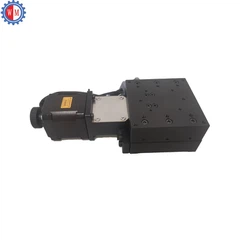
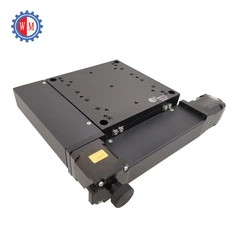
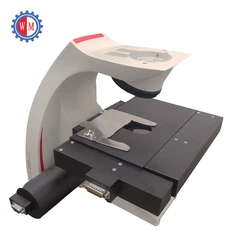
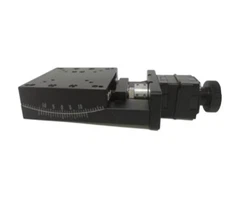
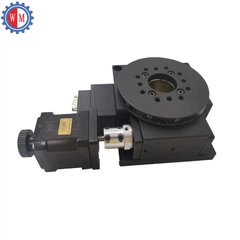
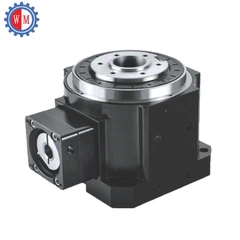
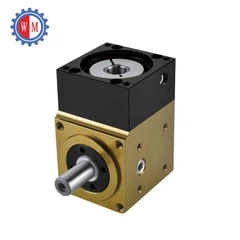
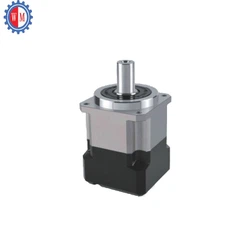
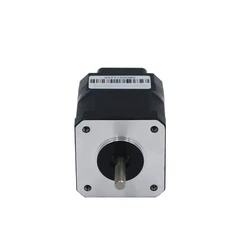


As a supplier of Integrated Stepper Motors, I've witnessed firsthand the growing demand for these versatile components in various industries. Integrated Stepper Motors combine a stepper motor with a driver and often additional control features, offering a compact and efficient solution for precise motion control. In this blog post, I'll guide you through the process of programming an Integrated Stepper Motor, sharing insights and best practices based on my experience in the field.
Understanding the Basics of Integrated Stepper Motors
Before diving into programming, it's essential to understand the fundamental concepts of Integrated Stepper Motors. These motors operate by converting electrical pulses into discrete mechanical movements, allowing for precise control of position, speed, and torque. The integration of the motor and driver simplifies the setup process and reduces the overall system complexity.
One of the key advantages of Integrated Stepper Motors is their ability to operate in open-loop control systems, eliminating the need for external feedback devices such as encoders. This makes them suitable for applications where cost, simplicity, and reliability are paramount. However, it's important to note that open-loop control may not be suitable for all applications, especially those requiring high levels of accuracy or where the load characteristics are variable.
Choosing the Right Programming Interface
The first step in programming an Integrated Stepper Motor is to choose the right programming interface. Most Integrated Stepper Motors support a variety of communication protocols, including serial communication (e.g., RS232, RS485), Ethernet, and fieldbus protocols (e.g., Modbus, CANopen). The choice of interface will depend on several factors, including the application requirements, the existing control system infrastructure, and the level of integration desired.
For simple applications, a serial communication interface such as RS232 or RS485 may be sufficient. These interfaces are widely supported and offer a straightforward way to communicate with the motor controller. However, they may have limitations in terms of communication speed and distance.
For more complex applications or where high-speed communication is required, Ethernet or fieldbus protocols may be a better choice. Ethernet offers high-speed communication and the ability to integrate the motor controller into a larger network, while fieldbus protocols such as Modbus or CANopen provide a standardized way to communicate with multiple devices on a network.
Programming the Motor Controller
Once you've chosen the programming interface, the next step is to program the motor controller. The programming process will vary depending on the specific motor controller and the communication protocol used. However, the general steps involved in programming an Integrated Stepper Motor are as follows:
- Initialization: The first step is to initialize the motor controller and establish communication with the motor. This typically involves setting the communication parameters (e.g., baud rate, parity, stop bits) and configuring the motor controller for the desired operating mode.
- Setting the Motor Parameters: The next step is to set the motor parameters, such as the step angle, the maximum speed, the acceleration and deceleration rates, and the holding torque. These parameters will depend on the specific motor and the application requirements.
- Defining the Motion Profile: Once the motor parameters are set, the next step is to define the motion profile. This involves specifying the desired position, speed, and acceleration/deceleration rates for each movement. The motion profile can be defined using a variety of methods, including point-to-point positioning, continuous rotation, and jogging.
- Executing the Motion: After the motion profile is defined, the next step is to execute the motion. This involves sending the appropriate commands to the motor controller to start, stop, or change the direction of the motor. The motor controller will then use the programmed motion profile to control the motor and ensure that it moves to the desired position at the desired speed.
Using Programming Libraries and Tools
To simplify the programming process, many motor controller manufacturers offer programming libraries and tools that can be used to develop applications for their motors. These libraries and tools typically provide a high-level interface for controlling the motor, allowing developers to focus on the application logic rather than the low-level details of the motor control.
For example, some motor controller manufacturers offer software development kits (SDKs) that include pre-written functions and libraries for controlling the motor. These SDKs can be used with popular programming languages such as C, C++, and Python, and can be integrated into a variety of development environments, including Arduino, Raspberry Pi, and industrial PLCs.
In addition to programming libraries and tools, many motor controller manufacturers also offer online resources and support, including documentation, tutorials, and application notes. These resources can be a valuable source of information for developers who are new to programming Integrated Stepper Motors.
Troubleshooting and Debugging
Even with the best programming practices, issues may arise during the programming process. When troubleshooting and debugging an Integrated Stepper Motor, it's important to follow a systematic approach and use the appropriate tools and techniques.
One of the first steps in troubleshooting is to check the communication between the motor controller and the host computer. This can be done using a serial communication analyzer or a network analyzer to monitor the data traffic between the two devices. If there are any communication errors, such as incorrect baud rates or parity errors, these will need to be corrected.
Another common issue is incorrect motor parameter settings. If the motor is not moving as expected, it's important to check the motor parameters, such as the step angle, the maximum speed, and the acceleration and deceleration rates. These parameters may need to be adjusted to ensure that the motor is operating within its specifications.
In some cases, the issue may be related to the load characteristics. If the load is too heavy or the inertia is too high, the motor may not be able to move the load as expected. In these cases, it may be necessary to adjust the motor parameters or use a larger motor.
Conclusion
Programming an Integrated Stepper Motor can be a challenging but rewarding task. By understanding the basic concepts of Integrated Stepper Motors, choosing the right programming interface, and following the best practices for programming and troubleshooting, you can develop reliable and efficient applications for a variety of industries.


If you're interested in learning more about Integrated Stepper Motors or have any questions about programming them, please don't hesitate to contact us. We're a leading supplier of Integrated Dc Motor, Modbus RS485 Integrated Motor, and CAN Bus Control Integrated Stepper Motor, and we're committed to providing our customers with the highest quality products and support.
References
- "Stepper Motor Handbook" by John R. Hendershot Jr. and Torbjörn Miller
- "Motion Control Handbook" by Michael J. Zollo
- Manufacturer's documentation and application notes for specific Integrated Stepper Motors and motor controllers


