
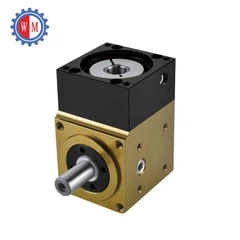
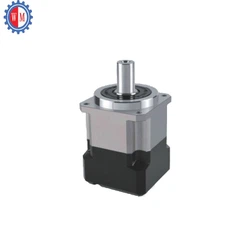
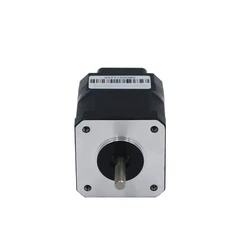


As a supplier of planetary actuators, I've witnessed firsthand the growing demand for high - performance yet cost - effective solutions in various industries. The cost - performance ratio of planetary actuators is a critical factor that can influence purchasing decisions, and here, I'll share some practical strategies to improve it.
1. Material Selection and Optimization
One of the most fundamental aspects of improving the cost - performance ratio is the choice of materials. High - quality materials can enhance the durability and performance of planetary actuators, but they often come with a higher price tag. Therefore, finding the right balance is crucial.
For gears, consider using advanced alloy steels. These steels offer a good combination of strength and wear resistance. Heat treatment processes can further improve their mechanical properties. For example, carburizing and quenching can make the gear surface hard and wear - resistant while maintaining a tough core. This not only extends the service life of the gears but also reduces the need for frequent replacements, thereby lowering the long - term cost.
When it comes to the housing, instead of choosing expensive special - purpose alloys, high - grade engineering plastics can be a viable option in some non - high - load applications. They are lightweight, which reduces the overall weight of the actuator and can also lead to cost savings in transportation and installation. Additionally, plastics can have good corrosion resistance, reducing the cost associated with maintenance and protection against rust.
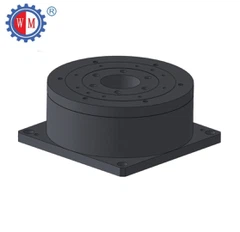
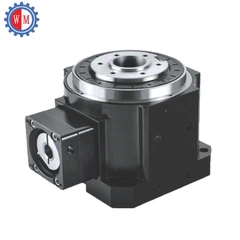
For more information on high - performance planetary actuators, you can visit our page on High Precision Spiral Gear Planetary Reducer. This product incorporates advanced material design for optimal cost - performance.
2. Design and Manufacturing Process Improvement
Design Optimization
The design of a planetary actuator plays a significant role in its cost - performance. A well - designed actuator can achieve high efficiency with fewer components. For instance, by using a more compact gear arrangement, you can reduce the size and weight of the actuator. This not only saves on material costs but also reduces the space required for installation, which can be a valuable consideration in many industrial settings.
In addition, the integration of modular design concepts can simplify the manufacturing process and reduce costs. Modular components can be mass - produced, which can take advantage of economies of scale. At the same time, modular design makes it easier to replace individual parts, which can significantly reduce maintenance costs.
Advanced Manufacturing Technologies
Adopting advanced manufacturing technologies can also improve the cost - performance ratio. Computer - Numerical - Control (CNC) machining, for example, offers high precision and repeatability. It can produce complex shapes with high accuracy, reducing the waste of materials and minimizing the need for subsequent finishing operations.


Another emerging technology is additive manufacturing, or 3D printing. While it may not be suitable for large - scale production of all components yet, it can be very useful for prototyping and producing small - batch, customized parts. 3D printing can quickly produce parts with complex geometries that are difficult or impossible to manufacture using traditional methods, and it can potentially save on tooling costs.
3. Quality Control and Testing
Effective quality control measures are essential to ensure that each planetary actuator meets the required performance standards. A comprehensive quality control system starts from the incoming inspection of raw materials, through every stage of the manufacturing process, to the final product testing.
By ensuring the quality of raw materials, you can prevent the production of defective products at an early stage. During the manufacturing process, in - process inspection can identify and correct any potential issues immediately, reducing the cost of rework and scrap.
Final product testing should include a variety of performance tests, such as torque testing, efficiency testing, and noise testing. Only products that pass all the tests can be released to the market. This may seem to increase the short - term cost, but in the long run, it can significantly reduce the cost associated with product recalls, customer complaints, and warranty claims.
Our IP65 Planetary Gearbox undergoes strict quality control and testing procedures to ensure both high performance and cost - effectiveness.
4. Energy Efficiency Improvement
Energy efficiency is an important aspect of the cost - performance equation. A more energy - efficient planetary actuator can reduce the operating cost over its service life.
To improve energy efficiency, start by improving the gear design. Using high - precision gears with low - friction surfaces can reduce power losses due to friction. Additionally, optimizing the lubrication system is crucial. The right lubricant can reduce friction and wear, and a well - designed lubrication system can ensure that the gears are properly lubricated at all times.
Another way to improve energy efficiency is to use advanced control systems. These systems can adjust the actuator's operation according to the actual load requirements, reducing unnecessary energy consumption. For example, a variable - speed drive can adjust the speed of the motor based on the load, improving overall energy efficiency.
5. Customization and Standardization
Balancing customization and standardization is also important for improving the cost - performance ratio. While some customers may have specific requirements that call for customized actuators, the cost of customization can be relatively high. On the other hand, standard products can be produced in large quantities, which can take advantage of economies of scale.
To solve this problem, a good approach is to design a modular system where standard components can be combined in different ways to meet different customer needs. This allows for a certain degree of customization while still maintaining the benefits of standardization in terms of cost and lead time.
Our Solid Shaft Planetary Actuator is based on a modular design, which can be customized to a certain extent to meet various application requirements.
Conclusion
Improving the cost - performance ratio of planetary actuators requires a comprehensive approach that encompasses material selection, design, manufacturing, quality control, energy efficiency, and the balance between customization and standardization. By implementing these strategies, we can offer our customers high - performance planetary actuators at a more reasonable price.
If you are interested in our planetary actuator products or have specific requirements for improving cost - performance in your applications, we welcome you to contact us for procurement discussions. We are committed to providing you with the best solutions based on years of experience and expertise in this field.
References
- Smith, J. (2018). Gear Design and Manufacturing for High - Efficiency Actuators. Machinery Publishing.
- Johnson, A. (2020). Advanced Materials in Planetary Actuators. Material Science Press.
- Brown, C. (2021). Quality Control Methods for Precision Actuators. Industrial Quality Journal.


