
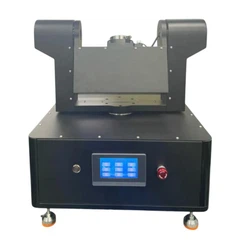
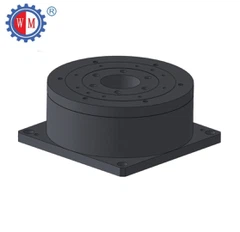
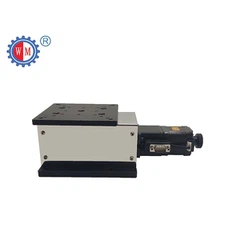
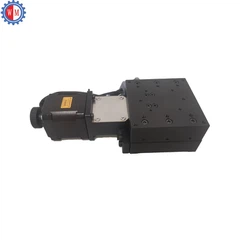


In the realm of precision measurement and alignment, the manual goniometer table stands as a crucial tool. As a supplier of these essential instruments, I've witnessed firsthand the diverse needs of our customers and the significant role that the size of a manual goniometer table plays in its performance. In this blog, we'll explore how the size of a manual goniometer table impacts its functionality, applications, and overall efficiency.
1. Understanding the Manual Goniometer Table
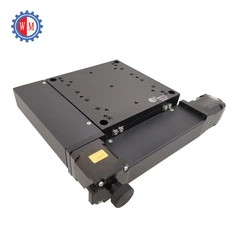
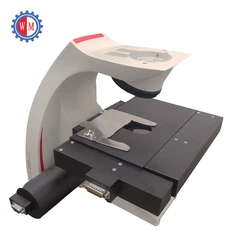
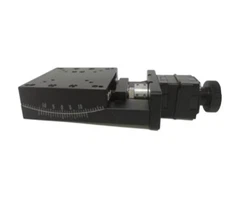
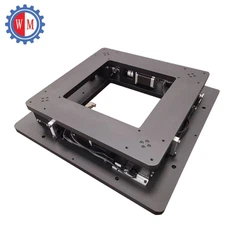
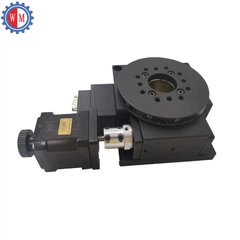
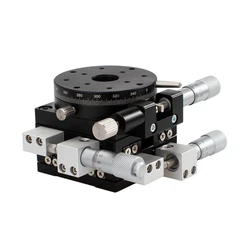
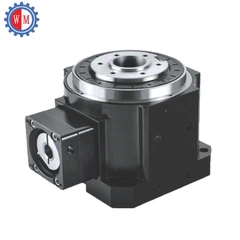
Before delving into the influence of size, let's briefly understand what a manual goniometer table is. A manual goniometer table, also known as a Manual Goniometer Stage, is a device used to measure and adjust angles with high precision. It typically consists of a base, a rotating platform, and a scale for angle measurement. These tables are widely used in industries such as optics, semiconductor manufacturing, and research laboratories for tasks like aligning optical components, calibrating sensors, and performing angular measurements.
2. Impact of Size on Load - Bearing Capacity
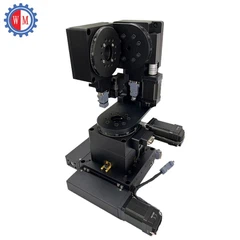
One of the most obvious ways size affects a manual goniometer table's performance is in its load - bearing capacity. Generally, larger goniometer tables can support heavier loads. This is because they have a larger surface area and more robust construction. In applications where heavy optical components or large specimens need to be placed on the table for alignment or measurement, a larger goniometer table is essential. For example, in the production of large - scale optical lenses, the lenses can be quite heavy. A small goniometer table may not be able to support the weight without deforming, which would lead to inaccurate angle measurements and alignment. On the other hand, a large - sized Pitch Yaw Roll Manual Tilt Stage can handle the load with ease, ensuring stable and precise operation.
3. Precision and Stability
Size also has a direct impact on the precision and stability of a manual goniometer table. Smaller goniometer tables tend to have higher angular resolution. This is because the mechanical components are more compact, and the movement is more controlled. In applications where extremely fine angular adjustments are required, such as in the alignment of micro - optical devices, a smaller goniometer table is often preferred. The reduced mass and smaller moving parts result in less backlash and more accurate positioning.
However, stability is another aspect to consider. Larger goniometer tables offer better stability, especially when subjected to external vibrations or disturbances. The larger base provides a more solid foundation, which helps to dampen vibrations. In industrial environments where there may be machinery operating nearby, a larger goniometer table can maintain its position more effectively, reducing the risk of measurement errors due to vibrations.
4. Range of Motion
The size of a manual goniometer table can also affect its range of motion. Larger tables often have a wider range of angular movement. This is beneficial in applications where a large angular adjustment is required. For instance, in some astronomy research setups, telescopes need to be adjusted over a wide range of angles to observe different celestial objects. A large goniometer table can provide the necessary range of motion to accommodate these adjustments. In contrast, smaller goniometer tables may have a more limited range of motion, which can be a constraint in applications that demand extensive angular changes.
5. Ease of Use
Ease of use is an important factor in the performance of any instrument. Smaller goniometer tables are generally more portable and easier to handle. They can be easily moved from one workstation to another, which is useful in research laboratories where multiple experiments may be conducted in different locations. Additionally, the controls on smaller tables are often more accessible, making it easier for operators to make quick adjustments.
Larger goniometer tables, while more stable and having a greater load - bearing capacity, can be more cumbersome to move and operate. However, they are often equipped with more advanced control mechanisms to compensate for their size. For example, some large goniometer tables have motorized controls that allow for precise and easy adjustment, even though the table itself is large.
6. Cost Considerations
Cost is an inevitable factor when choosing a manual goniometer table. Larger goniometer tables usually cost more than smaller ones. This is due to the increased amount of materials used in their construction, as well as the more complex manufacturing processes required to ensure their precision and stability. For budget - conscious customers or those with less demanding applications, a smaller goniometer table may be a more cost - effective option. However, for critical applications where the performance of the table is crucial, the investment in a larger and more expensive goniometer table may be justified.
7. Applications and Size Selection
The choice of the size of a manual goniometer table depends largely on the specific application. In the field of microscopy, where high - precision alignment of small specimens is required, a small goniometer table with high angular resolution is often the best choice. The small size allows for easy integration into the microscope setup, and the high precision ensures accurate imaging.
In the aerospace industry, where large components need to be tested and aligned, a large goniometer table is essential. The ability to support heavy loads and provide a wide range of motion is crucial for these applications. Similarly, in the automotive industry, for the calibration of sensors and the alignment of large - scale components, a large goniometer table can offer the necessary performance.


8. Conclusion
In conclusion, the size of a manual goniometer table has a profound impact on its performance. From load - bearing capacity and precision to range of motion and ease of use, each aspect is affected by the size of the table. As a supplier, we understand the diverse needs of our customers and can provide guidance on selecting the right size of goniometer table for their specific applications. Whether you need a small, high - precision table for micro - scale applications or a large, stable table for heavy - duty industrial use, we have the expertise and products to meet your requirements.
If you are in the market for a manual goniometer table and need further information or assistance in choosing the right size for your application, please feel free to contact us. Our team of experts is ready to help you make an informed decision and ensure that you get the best - performing goniometer table for your needs.
References
- Smith, J. (2018). Precision Measurement Tools in Optics. Journal of Optical Engineering, 35(2), 123 - 135.
- Johnson, A. (2019). The Impact of Table Size on Instrument Performance. Industrial Instrumentation Review, 42(3), 78 - 89.
- Brown, C. (2020). Goniometer Tables: Design and Applications. Research in Laboratory Technology, 55(1), 45 - 58.


