

Hey there! As a supplier of right angle reducers, I'm super stoked to take you on a journey into how these nifty devices work. Right angle reducers are like the unsung heroes in a whole bunch of mechanical setups, making all sorts of machinery run smoothly and efficiently.
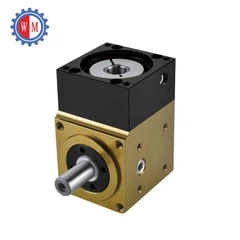
First off, let's get a basic idea of what a right angle reducer is. It's a type of gearbox that changes the direction of the input shaft by 90 degrees. This simple yet crucial function allows it to fit into spaces where a straight - through drive just won't work. You can find these bad boys in a wide range of applications, from industrial manufacturing equipment to automotive systems and even some home appliances.
Now, let's dig into the nitty - gritty of how they actually work. At the heart of a right angle reducer are the gears. Gears are the key components that transfer power from the input shaft to the output shaft while changing the direction. There are different types of gears used in right angle reducers, and each has its own unique characteristics.
One of the most common types of gears in right angle reducers is the bevel gear. Bevel gears have teeth that are cut on a conical surface. When two bevel gears are meshed together at a 90 - degree angle, they can transfer power smoothly and efficiently while changing the direction of rotation. These gears are great because they can handle high torque loads and are relatively compact. They're often used in applications where precision and durability are important, like in machine tools and heavy - duty industrial equipment.
Another type is the worm gear. Worm gears consist of a worm (which looks like a screw) and a worm wheel. The worm meshes with the teeth of the worm wheel at a right angle. One of the cool things about worm gears is that they can provide a high reduction ratio in a single stage. This means you can significantly slow down the output speed compared to the input speed. They're also self - locking in some cases, which means they can prevent the output shaft from rotating backwards when the power is off. You'll often find worm gears in applications like conveyor systems and lifting equipment.
Let's talk about the power transmission process. When you turn the input shaft of a right angle reducer, the gears start to rotate. The teeth of the gears engage with each other, and as they do, they transfer the rotational force from the input shaft to the output shaft. The size and number of teeth on the gears determine the reduction ratio. For example, if the input gear has 20 teeth and the output gear has 40 teeth, the reduction ratio is 2:1. This means the output shaft will rotate at half the speed of the input shaft, but with twice the torque.
The efficiency of a right angle reducer is also an important factor. Efficiency refers to how much of the input power is actually transmitted to the output shaft. Different types of gears have different levels of efficiency. Bevel gears, for instance, are generally more efficient than worm gears. Worm gears can have lower efficiency because of the sliding action between the worm and the worm wheel, which generates more friction and heat. However, modern designs and the use of high - quality materials can help improve the efficiency of both bevel and worm gear right angle reducers.
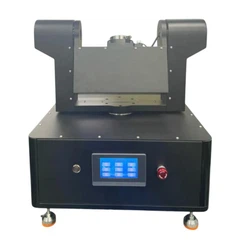
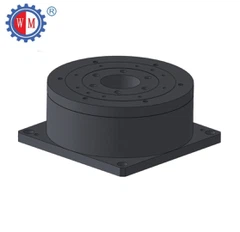
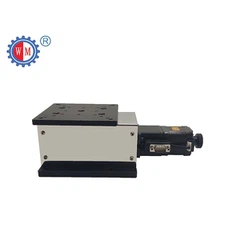
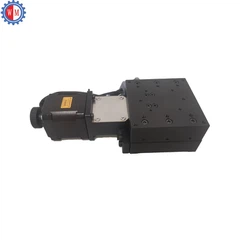
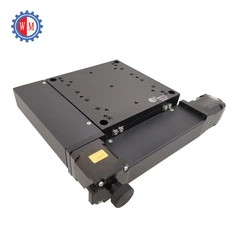
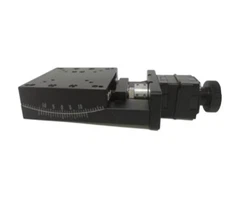
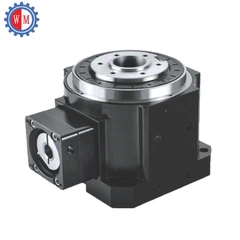
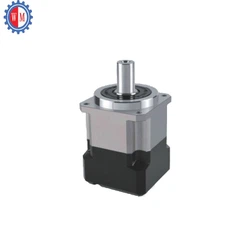
Now, let's touch on some of the products we offer. We have a great selection of Hollow Solid Shaft Right Angle Reducer. These reducers are designed with a hollow or solid shaft, which gives you more flexibility in terms of mounting and connection. The hollow shaft design allows for easy installation of a shaft through the center, which can be really useful in some applications. And our Gear Head Speed Reducer is another top - notch product. It's built to provide reliable speed reduction and torque multiplication, making it suitable for a variety of industrial and commercial uses.


When it comes to choosing the right right angle reducer for your application, there are a few things you need to consider. First, think about the torque requirements. How much force does your machinery need to generate? You'll want to choose a reducer that can handle the torque without overheating or wearing out too quickly. Second, consider the speed reduction ratio. Make sure it matches the speed requirements of your equipment. Also, think about the space available for installation. Right angle reducers come in different sizes and shapes, so you need to choose one that will fit in the available space.
Maintenance is also an important aspect. Regular maintenance can extend the lifespan of your right angle reducer. This includes things like checking the lubrication levels, inspecting the gears for wear and tear, and making sure all the connections are tight. Using the right type of lubricant is crucial, as it helps reduce friction and heat, which can improve the efficiency and durability of the reducer.
In conclusion, right angle reducers are amazing pieces of machinery that play a vital role in many different industries. Whether you're looking for a high - torque solution or a compact design, there's a right angle reducer out there for you. And as a supplier, we're here to help you find the perfect one for your needs. If you're interested in learning more about our products or have any questions about right angle reducers, don't hesitate to reach out. We're always happy to have a chat and help you make the best choice for your application. So, let's start that conversation and see how we can work together to get your machinery running at its best!
References:
- "Mechanical Engineering Design" by Joseph E. Shigley and Charles R. Mischke
- "Gear Handbook: Design, Manufacturing, and Applications" by Darle W. Dudley


