
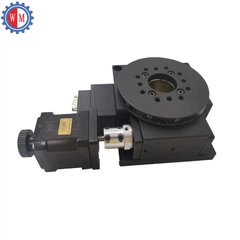
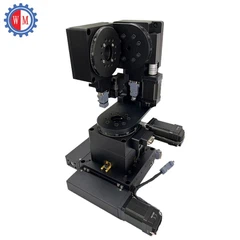
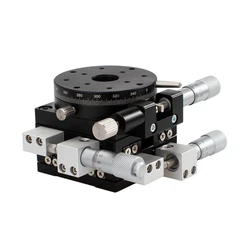
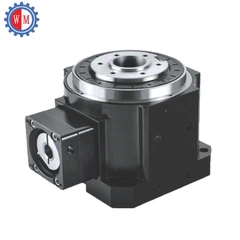


Hey there! As a supplier of Manual X - Axis Stages, I often get asked about how accurate these things really are. So, I thought I'd sit down and write this blog to share some insights with you all.
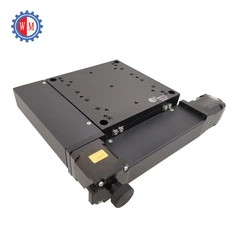
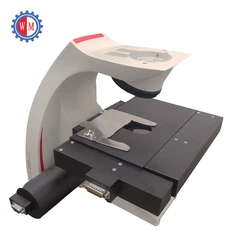
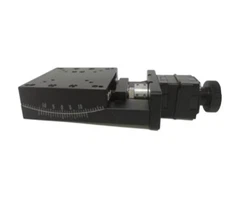
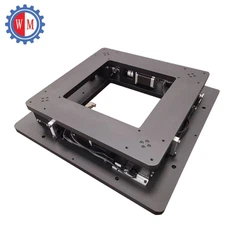
First off, let's talk about what Manual X - Axis Stages are. In simple terms, they're devices that allow you to move an object along the X - axis (that's the horizontal direction for those who aren't too into technical jargon). You use them in all sorts of industries, like microscopy, photonics, and semiconductor manufacturing. They're pretty handy when you need to position something precisely in one direction.
Now, the accuracy of Manual X - Axis Stages can vary quite a bit. It depends on a bunch of factors, and I'll break them down for you.
Factors Affecting Accuracy
1. Mechanical Design
The way a Manual X - Axis Stage is built plays a huge role in its accuracy. High - quality stages are usually made with precision - machined components. For example, the lead screw, which is responsible for converting rotational motion into linear motion, needs to be extremely accurate. A well - made lead screw will have a consistent pitch, meaning that for every full turn of the screw, the stage moves the same distance. If the pitch isn't consistent, you're going to have problems with accuracy.
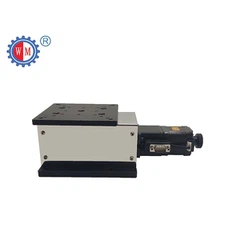
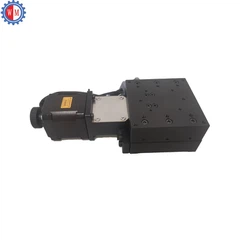
Some of our Single - Axis Manual Translation Stage models are designed with high - precision lead screws. These screws are manufactured to tight tolerances, which helps ensure that the stage moves smoothly and accurately along the X - axis.
2. Material Quality
The materials used in the construction of the stage also matter. Stages made from high - grade metals, like aluminum or stainless steel, tend to be more accurate. These materials are less likely to warp or deform over time, which can affect the alignment of the moving parts.
For instance, if the base of the stage starts to bend due to a low - quality material, the lead screw might not be able to move the stage in a perfectly straight line. That's why we use high - quality materials in our Adjustable Manual Translation Platform. It gives our customers peace of mind knowing that their stage will maintain its accuracy for a long time.
3. Manufacturing Tolerances
Manufacturing tolerances refer to the allowable deviation from the ideal dimensions of a part. In the case of Manual X - Axis Stages, tight manufacturing tolerances are crucial. If the parts are not made to the right specifications, the stage might not assemble correctly, and this can lead to inaccuracies in movement.
Our manufacturing process is highly controlled. We use advanced machining techniques and quality control measures to ensure that each Manual X Axis Adjustable Stage meets strict tolerance requirements. This way, we can guarantee a high level of accuracy to our customers.
4. User Operation
Believe it or not, how the user operates the stage can also impact its accuracy. If the user applies too much force when turning the adjustment knob, it can cause the stage to overshoot the desired position. On the other hand, if the user doesn't turn the knob enough, the stage won't reach the intended location.
We always provide our customers with detailed instructions on how to operate our Manual X - Axis Stages correctly. With proper training and a bit of practice, users can achieve very high levels of accuracy.
Measuring Accuracy
So, how do we measure the accuracy of Manual X - Axis Stages? There are a few key metrics that are commonly used.
1. Positioning Accuracy
This is the most straightforward metric. It refers to how close the stage can get to the desired position. For example, if you set the stage to move to a position of 10 millimeters along the X - axis, the positioning accuracy tells you how close the stage actually gets to that 10 - millimeter mark.
Our stages typically have a positioning accuracy in the range of a few micrometers. That means they can get really close to the desired position, which is great for applications that require high precision.
2. Repeatability
Repeatability measures how consistently the stage can return to the same position. If you move the stage to a certain position, then move it away, and then try to move it back to the same position again, repeatability tells you how close it will get to that original position.
High - quality Manual X - Axis Stages have excellent repeatability. Our products are designed to have a repeatability of less than a micrometer in many cases. This means that you can rely on the stage to return to the same position over and over again, which is essential for applications like automated testing.
3. Resolution
Resolution refers to the smallest increment of movement that the stage can make. A stage with a high resolution can make very fine adjustments. For example, if a stage has a resolution of 1 micrometer, it means that you can move the stage in steps as small as 1 micrometer.


Our stages are available with different resolutions to meet the needs of different applications. Whether you need a high - resolution stage for precise positioning in a microscopy setup or a lower - resolution stage for a less demanding application, we've got you covered.
Real - World Applications
Let's take a look at some real - world applications to see how the accuracy of Manual X - Axis Stages matters.
1. Microscopy
In microscopy, you often need to position the sample precisely under the objective lens. A Manual X - Axis Stage allows you to move the sample along the X - axis to view different areas. The high accuracy of our stages ensures that you can get a clear and focused view of the sample, even at high magnifications.
2. Photonics
In photonics, components like lasers and optical fibers need to be aligned precisely. Manual X - Axis Stages are used to position these components accurately. The accuracy of the stage is crucial for ensuring that the light is transmitted correctly through the optical system.
3. Semiconductor Manufacturing
During semiconductor manufacturing, precise positioning of wafers is essential. Manual X - Axis Stages are used to move the wafers to the right position for processes like etching and deposition. The high accuracy of our stages helps to improve the yield and quality of the semiconductor devices.
Conclusion
In conclusion, the accuracy of Manual X - Axis Stages is influenced by many factors, including mechanical design, material quality, manufacturing tolerances, and user operation. By using high - quality materials, advanced manufacturing techniques, and providing proper user instructions, we're able to offer stages with excellent positioning accuracy, repeatability, and resolution.
If you're in the market for a Manual X - Axis Stage and need high - precision performance, we'd love to talk to you. Whether you're working in microscopy, photonics, semiconductor manufacturing, or any other industry that requires precise positioning, our products can meet your needs. Get in touch with us to discuss your requirements and start a procurement conversation.
References
- "Precision Motion Control: Technology and Applications" by John A. S. Reed
- "Handbook of Optical Systems" edited by Rüdiger Paschotta


