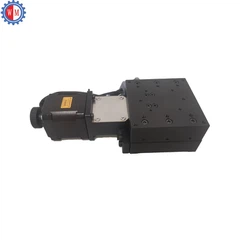
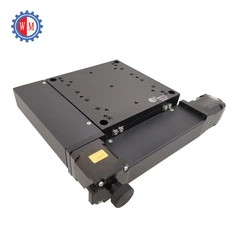
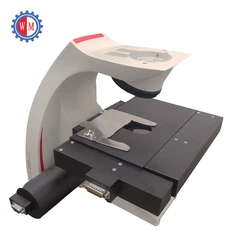
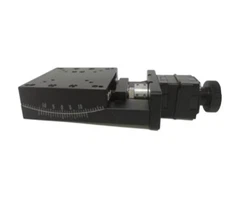


In the realm of precision engineering and manufacturing, the Visual Alignment Stage plays a pivotal role. As a trusted supplier of Visual Alignment Stages, I understand the critical importance of feature selection for these stages. This blog aims to guide you through the process of selecting the right features for a Visual Alignment Stage, ensuring that you make an informed decision that meets your specific requirements.
Understanding the Basics of Visual Alignment Stages
Before delving into feature selection, it's essential to have a clear understanding of what a Visual Alignment Stage is and what it does. A Visual Alignment Stage is a precision positioning device used to accurately align components or objects in various applications, such as semiconductor manufacturing, microscopy, and photonics. It typically consists of a stage platform, a motion control system, and a vision system for visual feedback.
The primary function of a Visual Alignment Stage is to provide precise and repeatable positioning in multiple axes (X, Y, Z, and sometimes θ - rotation). This is achieved through the use of high - precision linear guides, actuators, and encoders. The vision system, on the other hand, allows for real - time monitoring and adjustment of the alignment, ensuring that the desired accuracy is achieved.
Key Features to Consider
1. Precision and Accuracy
The most fundamental feature of a Visual Alignment Stage is its precision and accuracy. Precision refers to the ability of the stage to reproduce the same position repeatedly, while accuracy is the degree to which the actual position of the stage matches the desired position.
- Resolution: The resolution of a stage is the smallest increment of movement that the stage can achieve. For applications that require extremely fine alignment, such as nanoscale manufacturing, a stage with high resolution (e.g., sub - micron or even nanometer resolution) is necessary.
- Repeatability: A high - repeatability stage ensures that the same alignment can be achieved multiple times. This is crucial in mass production environments where consistent results are required. Look for stages with repeatability specifications in the range of ± a few microns or better.
- Accuracy: The overall accuracy of the stage depends on factors such as the quality of the motion control system, the linear guides, and the calibration of the stage. When selecting a stage, consider the application's accuracy requirements and choose a stage that can meet or exceed those requirements.
2. Range of Motion
The range of motion of a Visual Alignment Stage refers to the maximum distance that the stage can travel in each axis. This is an important consideration as it determines the size of the components or objects that can be aligned on the stage.


- X and Y Axes: In most applications, the X and Y axes are used for lateral positioning. The range of motion in these axes should be sufficient to cover the entire area of the component to be aligned. For example, in semiconductor wafer alignment, the stage needs to have a large enough X - Y range to accommodate wafers of different sizes.
- Z Axis: The Z - axis range is important for applications that require vertical positioning, such as focusing in microscopy or height adjustment in 3D printing. Consider the maximum height difference that needs to be accommodated when selecting the Z - axis range.
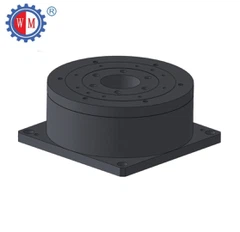
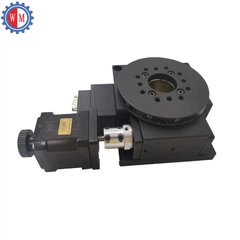
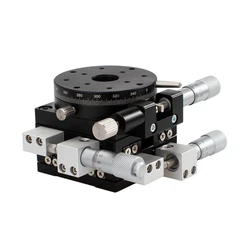
- Rotation (θ): Some Visual Alignment Stages also offer rotation capabilities around a vertical axis. The rotation range should be sufficient to achieve the desired angular alignment.
3. Speed and Acceleration
The speed and acceleration of a Visual Alignment Stage are important factors, especially in high - throughput applications.
- Speed: The maximum speed of the stage determines how quickly it can move from one position to another. Faster speeds can significantly reduce the alignment time, increasing the overall productivity of the manufacturing process.
- Acceleration: Acceleration is the rate at which the stage can change its speed. A stage with high acceleration can reach the desired speed more quickly, further reducing the alignment time. However, high acceleration may also require more powerful actuators and a more robust motion control system.
4. Vision System
The vision system is a key component of a Visual Alignment Stage as it provides the visual feedback necessary for accurate alignment.
- Camera Resolution: The resolution of the camera in the vision system determines the level of detail that can be captured. A higher - resolution camera can provide more accurate alignment information, especially for small or complex components.
- Field of View: The field of view of the camera should be large enough to cover the area of interest on the component. A wide field of view can reduce the need for multiple camera positions, simplifying the alignment process.
- Image Processing Capabilities: The vision system should have advanced image processing capabilities to analyze the captured images and provide accurate alignment information. This may include features such as edge detection, pattern recognition, and alignment algorithms.
5. Load Capacity
The load capacity of a Visual Alignment Stage refers to the maximum weight that the stage can support without compromising its performance.
- Static Load: The static load capacity is the maximum weight that the stage can support when it is stationary. Consider the weight of the component or object to be aligned, as well as any additional fixtures or tooling that may be used on the stage.
- Dynamic Load: The dynamic load capacity takes into account the weight of the moving parts during the alignment process. A stage with a high dynamic load capacity can ensure smooth and stable operation even when moving heavy loads.
6. Compatibility and Integration
In many applications, the Visual Alignment Stage needs to be integrated with other equipment, such as microscopes, lasers, or robotic arms.
- Mechanical Compatibility: The stage should have a mechanical design that allows for easy integration with other equipment. This may include standard mounting interfaces and dimensions.
- Electrical Compatibility: The stage's motion control system should be compatible with the electrical systems of other equipment. This includes considerations such as communication protocols, power requirements, and signal compatibility.
- Software Compatibility: The vision system and motion control software of the stage should be compatible with other software used in the manufacturing process. This allows for seamless integration and easy operation.
Specific Stage Options
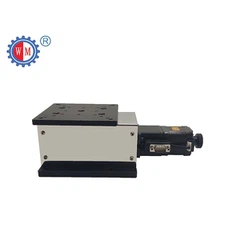
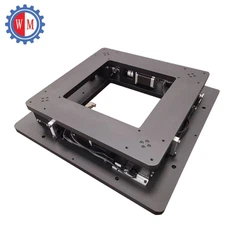
- XYY Alignment Stage: The XYY Alignment Stage offers a unique configuration that provides additional degrees of freedom for alignment. It is suitable for applications that require complex alignment tasks, such as aligning multiple components or objects with different orientations.
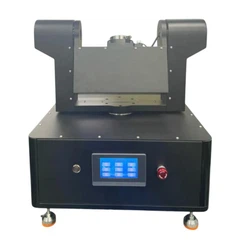
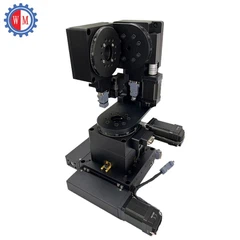
- Visual Alignment Stage: Our Visual Alignment Stage is a comprehensive solution that combines high - precision motion control with advanced vision technology. It is designed to meet the most demanding alignment requirements in various industries.
- Motorized UVW Alignment Stage: The Motorized UVW Alignment Stage provides precise control in three axes (U, V, W), allowing for accurate alignment in both linear and rotational directions. This stage is ideal for applications that require multi - axis alignment with high precision.
Making the Decision
Selecting the right features for a Visual Alignment Stage requires a careful consideration of the specific requirements of your application. Start by defining the accuracy, range of motion, speed, and other key parameters based on your manufacturing process. Then, evaluate different stage options based on these requirements.
It's also important to consider the reputation and support of the supplier. As a supplier, we are committed to providing high - quality Visual Alignment Stages and excellent customer support. Our team of experts can help you select the right stage for your application and provide technical assistance throughout the installation and operation process.
Contact for Purchase and Consultation
If you are interested in learning more about our Visual Alignment Stages or have specific requirements for your application, we encourage you to contact us for a detailed consultation. We can provide you with more information about our products, pricing, and delivery options. Our goal is to help you find the perfect Visual Alignment Stage solution that meets your needs and exceeds your expectations.
References
- "Precision Motion Control: Technology and Applications" by Peter R. Nist.
- "Handbook of Photonics Manufacturing Technology" edited by Richard P. Salathe.
- "Micro - and Nanomanufacturing Technologies for Biomedical Devices" by Chwee Teck Lim and Hong Liang.


