
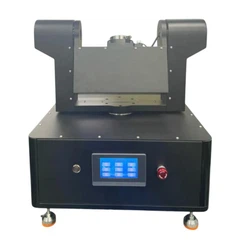
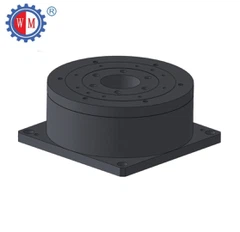
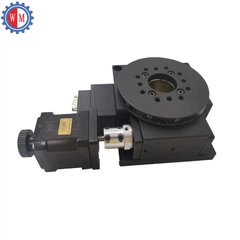
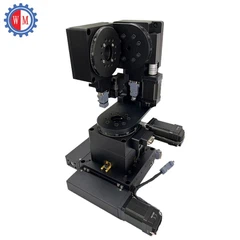
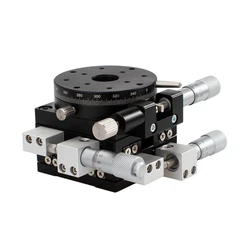
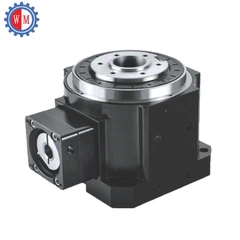


Planetary actuators are highly versatile mechanical components that have found widespread use in various industries. As a leading planetary actuator supplier, I am often asked whether these actuators can be effectively used in robotic applications. In this blog post, I will delve into this question, exploring the characteristics of planetary actuators, their advantages and limitations in robotic systems, and provide real - world examples to illustrate their practical use.


Characteristics of Planetary Actuators
Planetary actuators, also known as planetary gearboxes, are based on a unique gear arrangement. They consist of a central sun gear, multiple planet gears that revolve around the sun gear, and an outer ring gear. This design offers several distinct features.
One of the most prominent characteristics is high torque transmission. The multiple planet gears distribute the load evenly, allowing the actuator to handle large amounts of torque. This is crucial in many robotic applications where the robot needs to perform tasks such as lifting heavy objects or applying significant force. For instance, in industrial robotic arms used in automotive manufacturing, high - torque capabilities are essential for handling car parts during assembly.
Another advantage is high efficiency. The compact and well - designed gear arrangement reduces energy losses during power transmission. Compared to some other types of gearboxes, planetary actuators can transfer a larger proportion of the input power to the output, which is beneficial for robots that operate on battery power or have strict energy consumption requirements.
Planetary actuators also offer high precision. Their gear meshing is carefully engineered to minimize backlash, which is the play or clearance between the gears. In robotic applications, low backlash is vital for accurate positioning and smooth motion control. For example, in robotic surgical systems, the slightest error in positioning can have serious consequences, so high - precision actuators are a must.
Advantages of Using Planetary Actuators in Robotic Applications
1. Compact Design
Robots often have limited space for components. Planetary actuators have a very compact design, which allows them to be easily integrated into the robot's structure. Their small size does not compromise their performance; instead, they can deliver high torque and power in a relatively small package. This is particularly useful in mobile robots, where space is at a premium, and the overall size and weight of the robot need to be minimized for better mobility and agility.
2. High Torque - to - Volume Ratio
As mentioned earlier, planetary actuators can handle high torque. Their high torque - to - volume ratio means that they can provide the necessary power for heavy - duty tasks without taking up too much space. This is extremely beneficial for industrial robots that need to lift and move large and heavy objects. For example, in a warehouse automation system, robotic forklifts use planetary actuators to lift pallets of goods efficiently.
3. Precise Motion Control
The low backlash and high precision of planetary actuators enable precise motion control in robots. This is essential for applications such as pick - and - place operations, where the robot needs to accurately grasp and place objects in specific locations. In addition, in robotic painting systems, the actuator's precision ensures a smooth and even paint application on the surface of the workpiece.
4. Durability
Robotic applications often involve continuous operation and repetitive tasks. Planetary actuators are designed to be durable and can withstand high levels of stress and wear. Their robust construction and high - quality materials make them suitable for long - term use in harsh industrial environments. For example, in mining robots that operate in dusty and rough conditions, the durability of the actuators is crucial for reliable performance.
Limitations and Challenges
While planetary actuators offer many advantages, they also have some limitations when used in robotic applications.
1. Cost
Planetary actuators can be relatively expensive compared to some other types of actuators. The complex manufacturing process and high - quality materials used in their production contribute to the higher cost. This can be a significant factor, especially for small - scale robotic projects or startups with limited budgets.
2. Noise and Vibration
Under certain operating conditions, planetary actuators can generate noise and vibration. In some robotic applications, such as those in quiet laboratory environments or in consumer - facing robots, noise and vibration can be a drawback. However, with proper design and the use of damping materials, these issues can be mitigated to a certain extent.
3. Maintenance Requirements
Although planetary actuators are durable, they still require regular maintenance. The gears need to be lubricated, and the actuator's components need to be inspected periodically for wear and tear. In some robotic applications where access to the actuator is difficult, maintenance can become a challenge.
Real - World Examples of Planetary Actuators in Robotic Applications
1. Industrial Robotic Arms
Industrial robotic arms are widely used in manufacturing plants for tasks such as welding, assembly, and material handling. Planetary actuators are commonly used in these arms to provide the necessary torque and precision for accurate movement. For example, in the electronics manufacturing industry, robotic arms equipped with planetary actuators can precisely place tiny components on circuit boards.
2. Mobile Robots
Mobile robots, including autonomous guided vehicles (AGVs) and service robots, also benefit from planetary actuators. These actuators are used in the robot's wheels or joints to provide the power and control for movement. For instance, in a delivery robot that navigates through a building, the planetary actuators in its wheels ensure smooth and efficient movement.
3. Robotic Exoskeletons
Robotic exoskeletons are designed to assist humans in performing physical tasks or to enhance their physical capabilities. Planetary actuators are used in the joints of these exoskeletons to provide the necessary torque for movement. For example, in a military exoskeleton, the actuators can help soldiers carry heavy loads over long distances with less fatigue.
Related Products
As a planetary actuator supplier, we offer a range of products suitable for robotic applications. Our High Torque Spur Gear Speed Reducer is designed to provide high torque output with excellent efficiency. It is ideal for heavy - duty robotic tasks.
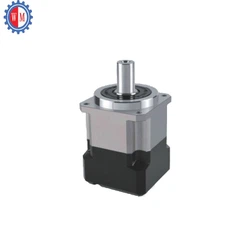
Our Solid Shaft Planetary Actuator offers a compact and reliable solution for robots with limited space. Its solid shaft design ensures high strength and durability.
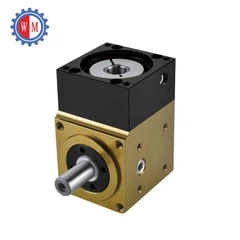
The Spur Gear Right Angle Reducer is another great option for robotic applications where a change in the direction of motion is required. It provides smooth and precise power transmission at a right angle.
Conclusion
In conclusion, planetary actuators can indeed be effectively used in robotic applications. Their high torque, efficiency, precision, and compact design make them well - suited for a wide range of robotic tasks. Although they have some limitations such as cost and maintenance requirements, the benefits they offer often outweigh these drawbacks.
If you are interested in using planetary actuators in your robotic projects, we invite you to contact us for further discussion. Our team of experts can provide you with detailed product information and technical support to help you select the most suitable actuator for your specific needs. We look forward to the opportunity to work with you and contribute to the success of your robotic applications.
References
- "Robotics: Modelling, Planning and Control" by Bruno Siciliano, Lorenzo Sciavicco, Luigi Villani, and Giuseppe Oriolo.
- "Planetary Gear Trains: Analysis and Applications" by G. M. Maitra.
- Industry reports on robotic component technologies.


