


As a leading supplier of planetary actuators, I often encounter a pivotal question from clients: Can planetary actuators be powered by batteries? This query is not only relevant in today's context of mobile and remote applications but also ties into the broader trend of energy - efficient and sustainable technology. In this blog, I'll delve into the technical, practical, and economic aspects of powering planetary actuators with batteries.
Technical Feasibility
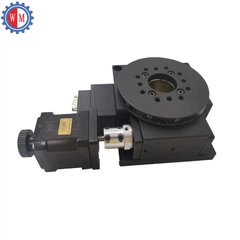
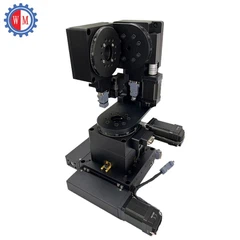
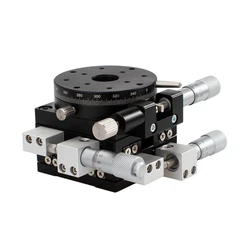
Planetary actuators are sophisticated mechanical devices designed to provide high - torque output with compact dimensions. They work on the principle of planetary gear systems, where multiple gears rotate around a central sun gear to achieve a significant reduction in speed and an increase in torque. The key to powering these actuators with batteries lies in understanding the electrical requirements of the actuator's motor.


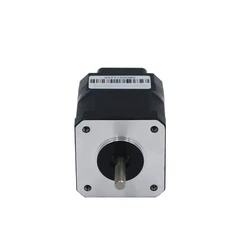
Most planetary actuators are equipped with electric motors, such as DC motors. DC motors are well - suited for battery power because batteries inherently supply direct current. The voltage and current requirements of the motor need to be carefully matched with the battery's output. For instance, if a planetary actuator's motor is rated for 12V DC, a 12V battery can be used as a power source.
However, there are other technical considerations. The power consumption of the actuator is a crucial factor. High - torque applications demand more power, which means a larger battery capacity or a higher - voltage battery pack may be required. Additionally, the efficiency of the actuator's motor plays a role. A more efficient motor will draw less power from the battery, extending the battery life.
Practical Applications
The ability to power planetary actuators with batteries opens up a wide range of practical applications. In mobile robotics, for example, planetary actuators are used to control the movement of robot arms, legs, or wheels. Batteries provide the necessary portability, allowing robots to operate in various environments without being tethered to a power outlet.
In the aerospace industry, battery - powered planetary actuators are used in small satellites for attitude control. The limited space and the need for reliable, self - contained power make batteries an ideal choice. These actuators can precisely adjust the satellite's orientation, ensuring proper communication and data collection.
Another area is the automotive industry, especially in electric vehicles (EVs). Planetary actuators are used in systems like electric power steering. Battery - powered actuators can enhance the energy efficiency of the vehicle and provide a more responsive steering experience.
Advantages of Battery - Powered Planetary Actuators
One of the most significant advantages is the mobility they offer. Without the need for a fixed power source, equipment using battery - powered planetary actuators can be deployed in remote locations, such as construction sites in the mountains or agricultural fields far from the grid.
Battery - powered systems also tend to be more environmentally friendly. As the world moves towards clean energy, using rechargeable batteries reduces reliance on fossil - fuel - based power generation. Moreover, the maintenance of battery - powered actuators can be simpler compared to those connected to a complex power grid. There are no issues with power outages or fluctuations, and battery replacement or recharging can be easily scheduled.
Challenges and Solutions
Despite the many advantages, there are challenges associated with powering planetary actuators with batteries. One of the main challenges is the limited energy density of batteries. Batteries can store a finite amount of energy, which means that in high - power applications, the operating time may be limited.
To address this, one solution is to use high - energy - density batteries, such as lithium - ion batteries. These batteries have a much higher energy - to - weight ratio compared to traditional lead - acid batteries. Another approach is to optimize the actuator's design to reduce power consumption. For example, using more efficient gear materials and better motor control algorithms can significantly improve the overall efficiency of the system.
Product Offerings
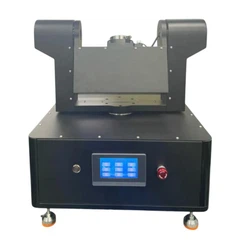
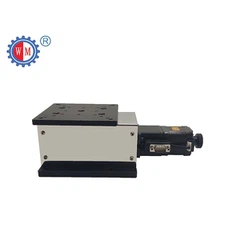
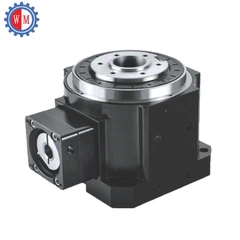
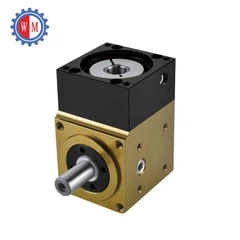
At our company, we offer a variety of planetary actuators that are suitable for battery - powered applications. Our Spur Gear Right Angle Reducer is designed with high - efficiency gears, which reduces power consumption and is well - suited for battery - powered systems. The compact design also makes it ideal for mobile applications.
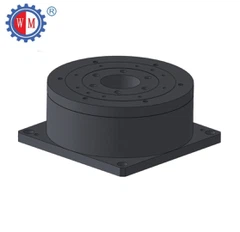
The Circular Flange Output Rotary Actuator is another product in our lineup. It provides a smooth and precise rotary motion, and its motor can be easily paired with a battery pack. This actuator is commonly used in robotics and automation systems.
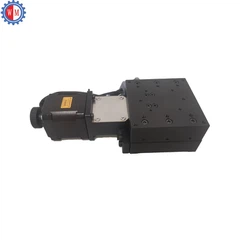
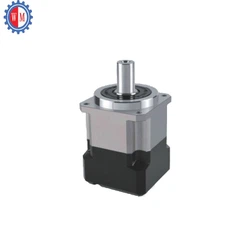
Our Solid Shaft Planetary Actuator is known for its high - torque output. It is engineered to handle heavy - duty applications while still being compatible with battery power sources. The solid shaft design ensures durability and reliability in challenging environments.
Cost - Benefit Analysis
When considering battery - powered planetary actuators, it's important to conduct a cost - benefit analysis. The initial cost of high - quality batteries and the actuator itself may be higher compared to non - battery - powered systems. However, in the long run, the savings in installation costs (since there's no need for complex wiring to a power grid) and the potential for reduced energy costs can offset the initial investment.
For example, in a mobile robotic application, the ability to operate without a fixed power source can lead to increased productivity. The robot can be quickly deployed to different locations, and the downtime due to power - related issues is minimized.
Conclusion
In conclusion, planetary actuators can indeed be powered by batteries, and this combination offers numerous benefits in terms of mobility, environmental friendliness, and practical applications. While there are challenges, such as limited battery life and high initial costs, these can be overcome through technological advancements and proper system design.
If you're interested in learning more about our battery - compatible planetary actuators or have specific requirements for your application, we invite you to reach out for a detailed discussion. Our team of experts is ready to assist you in selecting the right product and ensuring a seamless integration into your system.
References
- Johnson, R. "Electric Motor Handbook." 3rd Edition, McGraw - Hill, 2018.
- Smith, A. "Battery Technology for Mobile Applications." IEEE Transactions on Energy Storage, Vol. 12, No. 3, 2020.
- Brown, C. "Planetary Gear Systems: Design and Analysis." Wiley, 2019.


