


Hey there! As a supplier of motorized gimbal stages, I often get asked if these nifty devices can be used for microscopy. Well, let's dive right into it and find out!
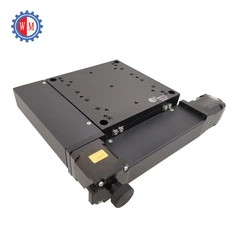
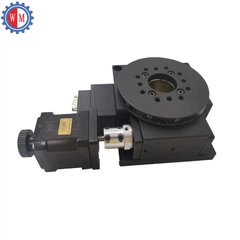
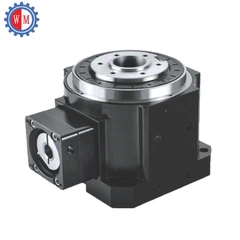
First off, what exactly is a motorized gimbal stage? It's a piece of equipment that allows for precise movement and positioning in multiple axes. With motors controlling the movement, you can achieve smooth and accurate adjustments. These stages are commonly used in various industries, like aerospace for testing, in robotics for positioning sensors, and more.
Now, let's talk about microscopy. Microscopy is all about getting a clear and detailed view of tiny things. Whether it's biological samples, materials science specimens, or microelectronics components, a good microscope setup is crucial. The key requirements for microscopy include high - resolution imaging, stable positioning, and the ability to make fine adjustments.
So, can a motorized gimbal stage fit the bill for microscopy? The answer is a resounding yes, and here's why.
Precision Movement
One of the main advantages of a motorized gimbal stage in microscopy is its ability to provide precise movement. In microscopy, you often need to move the sample in small increments to focus on different areas or to follow a particular feature. A motorized gimbal stage can be programmed to move in very small steps, sometimes down to micrometers or even nanometers. This level of precision is essential for capturing clear and detailed images. For example, when studying cells under a microscope, you might need to move the sample just a little bit to get the perfect view of a specific organelle. With a motorized gimbal stage, you can do this with ease.
Stability
Another important factor in microscopy is stability. Any vibration or sudden movement can blur the image and make it difficult to analyze the sample. Motorized gimbal stages are designed to be stable. They are built with high - quality materials and advanced mechanical components that minimize vibrations. This stability ensures that the sample remains still during imaging, allowing you to capture sharp and clear images. Whether you're using a high - power objective lens or taking time - lapse images, the stability provided by a motorized gimbal stage is invaluable.
Multiple Axes Movement
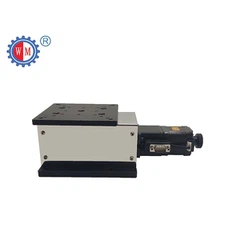
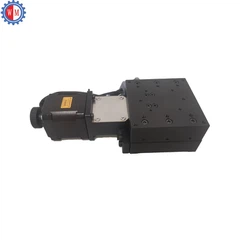
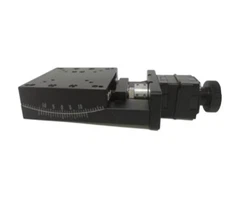
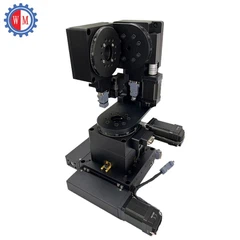
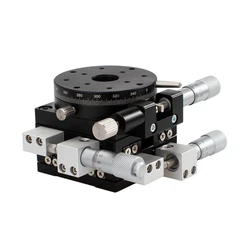
Microscopy often requires movement in multiple axes. You might need to move the sample up and down (z - axis) to focus, left and right (x - axis), and forward and backward (y - axis). Some motorized gimbal stages can even provide rotation around an axis, which can be useful for certain types of microscopy, such as confocal microscopy. For instance, in 3D imaging of a biological sample, you might want to rotate the sample to get different perspectives. A Three - Axis Motorized Gimbal Stage can offer this flexibility, allowing you to explore the sample from different angles and capture a more comprehensive view.


Automation
Automation is becoming increasingly important in microscopy. With a motorized gimbal stage, you can automate the movement of the sample. You can set up a sequence of movements, such as moving the sample in a grid pattern to scan a large area or following a predefined path to track a moving cell. This automation not only saves time but also reduces the risk of human error. For example, if you're analyzing a large number of samples, you can set up the motorized gimbal stage to move from one sample to the next automatically, allowing you to focus on the analysis rather than the manual movement of the samples.
Compatibility
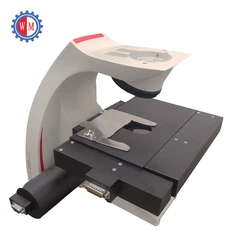
Most motorized gimbal stages are designed to be compatible with different types of microscopes. Whether you're using an optical microscope, an electron microscope, or a confocal microscope, you can usually find a motorized gimbal stage that can be easily integrated into your setup. This compatibility makes it convenient for researchers and scientists to upgrade their existing microscopy systems without having to make major changes.
Specific Applications in Microscopy
Let's take a look at some specific applications where a motorized gimbal stage can be extremely useful in microscopy.
Biological Microscopy
In biological microscopy, such as studying live cells or tissues, a motorized gimbal stage can be used to track the movement of cells over time. For example, when studying the migration of immune cells in a tissue sample, you can program the stage to follow the cells as they move. This allows you to capture a time - lapse video of the cell movement, which can provide valuable insights into the biological processes.
Materials Science Microscopy
In materials science, motorized gimbal stages are used for analyzing the microstructure of materials. For instance, when studying the grain boundaries in a metal sample, you can use the stage to move the sample precisely to different areas of interest. You can also use the rotation function of the stage to view the sample from different angles, which can help in understanding the three - dimensional structure of the material.
Microelectronics Microscopy
In microelectronics, motorized gimbal stages are used for inspecting and analyzing microchips and other electronic components. You can move the sample to different parts of the chip to check for defects, such as cracks or short circuits. The high - precision movement of the stage ensures that you can detect even the smallest defects, which is crucial for quality control in the microelectronics industry.
Our Product Offerings
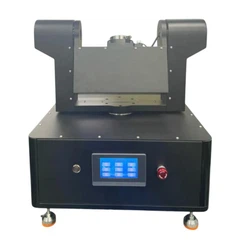
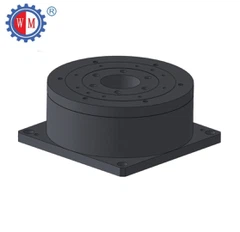
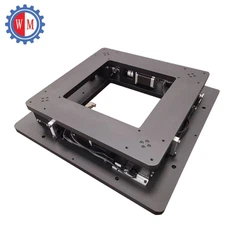
As a supplier of motorized gimbal stages, we offer a wide range of products to meet different microscopy needs. Our Dual - Axis Inertial Navigation Test Bench is a great option for applications that require movement in two axes. It provides high - precision movement and stability, making it suitable for various microscopy applications. Our Three - Axis Motorized Gimbal Stage offers even more flexibility with movement in three axes and can be used for more complex microscopy tasks.
If you're in the market for a motorized gimbal stage for your microscopy needs, we'd love to hear from you. We can provide you with detailed information about our products, help you choose the right one for your specific application, and offer support throughout the installation and use of the stage. Whether you're a research institution, a university, or an industrial company, we're here to assist you in getting the most out of your microscopy setup.
So, if you think a motorized gimbal stage could be a great addition to your microscopy equipment, don't hesitate to reach out. Let's start a conversation and see how we can help you achieve better results in your microscopy work.
References
- Wilson, T., & Sheppard, C. J. R. (1984). Theory and practice of scanning optical microscopy. Academic Press.
- Pawley, J. B. (2006). Handbook of biological confocal microscopy. Springer Science & Business Media.
- Goodhew, P. J., Edington, J. W., & Beanland, R. (2001). Electron microscopy and analysis. Taylor & Francis.


