
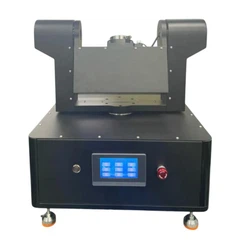


Hey there! As a supplier of Manual Goniometer Tables, I often get asked if these nifty tools can be used for measuring angles of porous materials. Well, let's dive right into it and find out.
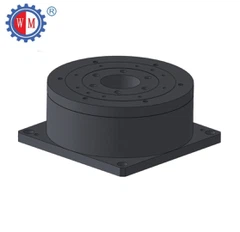
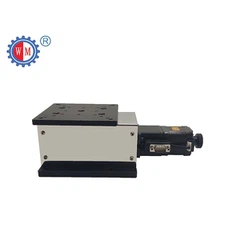
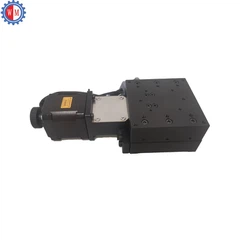
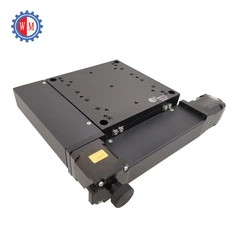
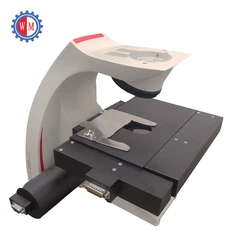
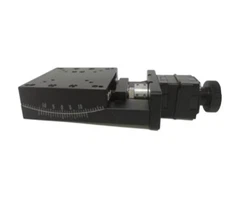
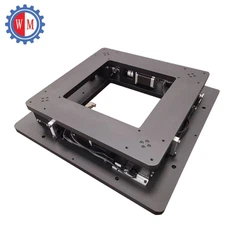
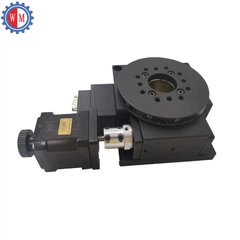
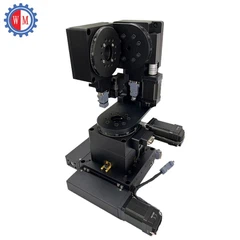
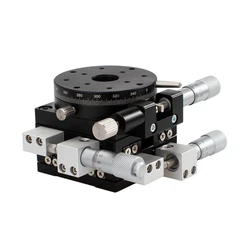
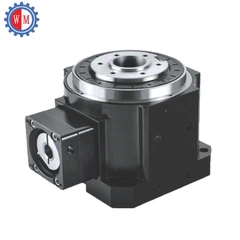
First off, let's talk a bit about what a Manual Goniometer Table is. It's a precision instrument that allows you to measure and adjust angles with a high degree of accuracy. There are different types available, like the Pitch Yaw Roll Manual Tilt Stage and the Manual Goniometer Stage. These stages are designed to provide smooth and reliable motion, making them ideal for a wide range of applications.
Now, onto the main question: Can a Manual Goniometer Table be used for measuring angles of porous materials? The short answer is yes, but there are some factors to consider.
Advantages of Using a Manual Goniometer Table for Porous Materials
One of the biggest advantages is the precision. Porous materials can have complex surface structures, and accurate angle measurements are crucial for understanding their properties. A Manual Goniometer Table can provide the level of precision needed to get reliable data.
For example, in materials science research, knowing the angles at which porous materials interact with other substances can help in developing new products. Whether it's a porous filter for water purification or a porous catalyst for chemical reactions, accurate angle measurements can give valuable insights into how these materials work.
Another advantage is the flexibility. Manual Goniometer Tables can be adjusted to different angles, allowing you to measure angles from multiple perspectives. This is especially useful when dealing with porous materials that may have irregular shapes or orientations.
Challenges and Considerations
However, there are also some challenges when using a Manual Goniometer Table for porous materials. One of the main challenges is the surface roughness of porous materials. The pores can cause the surface to be uneven, which may affect the accuracy of the angle measurements.
To overcome this, it's important to use proper measurement techniques. For example, you may need to take multiple measurements at different points on the surface and then calculate an average. This can help to reduce the impact of surface roughness on the overall measurement.


Another consideration is the fragility of some porous materials. Some porous materials may be easily damaged, so you need to be careful when handling them on the Manual Goniometer Table. Make sure to use gentle clamping or support methods to avoid any damage to the material.
Applications in Different Fields
Let's take a look at some specific applications where a Manual Goniometer Table can be used for measuring angles of porous materials.
Materials Science
In materials science, as mentioned earlier, accurate angle measurements of porous materials can help in understanding their mechanical, thermal, and chemical properties. For example, in the study of porous ceramics, knowing the angles at which the pores are oriented can affect the material's strength and thermal conductivity.
Biomedical Engineering
In biomedical engineering, porous materials are often used for tissue engineering and drug delivery. Measuring the angles of these porous materials can help in designing better scaffolds for cell growth or in optimizing the release of drugs from porous carriers.
Environmental Science
In environmental science, porous materials like activated carbon are used for air and water purification. Measuring the angles of the pores can help in understanding how these materials adsorb pollutants, which is crucial for improving their efficiency.
Tips for Using a Manual Goniometer Table with Porous Materials
If you're planning to use a Manual Goniometer Table for measuring angles of porous materials, here are some tips to keep in mind:
- Clean the surface: Before taking any measurements, make sure to clean the surface of the porous material to remove any debris or contaminants. This can help to improve the accuracy of the measurements.
- Use proper lighting: Good lighting is essential for accurate angle measurements. Make sure to use a light source that provides even illumination on the surface of the material.
- Calibrate the instrument: Regularly calibrate your Manual Goniometer Table to ensure its accuracy. This can help to minimize any errors in the measurements.
Conclusion
In conclusion, a Manual Goniometer Table can definitely be used for measuring angles of porous materials. While there are some challenges and considerations, with the right techniques and precautions, you can get accurate and reliable measurements.
Whether you're a researcher in a laboratory or an engineer in an industry, a Manual Goniometer Table can be a valuable tool for studying porous materials. So, if you're in need of a high - quality Manual Goniometer Table for your applications, don't hesitate to get in touch with us. We're here to help you find the right solution for your needs.
If you're interested in purchasing a Manual Goniometer Table or have any questions about using it for measuring angles of porous materials, feel free to reach out. We can provide you with more information and help you choose the best product for your specific requirements.
References
- Smith, J. (2018). "Advances in Angle Measurement Techniques for Porous Materials". Journal of Materials Research.
- Brown, A. (2019). "Applications of Manual Goniometer Tables in Biomedical Engineering". Biomedical Engineering Journal.
- Green, C. (2020). "Environmental Applications of Porous Materials: Angle Measurements and Their Importance". Environmental Science Review.


