


Hey there! As a supplier of Hollow Rotary Tables, I often get asked if these nifty devices can be used for indexing applications. Well, the short answer is yes, but let's dive deeper into the details to understand why and how.
First off, let's talk about what indexing applications are. In simple terms, indexing is the process of moving a component to a specific position in a repetitive and accurate manner. This is crucial in many manufacturing and automation processes, like CNC machining, assembly lines, and inspection systems. For instance, in a CNC machining center, the workpiece needs to be rotated to different angles precisely to cut various features on it. That's where indexing comes in.
Now, what makes a hollow rotary table a great fit for indexing? One of the key features of a hollow rotary table is its high precision. These tables are designed to provide accurate rotation, with minimal backlash. Backlash is the amount of play or movement in the opposite direction when the direction of rotation is reversed. A low backlash means that the table can stop exactly where it's supposed to, which is essential for accurate indexing.
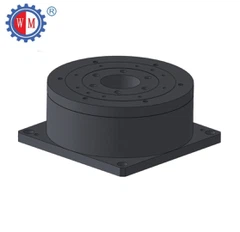
Another advantage is the hollow center design. This allows for the passage of cables, hoses, or shafts through the center of the table. In indexing applications, this can be really handy. For example, in a robotic assembly line, cables can be routed through the hollow center to power or control tools mounted on the table. This keeps the workspace organized and reduces the risk of tangling or interference.
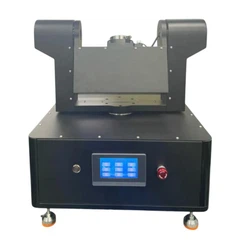
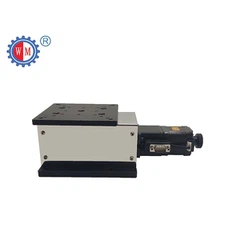
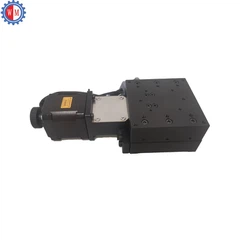
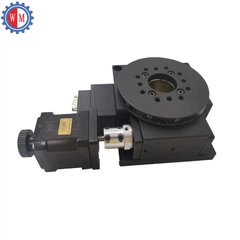
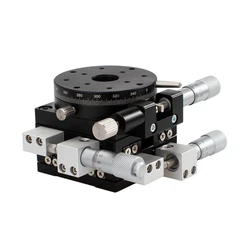
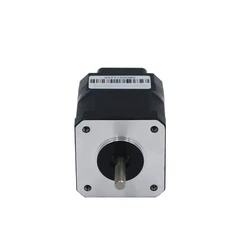
Let's take a look at some of the specific types of hollow rotary tables that are well - suited for indexing. The Hollow Rotary Stage is a popular choice. It offers smooth and precise rotation, making it ideal for applications where high - accuracy indexing is required. The stage can be easily integrated with servo motors or stepper motors, which can be programmed to control the rotation angle and speed precisely.
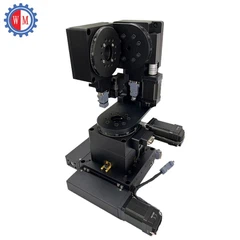
The 4th and 5th Axis Rotary Table is also a great option for indexing in multi - axis machining. In CNC machining, the 4th and 5th axes allow for more complex machining operations. These rotary tables can be used to index the workpiece to different angles, enabling the cutting of complex shapes and contours. With the ability to work in conjunction with the other axes of the machine, they provide a high degree of flexibility in machining operations.


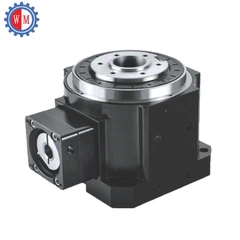
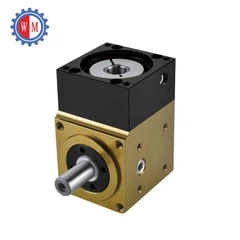
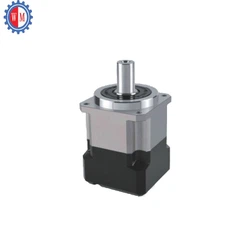
The Hollow Rotary Gearbox for Servo Motor is another important component. It provides the necessary torque and speed reduction for the servo motor. This gearbox is designed to work in harmony with the servo motor, ensuring smooth and accurate rotation. When used in indexing applications, it helps to maintain the precision of the rotation, even under heavy loads.
In addition to precision and the hollow center design, hollow rotary tables are also known for their durability. They are built to withstand the rigors of industrial environments. The materials used in their construction, such as high - grade steel and aluminum, are resistant to wear and corrosion. This means that they can operate reliably over long periods of time, with minimal maintenance.
However, like any other product, there are some factors to consider when using a hollow rotary table for indexing. One of the main considerations is the load capacity. The table needs to be able to support the weight of the workpiece and any additional equipment mounted on it. If the load is too heavy, it can affect the accuracy of the indexing and may even damage the table.
Another factor is the speed of rotation. Different indexing applications may require different rotation speeds. For example, in a high - speed assembly line, the table needs to be able to rotate quickly between indexing positions. On the other hand, in a precision machining operation, a slower and more controlled rotation speed may be required.
So, how do you choose the right hollow rotary table for your indexing application? First, you need to determine the accuracy requirements. If you need very high - precision indexing, you may want to choose a table with a low backlash and high - resolution encoder. Next, consider the load capacity and the size of the workpiece. Make sure the table can support the weight and dimensions of the workpiece. Also, think about the speed requirements and whether the table can be easily integrated with your existing equipment.
As a supplier of hollow rotary tables, I've seen firsthand how these products can improve the efficiency and accuracy of indexing applications. We offer a wide range of hollow rotary tables to meet different needs. Whether you're a small - scale manufacturer or a large industrial enterprise, we have a solution for you.
If you're interested in learning more about how our hollow rotary tables can be used for your indexing applications, or if you want to discuss your specific requirements, don't hesitate to get in touch. We're here to help you find the best solution for your business.
In conclusion, hollow rotary tables are definitely a great choice for indexing applications. Their precision, hollow center design, and durability make them well - suited for a wide range of industries. With the right table and proper installation, you can achieve accurate and efficient indexing in your manufacturing or automation processes.
References
- "Industrial Automation Handbook"
- "CNC Machining Technology"
- "Precision Rotary Table Design and Applications"


