
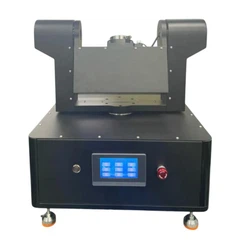
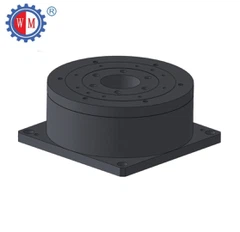
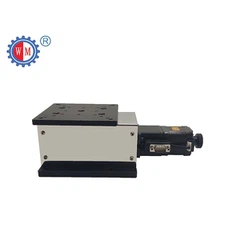
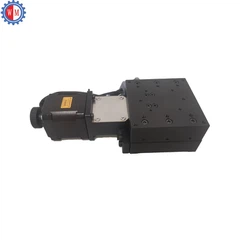
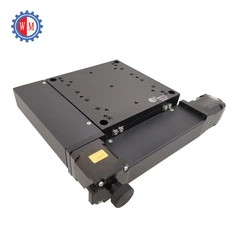
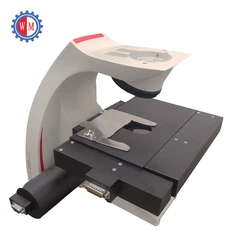
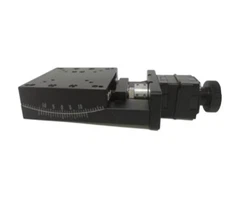
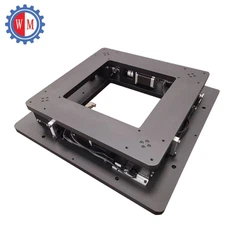
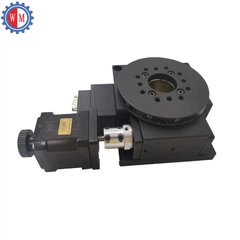
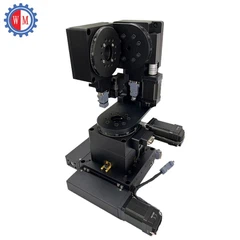
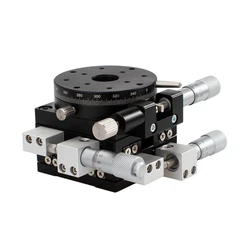
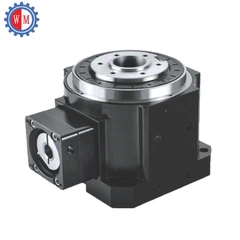

Three axis motorized gimbal stage in high-end fields such as aerospace, military electronics, autonomous driving, and precision sensing, the verification and optimization of equipment performance highly rely on the authenticity and accuracy of "attitude simulation". The high-precision three-axis turntable serves as the core test equipment. With its flexible adaptation to multiple scenarios and the ability to control micrometer-level attitude, it has become a key bridge connecting R&D design and practical application, providing reliable support for various precise attitude testing and simulation requirements.

Core Value: Solving testing pain points with "precision" and "fit"
I. The core advantage of the high-precision three-axis turntable lies in addressing the two major pain points of traditional testing equipment: "single scenario" and "insufficient precision".
- Accuracy: The three-axis motorized gimbal stage achieves an angle repeatability accuracy of within ±10 arcseconds and a rotational speed control accuracy of 360°/s through high-precision servo motors, precision ball screws, and closed-loop control systems. It can accurately simulate the subtle changes of the three-dimensional attitudes of "pitch, roll, and yaw". Perfectly reproduce the motion state of the equipment under actual working conditions to avoid distortion of test data caused by attitude errors.
- Suitability: Adopting the modular design of a motorized three-axis gimbal stage, it supports flexible customization of table size (from Φ60mm to Φ1000mm), load capacity (from 1kg to 30kg), and motion parameters (rotational speed 1°/s-300°/s). At the same time, it can integrate external devices such as high and low temperature chambers and vibration tables, easily adapting to the special testing environments of different industries.

II. Our three-axis motorized gimbal stage can be customized according to your requirements.
The customization core of the three-axis motorized gimbal stage is "matching application scenarios on demand". It is necessary to clarify the key parameters around the four dimensions of load characteristics, motion accuracy, environmental adaptation, and functional integration to ensure that the equipment can accurately meet the test/simulation requirements. The following is the classification and explanation of the core parameters that must be confirmed during customization:
- Basic Load Parameters (Determining the Load-bearing capacity and structural Design of the rotary stage)
①Load is the "core prerequisite" for customizing the motorized three-axis gimbal stage, directly affecting the tabletop size, material strength, and drive system selection. The following three key indicators need to be clarified.
②The maximum load weight refers to the maximum weight (including the weight of the workpiece under test and the fixture) that the tabletop of the motorized three-axis gimbal stage can stably bear, and the unit is usually kg or N. If the tested component is a 20kg inertial navigation module + 5kg fixture, it must be clearly stated that "the maximum load is ≥25kg".
③Note: It is necessary to distinguish between "static load" (the load when the equipment is stationary) and "dynamic load" (the load when the equipment is in motion, taking into account the influence of centrifugal force and acceleration). For dynamic loads, an additional safety factor (usually 1.2 to 1.5 times) should be marked.
- Load Center (CoG) and Eccentricity
①Center of Gravity: Refers to the center of gravity position of the workpiece under test + fixture. It is necessary to provide the three-dimensional coordinates (X/Y/Z, unit: mm) relative to the center of the motorized three-axis gimbal stage table.
②Eccentricity: If the center of gravity deviates from the center of the table surface, the maximum eccentric distance (unit: mm) should be marked to prevent vibration, precision deviation, and even damage to the drive components caused by "center of gravity offset" during the movement of the turntable.
- Countertop Dimensions and Installation Interfaces
①Countertop shape: The standard shape is circular (Φ60mm---1000mm). For special scenarios, a square shape can be selected. The diameter/side length must be clearly specified (such as Φ300mm, 300mm×300mm).
②Installation hole positions: Provide the number, hole diameter, and hole spacing of the installation holes on the table surface (e.g, 4-M8, hole spacing 200mm), or provide the installation drawings of the tested parts to ensure that the fixture is precisely matched with the table surface.
③Table material: Aluminum alloy (weight reduction) for light load, stainless steel or cast iron for heavy load/high rigidity requirements, titanium alloy for special scenes (such as anti-magnetic).
- Motion precision parameter (determines the accuracy of rotary stage attitude control)
①Accuracy is the "core indicator" of high-precision turntables. According to the testing requirements of the tested parts, the following key parameters should be clearly defined, which are commonly seen in high-precision scenarios such as aerospace and sensor calibration.
②Absolute positioning accuracy: It refers to the maximum deviation between the actual position of the turntable and the commanded position, such as ±60 arcseconds (1 arcsecond = 1/3600 degrees), and in high-precision scenarios, it can reach ±10 arcseconds. It determines the "authenticity" of the posture simulation of the device under test. For example, the calibration of inertial devices requires extremely high positioning accuracy.
③Positioning repeatability: It refers to the maximum deviation of multiple positioning to the same Angle, usually with positioning accuracy such as ±10 arcseconds to ensure the "consistency" of test data and avoid excessive deviation of multiple test results.
- Environmental Adaptation Parameters (Determining the Availability of the turntable under Special Working Conditions)
If the turntable needs to operate in extreme environments (such as high and low temperatures, vacuum, strong electromagnetic fields, etc.), the environmental adaptation parameters must be clearly defined to avoid the performance of the equipment being affected by the environment.
- Operating temperature range
①Conventional industrial scenarios: 0℃ to 50℃;
②Extreme low-temperature scenarios: -60℃ to 25℃ (such as polar equipment testing);
③High-temperature scenarios: -20℃ to 85℃ (such as testing of engine peripheral components);
③High-temperature scenarios: -20℃ to 85℃ (such as testing of engine peripheral components);
Note: It is necessary to specify whether an integrated "temperature control module" (such as a high and low temperature chamber) is required, as well as the temperature uniformity requirements (such as ±2℃).

Through the clarity of the above parameters, we can accurately design a "tailored" high-precision three-axis turntable to ensure that the equipment fully matches the test requirements and avoids the problem of later transformation or performance substandard caused by parameter ambiguity.


