


Hey there, tech enthusiasts! As a supplier of Motorized Gimbal Stages, I've seen firsthand how these nifty gadgets are revolutionizing various industries. Today, I'm super excited to dive into one of the hottest tech arenas right now: augmented reality (AR). So, what role does a motorized gimbal stage play in augmented reality? Let's find out!
First off, let's get a quick understanding of what augmented reality is. AR is all about overlaying digital information, like images, videos, or 3D models, onto the real - world environment. Think of those cool Pokémon Go games where you see Pokémon in your actual surroundings through your phone's camera. It's a blend of the virtual and the real, creating immersive experiences that are changing the way we interact with the world.
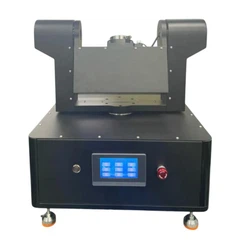
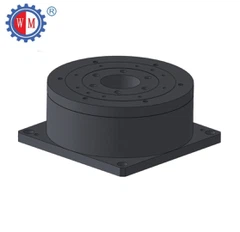
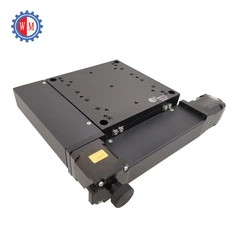
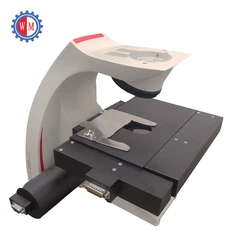
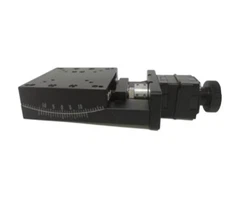
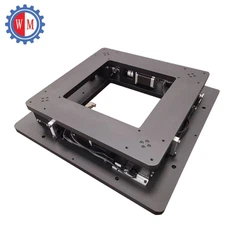
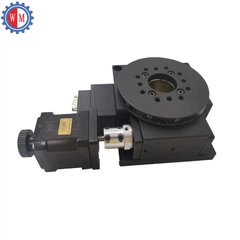
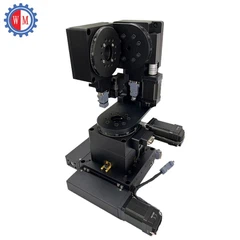
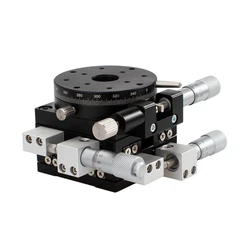
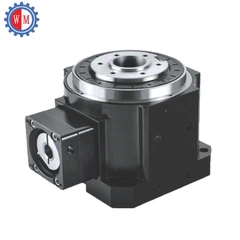
Now, let's talk about motorized gimbal stages. A motorized gimbal stage is a device that can hold and move objects or sensors in multiple axes with precision. It's like a robotic arm that can tilt, pan, and roll with great accuracy. These stages come in different configurations, like the Three - Axis Motorized Gimbal Stage, which can move in three different directions, and the Dual - Axis Inertial Navigation Test Bench, which is great for specific testing applications.


One of the key roles of a motorized gimbal stage in augmented reality is in the calibration and testing of AR devices. You see, for AR to work seamlessly, the devices need to be calibrated to accurately map the virtual elements onto the real world. Motorized gimbal stages can hold AR cameras or sensors in a controlled environment and move them in a precise pattern. This helps in simulating different real - world scenarios, like different angles of view, movements, and orientations. For example, if you're developing an AR headset, you can use a motorized gimbal stage to test how well the headset tracks your head movements and aligns the virtual objects correctly. By moving the headset in a known pattern on the gimbal stage, developers can collect data on how the AR system performs and make necessary adjustments to improve accuracy.
Another important aspect is in the development of AR content. Creating high - quality AR content requires a lot of data collection. Motorized gimbal stages can be used to hold cameras or other sensors to capture real - world scenes from multiple angles and perspectives. This data can then be used to create more realistic and immersive virtual environments. For instance, if you're making an AR app for a museum, you can use a motorized gimbal stage to capture 360 - degree views of the exhibits. The stage can rotate the camera smoothly around the object, allowing for a comprehensive view. This data can be used to create detailed 3D models that can be overlaid onto the real - world museum environment in the AR app.
In addition, motorized gimbal stages play a role in the user experience of AR devices. When using an AR device, the user expects a smooth and natural interaction. Motorized gimbal stages can be used to test the stability and responsiveness of the device's tracking systems. For example, if an AR device is supposed to follow the user's hand movements, the gimbal stage can be used to simulate these movements in a controlled way. By analyzing how the device responds to these movements on the gimbal stage, manufacturers can improve the device's performance and ensure a better user experience.
Let's also consider the aspect of research and development in AR. Scientists and researchers are constantly looking for ways to improve AR technology. Motorized gimbal stages provide a reliable and repeatable platform for conducting experiments. They can be used to test new algorithms for object recognition, tracking, and alignment in AR. For example, a researcher might want to test how well an AR system can recognize and track a moving object. By using a motorized gimbal stage to move the object in a specific pattern, the researcher can evaluate the performance of the new algorithm under controlled conditions.
Moreover, motorized gimbal stages are useful in the quality control of AR products. Before an AR device hits the market, it needs to go through rigorous testing to ensure it meets the required standards. Motorized gimbal stages can be used to simulate different usage scenarios and environmental conditions. For example, they can be used to test how an AR device performs in different lighting conditions or when subjected to vibrations. This helps in identifying any potential issues with the device and ensuring that only high - quality products are released to the market.
Now, you might be wondering why you should choose our motorized gimbal stages for your AR projects. Well, our stages are designed with high - precision motors and advanced control systems. This means they can provide accurate and repeatable movements, which is crucial for the calibration, testing, and content creation in AR. We also offer a wide range of customization options, so you can get a gimbal stage that perfectly suits your specific needs. Whether you're a small startup working on a new AR app or a large corporation developing the next - generation AR headset, our motorized gimbal stages can be a valuable addition to your toolkit.
If you're involved in the augmented reality industry, whether it's developing AR devices, creating AR content, or conducting research, a motorized gimbal stage can be a game - changer. It can help you improve the accuracy, quality, and user experience of your AR products. And if you're looking for a reliable supplier of motorized gimbal stages, look no further. We're here to provide you with the best - in - class products and support.
If you're interested in learning more about our motorized gimbal stages or want to discuss how they can fit into your AR projects, don't hesitate to reach out. We're always happy to have a chat and see how we can help you take your augmented reality endeavors to the next level.
References
- Some research papers on augmented reality technology and calibration methods.
- Industry reports on the development and future trends of augmented reality.
- Technical documentation on motorized gimbal stages and their applications.


