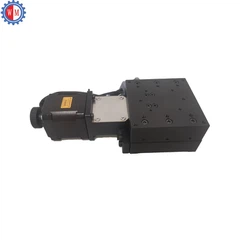
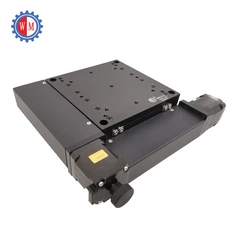
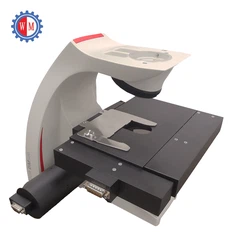
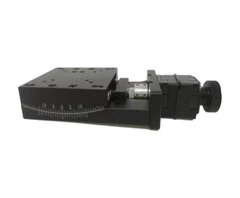


Hey there! As a supplier of Manual Z - Axis Stages, I often get asked about the materials commonly used to make these nifty devices. So, I thought I'd sit down and write this blog to share some insights with you all.
Aluminum
One of the most popular materials for making manual Z - Axis stages is aluminum. Aluminum is lightweight, which makes it easy to handle and transport these stages. You don't have to be a bodybuilder to move them around! It also has good corrosion resistance. This means that even if the stage is used in an environment with a bit of moisture, it won't rust away quickly.
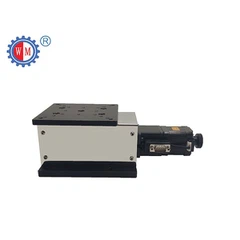
In terms of machining, aluminum is a dream. It can be easily cut, drilled, and shaped into the precise components needed for a Z - Axis stage. We can create smooth surfaces and tight tolerances, which are crucial for the accurate movement of the stage. And let's not forget about its cost - effectiveness. Aluminum is relatively inexpensive compared to some other metals, so we can offer high - quality manual Z - Axis stages at a reasonable price. For example, our Manual Vertical Stage uses aluminum in its construction, providing a great balance of performance and affordability.
Stainless Steel
Stainless steel is another material that we frequently use. It's known for its excellent strength and durability. If you need a manual Z - Axis stage that can withstand heavy loads or rough handling, stainless steel is the way to go. Unlike aluminum, stainless steel is less likely to dent or scratch, which means it can maintain its structural integrity over a long period of time.
Stainless steel also has great resistance to chemicals. So, if your application involves exposure to various chemicals, a stainless - steel Z - Axis stage will hold up well. However, it's heavier than aluminum, which can be a drawback in some situations where portability is a key factor. But for industrial settings where stability and long - term use are more important, stainless steel is a top choice.
Brass
Brass is a material that offers some unique advantages. It has good electrical conductivity, which can be useful in applications where electrical grounding or signal transmission is required. Brass also has a low coefficient of friction, which means that the moving parts of the Z - Axis stage can slide smoothly against each other. This results in a more precise and effortless movement of the stage.


In addition, brass has a nice aesthetic appearance. It gives the stage a more professional and high - end look. We often use brass for some of the smaller components of our manual Z - Axis stages, such as the knobs or the adjustment screws. It not only functions well but also adds a touch of style.
Acrylic
Acrylic is a non - metallic material that we sometimes incorporate into our manual Z - Axis stages. It's transparent, which can be a huge advantage in applications where you need to visually inspect the object being moved on the stage. For example, in microscopy or some optical applications, an acrylic stage allows you to see the sample clearly from different angles.
Acrylic is also lightweight and easy to machine. We can cut and shape it into various forms to fit the design requirements of the Z - Axis stage. However, it's not as strong as metals, so it's usually used in combination with other materials or for non - load - bearing parts of the stage.
Plastic
Plastic is a versatile material that has its place in the manufacturing of manual Z - Axis stages. There are different types of plastics, each with its own set of properties. Some plastics are very lightweight and inexpensive, which can be great for creating budget - friendly stages. They can also be molded into complex shapes easily, which gives us more design flexibility.
However, plastics may not be as strong or durable as metals. They can be prone to cracking or warping under certain conditions, such as high temperatures or heavy loads. But for applications where the stage doesn't need to support a lot of weight and is used in a relatively stable environment, plastic can be a good option.
Cast Iron
Cast iron is a heavy - duty material that offers exceptional stability. It has a high mass, which helps to dampen vibrations. This is crucial in applications where precision is of the utmost importance, such as in some high - end microscopy or metrology setups. The stability provided by cast iron ensures that the Z - Axis stage remains steady during operation, reducing the chances of errors in measurement or positioning.
But cast iron is heavy, and its machining can be more challenging compared to aluminum or brass. It also requires proper surface treatment to prevent rusting. Despite these drawbacks, when stability is the top priority, cast iron is a material that we often consider.
Composite Materials
Composite materials are becoming more and more popular in the manufacturing of manual Z - Axis stages. These materials are made by combining two or more different materials to get the best of both worlds. For example, a composite material might combine the lightweight properties of carbon fiber with the strength of a resin matrix.
Composite materials can offer a high strength - to - weight ratio, which is ideal for applications where both strength and portability are important. They can also be designed to have specific properties, such as high stiffness or low thermal expansion. However, they are usually more expensive to produce than traditional materials, so they are often used in high - end or specialized applications.
Choosing the Right Material
When it comes to choosing the material for a manual Z - Axis stage, there are several factors to consider. First of all, you need to think about the application. If it's for a laboratory environment where precision and portability are key, aluminum or acrylic might be a good choice. For industrial applications with heavy loads and rough conditions, stainless steel or cast iron could be more suitable.
Cost is also an important factor. If you're on a tight budget, plastic or aluminum might be the way to go. But if you need the best performance and durability, you might have to invest in more expensive materials like composite materials or stainless steel.
Another factor is the size and weight requirements. If you need a stage that can be easily moved around, lightweight materials like aluminum or plastic are preferable. On the other hand, if stability is more important than portability, heavier materials like cast iron are a better option.
Wrapping Up
So, there you have it! These are some of the most commonly used materials for making manual Z - Axis stages. Each material has its own advantages and disadvantages, and the choice depends on your specific needs and requirements. As a supplier, we have the expertise and the resources to provide you with the right manual Z - Axis stage made from the most suitable material.
If you're in the market for a manual Z - Axis stage, whether it's for a scientific research project, an industrial application, or something else, we'd love to hear from you. We can help you choose the right stage based on your needs and budget. Don't hesitate to reach out and start a conversation about your requirements. We're here to assist you every step of the way.
References
- "Materials Science and Engineering: An Introduction" by William D. Callister Jr. and David G. Rethwisch
- Various industry reports on manufacturing materials for precision equipment.


