
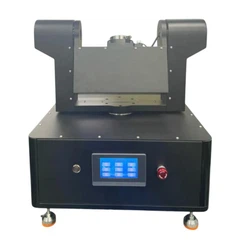



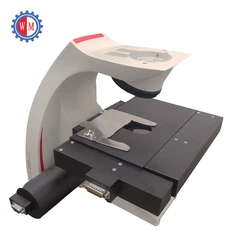
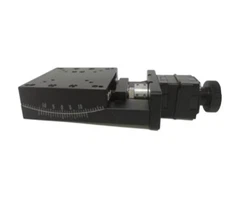
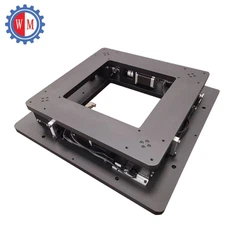
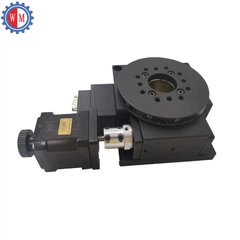
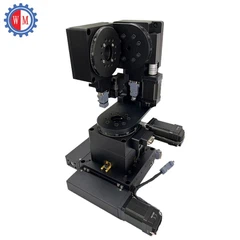
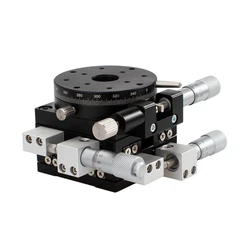



Hey there! As a supplier of Manual Goniometer Tables, I've had my fair share of experiences and insights into how these nifty devices work. Today, I wanna dive deep into one crucial aspect: the role of the base of a Manual Goniometer Table in its performance.
Let's start with the basics. What exactly is a Manual Goniometer Table? Well, it's a precision instrument used in various fields like optics, electronics, and materials testing. It allows users to precisely measure and adjust angles. You can check out more about Manual Goniometer Stage on our website. And if you're into more complex setups, our Pitch Yaw Roll Manual Tilt Stage might be just what you need.
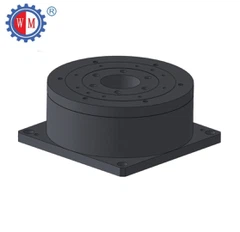
Now, let's talk about the base. The base of a Manual Goniometer Table is like the foundation of a house. It provides stability and support for the entire structure. Without a solid base, the table won't be able to perform at its best.
One of the key functions of the base is to minimize vibrations. In precision measurement applications, even the slightest vibration can cause inaccurate readings. A well-designed base is made of materials that have good vibration-damping properties. For example, some bases are made of cast iron, which is known for its high mass and ability to absorb vibrations. This ensures that the table remains stable during operation, and you get accurate angle measurements every time.
Another important role of the base is to provide a flat and level surface for the goniometer to rest on. If the base is not flat, the table might tilt or wobble, which can also lead to measurement errors. During the manufacturing process, the base is carefully machined to ensure a high degree of flatness. This flat surface allows the goniometer to be mounted securely and accurately, so you can trust the measurements it provides.
The base also plays a role in the overall durability of the Manual Goniometer Table. It has to withstand the weight of the goniometer and any additional equipment that might be placed on it. A strong and sturdy base is less likely to deform or break over time, which means you'll get a longer lifespan out of your table. This is especially important in industrial settings where the table might be used frequently and under harsh conditions.
In addition to stability and durability, the base can also affect the ease of use of the Manual Goniometer Table. Some bases are designed with features like adjustable feet. These feet allow you to level the table on uneven surfaces, which is really handy if you're working in a field or a workshop where the floor might not be perfectly flat. This makes it easier for you to set up the table and start taking measurements right away.
Now, let's take a look at some real-world examples of how the base impacts the performance of a Manual Goniometer Table. In an optics laboratory, where precise angle measurements are crucial for experiments, a table with a high-quality base can make all the difference. The stable base ensures that the optical components mounted on the table remain in the correct position, and the light beams are accurately aligned. This leads to more reliable experimental results and saves time and resources in the long run.
In the electronics industry, Manual Goniometer Tables are used for testing and calibrating electronic components. A base with good vibration-damping properties can prevent interference from external vibrations, which is essential for accurate testing. This helps manufacturers ensure the quality of their products and meet the strict standards of the industry.


When choosing a Manual Goniometer Table, it's important to pay attention to the base. Look for a table with a base that is made of high-quality materials and has the features you need. A good base will not only improve the performance of the table but also save you money in the long term by reducing the need for repairs and replacements.
If you're in the market for a Manual Goniometer Table, we've got a wide range of options to choose from. Our tables are designed with high-quality bases to ensure optimal performance. Whether you're a researcher, an engineer, or a manufacturer, we can provide you with the right table for your needs.
So, if you're interested in learning more about our Manual Goniometer Tables or want to discuss your specific requirements, don't hesitate to get in touch with us. We're always happy to help and look forward to the opportunity to work with you on your next project.
References
- Optics Handbook: Covers the principles of precision measurement in optics and the importance of stable equipment.
- Industrial Metrology Textbooks: Provide in - depth knowledge about the requirements for accurate angle measurement in industrial applications.
- Materials Science Literature: Discusses the properties of materials used in the manufacturing of goniometer bases, such as cast iron and its vibration - damping capabilities.


