
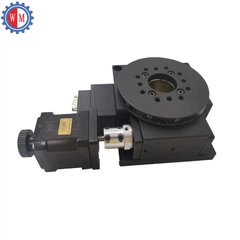
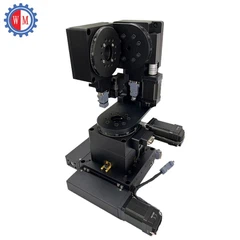
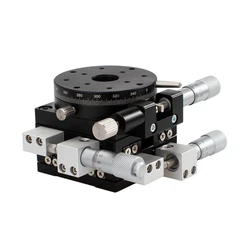
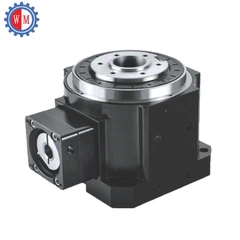


In the realm of industrial automation and mechanical engineering, planetary actuators play a pivotal role in a wide array of applications. These sophisticated devices are known for their high torque transmission, compact design, and efficient power conversion. One crucial aspect that often comes under scrutiny when evaluating planetary actuators is their response time. In this blog post, we'll delve into what response time means for planetary actuators, how it is measured, factors affecting it, and its significance in various applications. As a leading supplier of planetary actuators, we are committed to providing in - depth knowledge to our customers to help them make informed decisions.
Understanding the Concept of Response Time
Response time, in the context of planetary actuators, refers to the time interval between the moment a control signal is applied and the moment the actuator reaches a specified percentage (usually 90% or 95%) of its final output value. It is a measure of how quickly the actuator can react to a change in the input signal and adjust its position, speed, or torque accordingly.
For instance, in a robotic arm application, when a command is sent to the planetary actuator to move the arm to a new position, the response time determines how rapidly the arm will start moving and reach the desired location. A shorter response time implies that the actuator can follow the control signals more accurately and in a timely manner, which is essential for high - speed and precision - demanding applications.
Measuring the Response Time of Planetary Actuators
Measuring the response time of planetary actuators typically involves using specialized test equipment. The basic setup usually consists of a control system that can generate precise input signals, a sensor to measure the output of the actuator (such as a position encoder or a torque sensor), and a data acquisition system to record the time - related data.
The control system sends a step input signal to the actuator, which is a sudden change from one value to another. The sensor continuously monitors the actuator's output, and the data acquisition system records the time when the input signal is applied and the time when the actuator's output reaches the specified percentage of its final value. The difference between these two times is the response time.
Factors Affecting the Response Time of Planetary Actuators
1. Inertia
The inertia of the actuator and the load it is driving has a significant impact on the response time. A higher inertia requires more energy to accelerate or decelerate, which in turn increases the time it takes for the actuator to reach the desired output. For example, if a planetary actuator is driving a large and heavy robotic arm, the response time will be longer compared to when it is driving a lighter load.
2. Motor Characteristics
The type and performance of the motor used in the planetary actuator also play a crucial role. Motors with high torque - to - inertia ratios can provide more rapid acceleration and deceleration, resulting in shorter response times. Brushless DC motors, for example, are often preferred in applications where fast response times are required due to their high efficiency and excellent dynamic performance.
3. Gear Ratio
The gear ratio of the planetary gearbox in the actuator affects the response time. A higher gear ratio can increase the torque output but may also reduce the speed of the actuator. This trade - off needs to be carefully considered when selecting a planetary actuator for an application. In some cases, a lower gear ratio may be chosen to achieve a faster response time, even if it means sacrificing some torque.
4. Control System Design
The design of the control system, including the control algorithm and the quality of the feedback sensors, can have a major impact on the response time. A well - designed control system can compensate for the actuator's dynamic characteristics and optimize the response. For example, a PID (Proportional - Integral - Derivative) controller can be tuned to adjust the actuator's output more precisely and quickly in response to the input signal.
Significance of Response Time in Different Applications
1. Robotics
In robotics, response time is critical for achieving smooth and precise movements. Robots are often required to perform complex tasks at high speeds, such as pick - and - place operations in a manufacturing line. A planetary actuator with a short response time can enable the robot to move quickly and accurately, improving the overall productivity and quality of the manufacturing process.
2. Aerospace
In aerospace applications, such as aircraft flight control systems, the response time of the actuators is of utmost importance. These systems need to respond rapidly to changes in flight conditions to ensure the safety and stability of the aircraft. A delay in the actuator's response could lead to dangerous situations, so high - performance planetary actuators with short response times are essential.
3. Machine Tools
In machine tools, such as CNC (Computer Numerical Control) machines, the response time of the actuators affects the accuracy and surface finish of the machined parts. A fast - responding actuator can follow the tool path more precisely, reducing errors and improving the quality of the final product.
Our Product Offerings and Response Time
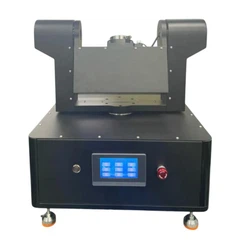
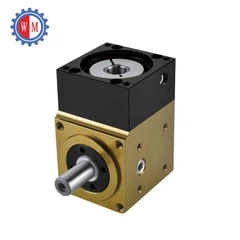
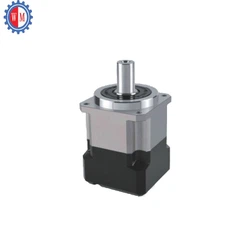
As a leading supplier of planetary actuators, we offer a wide range of products designed to meet the diverse needs of our customers. Our High Torque Spur Gear Speed Reducer is engineered to provide high torque output with a relatively short response time, making it suitable for heavy - load applications. The advanced gear design and high - performance motor ensure efficient power transmission and rapid response to control signals.
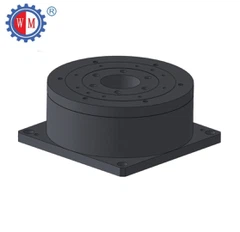
Our Circular Flange Output Rotary Actuator is another product that offers excellent response characteristics. It is designed for applications where precise rotational movement is required, such as in robotic joints. The compact design and optimized control system contribute to a fast response time, enabling smooth and accurate operation.
For applications that demand the highest level of precision, our High Precision Spiral Gear Planetary Reducer is the ideal choice. The spiral gear design reduces backlash and provides a more efficient power transfer, resulting in a shorter response time and better overall performance.
Conclusion
The response time of planetary actuators is a critical parameter that determines their performance in various applications. Understanding the concept of response time, the factors that affect it, and its significance in different industries is essential for selecting the right actuator for a specific application.


As a trusted supplier of planetary actuators, we are dedicated to providing high - quality products with excellent response times. Our team of experts is always ready to assist you in choosing the most suitable actuator for your needs. If you are interested in our products or have any questions about the response time of our planetary actuators, please feel free to contact us for a detailed discussion and procurement negotiation. We look forward to working with you to achieve your industrial automation goals.
References
- Dorf, R. C., & Bishop, R. H. (2017). Modern Control Systems. Pearson.
- Craig, J. J. (2005). Introduction to Robotics: Mechanics and Control. Pearson.
- Pandian, R. (2018). Mechatronics: Principles, Concepts, and Applications. CRC Press.


