

What is the response speed of the control system for motorized 2 axis stages?
In the world of precision engineering, motorized 2 axis stages play a crucial role in a wide range of applications, from semiconductor manufacturing to microscopy and beyond. One of the key performance metrics for these stages is the response speed of their control systems. As a trusted supplier of motorized 2 axis stages, we understand the importance of this parameter and its impact on overall system performance.


Understanding Response Speed
The response speed of a control system for motorized 2 axis stages refers to how quickly the stage can react to a command and reach the desired position. It is typically measured in terms of rise time, settling time, or bandwidth.
Rise time is the time it takes for the stage to go from a specified initial value (usually a small percentage of the final value) to a specified final value (usually a large percentage of the final value) in response to a step input. A shorter rise time indicates a faster response.
Settling time is the time it takes for the stage to reach and stay within a specified tolerance band around the final value after a step input. It accounts for any overshoot or oscillations that may occur during the transition. A shorter settling time means the stage can quickly stabilize at the desired position.
Bandwidth is a measure of the range of frequencies that the control system can effectively handle. A higher bandwidth indicates that the system can respond to faster and more complex input signals.
Factors Affecting Response Speed
Several factors influence the response speed of the control system for motorized 2 axis stages:
Motor Characteristics
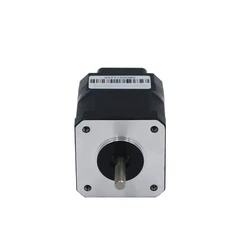
The type and performance of the motor used in the stage have a significant impact on response speed. Stepper motors are commonly used in motorized 2 axis stages due to their simplicity and low cost. However, they have limitations in terms of speed and torque. Servo motors, on the other hand, offer higher speed, better torque, and more precise control, resulting in faster response times.
Mechanical Design
The mechanical design of the stage, including the stiffness of the structure and the quality of the bearings, can affect response speed. A rigid structure with low friction and minimal backlash allows the stage to move more quickly and accurately, reducing the time it takes to reach the desired position.
Control Algorithm
The control algorithm used by the control system is another crucial factor. Advanced control algorithms, such as PID (Proportional-Integral-Derivative) control, can optimize the performance of the motor and reduce the response time. These algorithms continuously monitor the position of the stage and adjust the motor input to minimize errors and improve stability.
Feedback System
A high-quality feedback system, such as an encoder or a laser interferometer, is essential for accurate position control and fast response. The feedback system provides real-time information about the position of the stage, allowing the control system to make adjustments as needed. A more precise feedback system can improve the response speed and overall performance of the stage.
Importance of Response Speed
The response speed of the control system for motorized 2 axis stages is critical in many applications:
High-Speed Manufacturing
In high-speed manufacturing processes, such as pick-and-place operations or laser machining, fast response times are essential to ensure high productivity and precision. A stage with a quick response speed can move rapidly between positions, reducing cycle times and increasing throughput.
Microscopy and Imaging
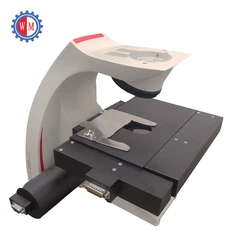
In microscopy and imaging applications, the ability to quickly adjust the position of the sample is crucial for capturing clear and accurate images. A fast response speed allows for rapid scanning and focusing, enabling researchers to observe dynamic processes in real-time.
Robotics and Automation
In robotics and automation systems, motorized 2 axis stages are often used to position tools or sensors. A high response speed ensures that the robot can quickly and accurately perform tasks, improving the efficiency and reliability of the system.
Our Motorized 2 Axis Stages and Their Response Speed
As a leading supplier of motorized 2 axis stages, we offer a range of products designed to meet the diverse needs of our customers. Our stages are equipped with high-performance motors, advanced control algorithms, and precise feedback systems, ensuring fast response times and excellent positioning accuracy.
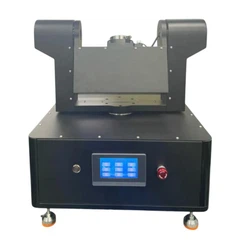
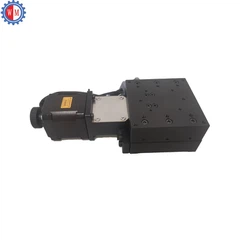
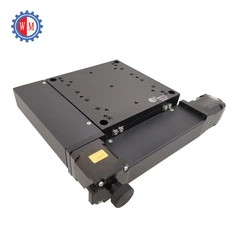
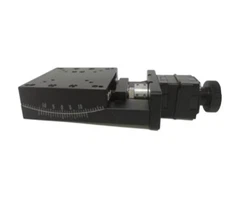
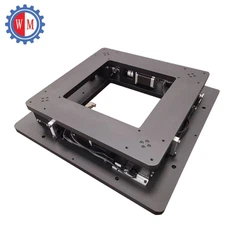
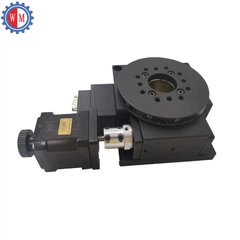
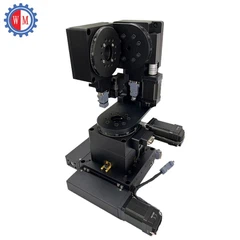
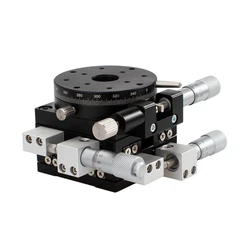
For example, our Motorized XY Tables Built-in Controllers feature built-in controllers that provide seamless control and high-speed operation. These tables are designed for applications that require fast and accurate positioning, such as semiconductor testing and inspection.
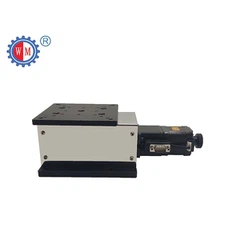
Our Precision Motorized Xy Positioning Translation Stage is another popular product that offers exceptional response speed and positioning accuracy. This stage is ideal for applications in microscopy, biotechnology, and nanotechnology.
In addition, our Motorized Xy Translation Stage is designed for high-speed and high-precision applications. It features a rigid structure, low friction bearings, and a high-performance control system, ensuring fast response times and smooth operation.
Contact Us for Your Motorized 2 Axis Stage Needs
If you are in the market for motorized 2 axis stages with fast response speeds and excellent performance, we invite you to contact us for more information. Our team of experts can help you choose the right stage for your specific application and provide you with a customized solution. We look forward to discussing your requirements and helping you achieve your goals.
References
- "Precision Motion Control: Concepts and Applications" by Peter R. Nachtigall.
- "Motion Control Systems: Design and Implementation" by C. H. Houpis and G. F. Franklin.
- "Servo Motors and Industrial Control Theory" by Julio Gutman.


