

What is the positioning accuracy at different load levels for a motorized vertical stage?
In the world of precision engineering and automation, motorized vertical stages play a crucial role in a wide range of applications, from semiconductor manufacturing to microscopy and beyond. As a supplier of motorized vertical stages, I often receive inquiries about the positioning accuracy of these stages under different load levels. In this blog post, I will delve into this topic, exploring how load levels can impact the positioning accuracy of a motorized vertical stage and what factors need to be considered when selecting a stage for a specific application.
Understanding Positioning Accuracy
Before we dive into the effects of load levels on positioning accuracy, let's first clarify what positioning accuracy means in the context of a motorized vertical stage. Positioning accuracy refers to the ability of the stage to move to a specified position and stay there within a certain tolerance. It is typically expressed in terms of linear displacement, such as micrometers (μm) or nanometers (nm).
A high - precision motorized vertical stage is designed to provide accurate and repeatable positioning, which is essential for applications that require precise movement and alignment. However, achieving high positioning accuracy is not always straightforward, as it can be affected by various factors, including the load placed on the stage.
How Load Levels Affect Positioning Accuracy
The load on a motorized vertical stage can have a significant impact on its positioning accuracy. When a load is applied to the stage, it creates additional forces and stresses on the mechanical components, such as the lead screw, bearings, and motor. These additional forces can cause several issues that affect the stage's performance:
- Deflection: The weight of the load can cause the stage to deflect or bend, especially if the stage has a long travel distance or if the load is unevenly distributed. This deflection can result in a deviation from the desired position, reducing the positioning accuracy.
- Friction: The increased load can also increase the friction between the moving parts of the stage, such as the lead screw and the nut. Higher friction can make it more difficult for the motor to move the stage smoothly and accurately, leading to positioning errors.
- Motor Performance: The motor of the stage needs to overcome the additional forces created by the load. If the load is too heavy for the motor, it may not be able to provide enough torque to move the stage at the desired speed and accuracy. This can result in slower movement, reduced acceleration, and increased positioning errors.
Different Load Scenarios and Their Impact
Let's consider different load levels and how they can affect the positioning accuracy of a motorized vertical stage:
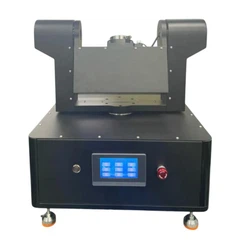
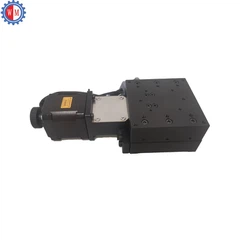
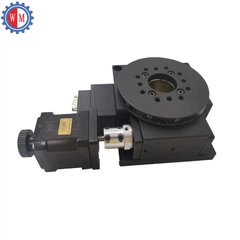
- Light Loads: When the load on the stage is relatively light, the impact on positioning accuracy is usually minimal. The stage can move smoothly and accurately, and the additional forces created by the load are easily overcome by the motor. In this scenario, the positioning accuracy is mainly determined by the inherent precision of the stage's mechanical and electrical components. For applications with light loads, such as small - scale microscopy or optical alignment, a High Precision Motorized Z Axis Stage can provide excellent positioning accuracy.
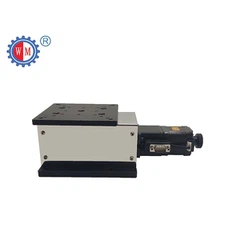
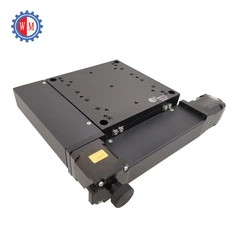
- Medium Loads: As the load increases to a medium level, the stage may start to experience some deflection and increased friction. This can lead to a slight reduction in positioning accuracy. To maintain high accuracy under medium loads, it is important to choose a stage with a robust mechanical design and a powerful motor. A well - designed Short Travel Motorized Vertical Positioning Stage can be a good choice for applications with medium loads, as it typically has a shorter travel distance and can better withstand the additional forces.
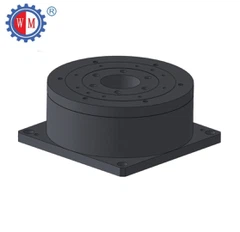
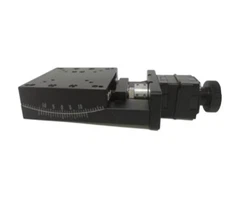
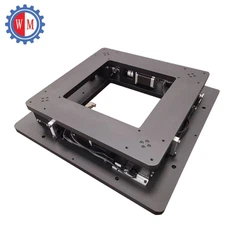
- Heavy Loads: When the load is heavy, the impact on positioning accuracy can be significant. The stage may experience large deflections, high friction, and motor overload. In this case, a specialized Motorized Lift Stage is required. These stages are designed to handle heavy loads and are equipped with powerful motors, reinforced mechanical structures, and advanced control systems to ensure accurate positioning.
Factors to Consider When Selecting a Stage for Different Loads
When choosing a motorized vertical stage for a specific application, it is important to consider the following factors to ensure optimal positioning accuracy at different load levels:


- Load Capacity: The load capacity of the stage should be carefully evaluated based on the weight of the load that will be placed on it. It is recommended to choose a stage with a load capacity that is higher than the expected load to ensure reliable performance.
- Mechanical Design: The mechanical design of the stage, including the type of bearing, lead screw, and frame structure, can have a significant impact on its ability to handle different loads. A rigid and well - engineered design can minimize deflection and ensure smooth movement.
- Motor Power: The power of the motor is crucial for moving the stage accurately under different loads. A more powerful motor can provide enough torque to overcome the additional forces created by the load, ensuring high - speed and accurate movement.
- Control System: An advanced control system can help to compensate for the effects of the load on the stage's performance. Features such as closed - loop control, which uses feedback sensors to adjust the position of the stage in real - time, can improve the positioning accuracy.
Testing and Validation
To ensure the positioning accuracy of a motorized vertical stage at different load levels, it is important to conduct thorough testing and validation. This can involve measuring the actual position of the stage under different loads using precision measuring instruments, such as laser interferometers or linear encoders. By comparing the measured position with the desired position, any positioning errors can be identified and corrected.
Testing should also be performed over a range of load levels to determine the stage's performance characteristics. This can help to identify the maximum load that the stage can handle while still maintaining the required positioning accuracy.
Conclusion
The positioning accuracy of a motorized vertical stage is significantly affected by the load levels. Light loads generally have a minimal impact on accuracy, while medium and heavy loads can cause deflection, increased friction, and motor performance issues. As a supplier of motorized vertical stages, we offer a range of products, including High Precision Motorized Z Axis Stage, Short Travel Motorized Vertical Positioning Stage, and Motorized Lift Stage, to meet the diverse needs of different applications.
If you are in the market for a motorized vertical stage and need to ensure high positioning accuracy at different load levels, we encourage you to contact us for more information. Our team of experts can help you select the right stage for your specific application and provide you with the technical support you need.
References
- "Precision Motion Control: Design and Applications" by Peter C. Hughes
- "Motion Control Systems: An Introduction" by Thomas H. Lee


