

Hey there! As a supplier of Integrated BLDC Motors, I've been getting a lot of questions lately about the control algorithms commonly used for these motors. So, I thought I'd take a few minutes to break it down for you and give you a better understanding of what's going on under the hood.


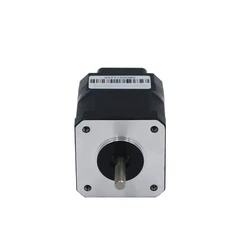
First off, let's talk about what an Integrated BLDC Motor is. An Integrated BLDC (Brushless Direct Current) Motor combines the motor itself with a built - in drive and control system. This integration makes it more compact, efficient, and easier to use compared to traditional setups where the motor and controller are separate components. You can check out more about Integrated Brushless Motor and Brushless Dc Motor with Integrated Drive on our website.
Now, let's dive into the control algorithms. There are several control algorithms commonly used for Integrated BLDC Motors, and each has its own advantages and use - cases.
1. Trapezoidal Control
Trapezoidal control is one of the most basic and widely used control algorithms for BLDC motors. It's relatively simple to implement, which makes it a popular choice for many applications.
The way it works is by applying a trapezoidal - shaped voltage waveform to the motor windings. This creates a magnetic field that interacts with the permanent magnets in the rotor, causing it to rotate. The commutation, or the switching of the voltage applied to the windings, is typically done based on the position of the rotor. Hall sensors are often used to detect the rotor position. When the rotor reaches a certain position, the controller switches the voltage to the appropriate windings to keep the motor rotating.
One of the big advantages of trapezoidal control is its simplicity. It doesn't require a lot of complex calculations, so it can be implemented with relatively low - cost microcontrollers. It also provides good torque at low speeds, which is great for applications like fans, pumps, and small robotics.
However, trapezoidal control does have some limitations. The torque ripple can be relatively high, which means the motor may not run as smoothly as some other control methods. Also, it may not be as efficient at high speeds compared to other algorithms.
2. Sinusoidal Control
Sinusoidal control is a more advanced control algorithm that aims to provide a smoother and more efficient operation of the BLDC motor. Instead of applying a trapezoidal voltage waveform, it applies a sinusoidal voltage waveform to the motor windings.
This creates a more uniform magnetic field, which results in less torque ripple and a smoother rotation of the motor. To implement sinusoidal control, the controller needs to have a more accurate knowledge of the rotor position. This can be achieved using more advanced position sensors, such as encoders or resolvers.
The advantage of sinusoidal control is its smooth operation. It's great for applications where noise and vibration need to be minimized, like in high - end robotics, medical equipment, and precision industrial machinery. It also tends to be more efficient at high speeds, which can lead to energy savings over time.
But, the downside is that it's more complex to implement than trapezoidal control. It requires more powerful microcontrollers and more sophisticated algorithms, which can increase the cost of the motor control system.
3. Field - Oriented Control (FOC)
Field - Oriented Control, also known as vector control, is another popular control algorithm for BLDC motors. It's a very powerful method that allows for precise control of the motor's torque and speed.
The basic idea behind FOC is to separate the stator current into two components: the torque - producing component (Iq) and the flux - producing component (Id). By independently controlling these two components, the controller can optimize the motor's performance.
To implement FOC, the controller needs to know the exact position and speed of the rotor. This usually requires the use of high - precision encoders or resolvers. The controller then uses complex mathematical transformations, such as the Park and Clarke transforms, to convert the three - phase stator currents into the d - q coordinate system, where the Iq and Id components can be easily controlled.
FOC offers several benefits. It provides excellent torque control, even at low speeds, and can achieve very high dynamic performance. It's also very efficient, as it can minimize the losses in the motor. This makes it suitable for a wide range of applications, from electric vehicles to high - performance industrial drives.
However, like sinusoidal control, FOC is quite complex to implement. It requires a high - performance microcontroller and a lot of computational power. This can make it more expensive than some of the other control algorithms.
4. Sensorless Control
Sensorless control is an interesting approach that eliminates the need for external position sensors, such as Hall sensors, encoders, or resolvers. Instead, it estimates the rotor position and speed based on the electrical signals of the motor, such as the back - EMF (electromotive force).
The advantage of sensorless control is that it reduces the cost and complexity of the motor control system. There are no position sensors to install and maintain, which can also make the motor more reliable. It's a popular choice for applications where cost is a major concern, like in consumer electronics and some low - end industrial applications.
However, sensorless control has its challenges. Estimating the rotor position accurately can be difficult, especially at low speeds or during startup. The performance may not be as good as when using position sensors, and it may require more complex algorithms to compensate for the lack of direct position information.
Choosing the Right Control Algorithm
So, how do you choose the right control algorithm for your Integrated BLDC Motor? Well, it depends on several factors.
- Application Requirements: If you need a simple and low - cost solution for a basic application like a fan or a small pump, trapezoidal control may be the way to go. If you need a smooth and quiet operation for a high - end application, sinusoidal control or FOC might be more suitable.
- Cost: If cost is a major concern, sensorless control or trapezoidal control could be better options. If you can afford to invest in a more complex and high - performance system, sinusoidal control or FOC may be worth considering.
- Performance Requirements: For applications that require high torque control and dynamic performance, like in electric vehicles or high - precision industrial machinery, FOC is often the best choice.
As a supplier of Integrated BLDC Motors, we have experience with all these control algorithms and can help you choose the right one for your specific application. We understand that every project is unique, and we're here to work with you to find the best solution.
If you're in the market for an Integrated BLDC Motor and want to learn more about which control algorithm would be best for your needs, or if you have any other questions about our products, don't hesitate to reach out. We're always happy to have a chat and discuss your requirements. Whether you're a small startup or a large industrial company, we can provide you with the right motor and control solution.
Let's have a conversation about how we can work together to make your project a success. Whether it's choosing the right control algorithm, customizing the motor to fit your specific needs, or just getting some technical advice, we're here to help.
References
- Krishnan, R. (2001). Electric Motor Drives: Modeling, Analysis, and Control. Prentice Hall.
- Boldea, I., & Nasar, S. A. (1999). Electric Drives: An Introduction. CRC Press.


