

In the realm of precision positioning and motion control, Z - Axis stages play a crucial role. They are essential for applications that require accurate vertical movement, such as microscopy, semiconductor manufacturing, and optical alignment. When it comes to Z - Axis stages, there are two primary types: manual and motorized. As a supplier of Manual Z - Axis Stages, I'd like to delve into the differences between these two types to help you make an informed decision for your specific needs.
1. Operation Mechanism
The most fundamental difference between manual and motorized Z - Axis stages lies in their operation mechanisms.
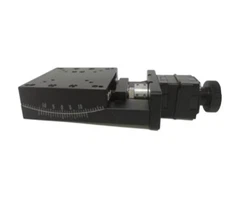
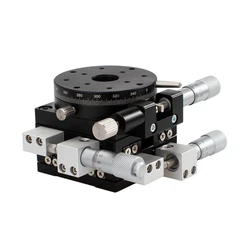
Manual Z - Axis stages are operated by hand. They typically feature a micrometer or a handwheel. By turning the handwheel or adjusting the micrometer, the user can precisely control the vertical movement of the stage. This hands - on approach allows for immediate tactile feedback. For example, when performing a delicate alignment in a microscopy setup, the user can feel the resistance and the smoothness of the movement. This tactile sense can be invaluable in ensuring that the stage is moving exactly as desired, especially in applications where fine adjustments are required.
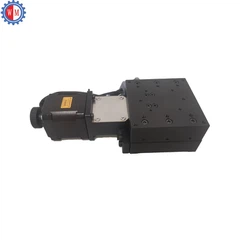
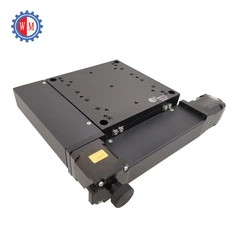
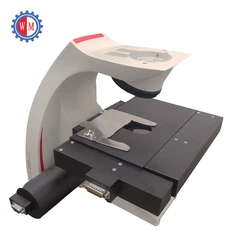
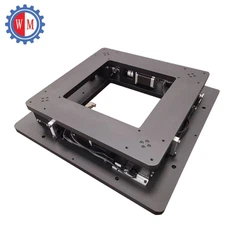
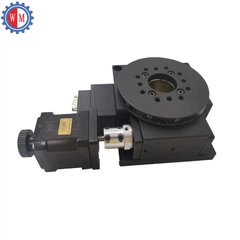
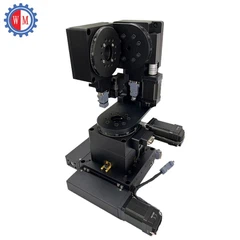
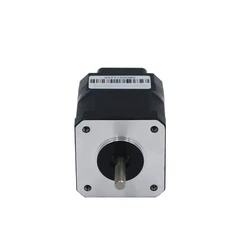
On the other hand, motorized Z - Axis stages are driven by motors, such as stepper motors or servo motors. These motors are controlled by a controller, which can be a simple handheld device or a more complex computer - based system. The user can input the desired position or movement parameters into the controller, and the motor will drive the stage to the specified location. This automation offers the advantage of repeatability. Once a particular movement sequence is programmed, the motorized stage can perform the same movement with high precision multiple times, which is ideal for mass production or experiments that require consistent results.
2. Precision and Accuracy
Both manual and motorized Z - Axis stages can offer high levels of precision, but they achieve it in different ways.
Manual Z - Axis stages can provide excellent precision when operated by a skilled user. The micrometer or handwheel on a manual stage can have a very fine pitch, allowing for small incremental movements. For instance, some high - quality manual stages can achieve a resolution of a few micrometers. However, the accuracy of a manual stage is highly dependent on the user's skill and consistency. Human error can introduce small variations in the movement, especially when making repeated adjustments.
Motorized Z - Axis stages, on the other hand, can offer extremely high precision and accuracy. The motors are designed to move the stage with a high degree of repeatability. Stepper motors, for example, can move in discrete steps, and the controller can precisely control the number of steps to achieve the desired movement. Servo motors, which are often used in more advanced applications, can provide even higher levels of accuracy by continuously adjusting the position based on feedback from sensors. In addition, motorized stages can be calibrated to correct for any systematic errors, ensuring that the actual movement closely matches the programmed movement.
3. Speed of Movement
The speed of movement is another significant difference between manual and motorized Z - Axis stages.
Manual Z - Axis stages are generally slower in terms of movement speed. Since the movement is controlled by hand, the user can only turn the handwheel or adjust the micrometer at a certain rate. This is suitable for applications where slow and controlled movement is required, such as in some types of microscopy where sudden movements can disrupt the sample or the optical alignment. However, for applications that require quick repositioning, the slow speed of manual stages can be a limitation.
Motorized Z - Axis stages can move much faster. The motors can be programmed to drive the stage at a high speed, allowing for rapid repositioning. This is particularly useful in applications such as semiconductor manufacturing, where the stage needs to move quickly between different processing steps. However, it's important to note that the maximum speed of a motorized stage may be limited by factors such as the power of the motor, the load on the stage, and the stability requirements of the application.
4. Cost
Cost is an important consideration when choosing between manual and motorized Z - Axis stages.
Manual Z - Axis stages are generally more cost - effective. They have a simpler design and do not require the additional components such as motors, controllers, and sensors that are found in motorized stages. This makes them a more affordable option, especially for small - scale applications or projects with a limited budget. For example, a basic manual Z - Axis stage can cost a few hundred dollars, while a comparable motorized stage may cost several thousand dollars.


Motorized Z - Axis stages, on the other hand, are more expensive. The cost of the motors, controllers, and sensors, as well as the additional engineering required to integrate these components, adds to the overall price. However, in applications where the benefits of automation, such as high precision, repeatability, and speed, are essential, the higher cost may be justified.
5. Ease of Use and Flexibility
Manual Z - Axis stages are relatively easy to use. They do not require any special training or programming knowledge. The user simply needs to turn the handwheel or adjust the micrometer to move the stage. This makes them suitable for users who are new to precision positioning or for applications where the movement requirements are relatively simple. In addition, manual stages offer a high degree of flexibility. The user can make immediate adjustments based on the real - time requirements of the application, without having to go through the process of programming a motorized stage.
Motorized Z - Axis stages, while more complex to set up and operate, offer greater flexibility in terms of programming and automation. They can be programmed to perform complex movement sequences, such as multi - step movements, continuous scanning, or synchronized movement with other stages. This is particularly useful in applications where the movement requirements are complex and need to be precisely controlled. However, this flexibility comes at the cost of a steeper learning curve, as the user needs to learn how to use the controller and program the stage.
Why Choose Our Manual Z - Axis Stages
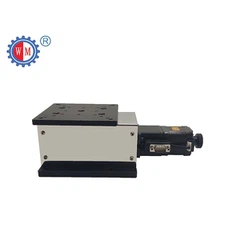
As a supplier of Manual Z - Axis Stages, we offer a range of high - quality products that are designed to meet the diverse needs of our customers. Our Manual Vertical Stage is a prime example of our commitment to quality and precision.
Our manual stages are constructed using high - grade materials, ensuring durability and long - term performance. The micrometers and handwheels on our stages are carefully calibrated to provide smooth and precise movement. We also offer a variety of options in terms of travel range, load capacity, and resolution, allowing you to choose the stage that best suits your specific application.
In addition, our manual stages are easy to install and use. Whether you are a novice user or an experienced professional, you can quickly get up and running with our products. And with our competitive pricing, you can get high - quality precision positioning at an affordable cost.
Contact Us for Purchase and Negotiation
If you are interested in our Manual Z - Axis Stages or have any questions about the differences between manual and motorized Z - Axis stages, we encourage you to contact us. Our team of experts is ready to assist you in choosing the right stage for your application and to discuss the details of your purchase. We believe that our products can offer you a cost - effective and reliable solution for your precision positioning needs.
References
- "Precision Motion Control Handbook" by Peter H. Mellor
- "Motion Control Technology: An Introduction" by Brian H. Kueck


