
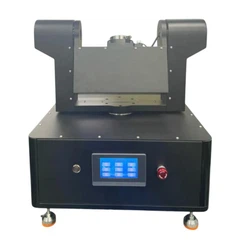
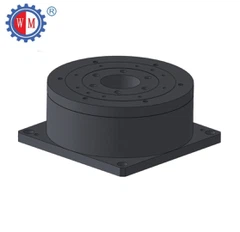
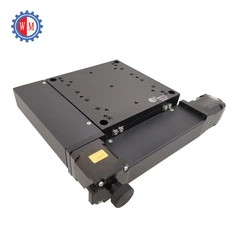
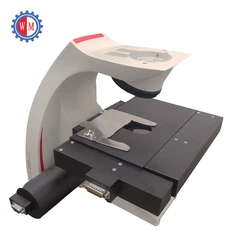
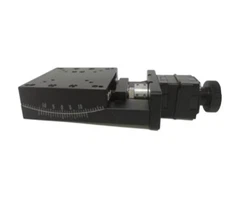
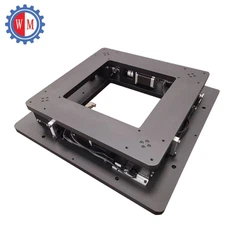
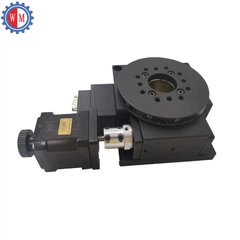
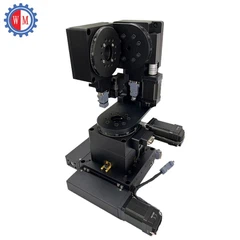
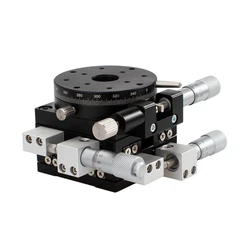
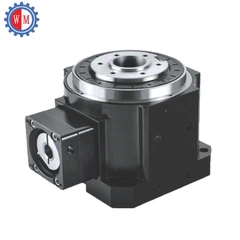


Is it difficult to operate a manual rotary stage? This is a question that often pops up among those in the precision engineering, research, and manufacturing industries. As a supplier of Manual Rotary Stages, I've had the privilege of interacting with numerous customers, hearing their experiences, and understanding their concerns. In this blog, I'll delve into the intricacies of operating a manual rotary stage, sharing insights from both a technical and practical perspective.
Understanding the Basics of a Manual Rotary Stage
Before we discuss the difficulty of operation, it's essential to understand what a manual rotary stage is. A manual rotary stage is a mechanical device that allows for precise angular rotation of an object around a central axis. It typically consists of a base, a rotating platform, and a mechanism for adjusting the rotation angle. These stages are widely used in applications such as microscopy, optical alignment, and small - scale manufacturing where accurate angular positioning is required.
The design of a manual rotary stage can vary significantly depending on its intended use. Some stages are simple, with a basic hand - wheel mechanism for rotation, while others are more complex, featuring fine - adjustment knobs, locking mechanisms, and high - precision bearings. The Manual Rotating Stage we offer at our company is designed to meet a wide range of requirements, from basic laboratory setups to more advanced industrial applications.
Factors Affecting the Difficulty of Operation
1. Design Complexity
The complexity of the manual rotary stage's design is one of the primary factors that determine how difficult it is to operate. Stages with a simple design, such as those with a single hand - wheel for rotation, are generally easier to operate. They require minimal training, and users can quickly get the hang of adjusting the rotation angle.
On the other hand, more complex stages with multiple adjustment mechanisms, such as fine - adjustment knobs for precise positioning and locking devices to secure the position, may take a bit more time to master. However, these additional features often provide greater accuracy and stability, which are crucial in many applications.
2. Precision Requirements
The level of precision required in a particular application also affects the difficulty of operating a manual rotary stage. In applications where high precision is needed, such as in micro - machining or optical component alignment, operators need to be more careful and precise when adjusting the rotation angle. This may involve using the fine - adjustment mechanisms and taking multiple readings to ensure that the desired angle is achieved.
For less precise applications, such as general positioning in a laboratory setup, the operation is usually less challenging. Operators can make rough adjustments using the main hand - wheel and still achieve satisfactory results.
3. User Experience
A user's prior experience with mechanical devices and precision instruments plays a significant role in how difficult they find operating a manual rotary stage. Someone who has worked with similar equipment before will likely find it easier to understand the operation of the stage and make the necessary adjustments.
In contrast, a novice user may initially struggle with the basic concepts of angular adjustment and the use of the various adjustment mechanisms. However, with proper training and practice, even novice users can become proficient in operating a manual rotary stage.
The Learning Curve
The learning curve for operating a manual rotary stage is generally not very steep. For most users, it takes only a few hours of hands - on practice to become familiar with the basic operation of the stage. During this initial learning phase, users typically learn how to rotate the platform, make coarse and fine adjustments, and use the locking mechanism if available.
As users gain more experience, they can start to explore the advanced features of the stage, such as using the fine - adjustment knobs to achieve higher levels of precision. With continued use, users can develop a sense of how much force to apply to the adjustment mechanisms to achieve the desired movement, which further improves their operating efficiency.
Practical Tips for Easy Operation
1. Read the Manual
Before using a manual rotary stage, it's essential to read the user manual carefully. The manual provides detailed information about the stage's features, operation procedures, and maintenance requirements. By familiarizing yourself with the manual, you can avoid common mistakes and ensure that you are using the stage correctly.
2. Start with Coarse Adjustments
When making adjustments to the rotation angle, it's a good idea to start with coarse adjustments using the main hand - wheel. This allows you to quickly get the platform close to the desired position. Once you are in the general vicinity, you can then use the fine - adjustment knobs to make more precise adjustments.
3. Use Locking Mechanisms Properly
If your manual rotary stage is equipped with a locking mechanism, make sure to use it properly. Locking the stage after making the necessary adjustments helps to prevent any unwanted movement, ensuring that the platform remains in the desired position.
4. Practice Regularly
Like any skill, operating a manual rotary stage improves with practice. Try to use the stage as often as possible to gain more experience and become more comfortable with its operation. You can also practice making precise adjustments on a test object to improve your skills.
Our Manual Rotary Stages: A User - Friendly Solution
At our company, we understand the importance of providing user - friendly manual rotary stages. Our Manual Rotating Stage is designed with simplicity and ease of use in mind. We offer a range of stages with different levels of complexity to meet the diverse needs of our customers.


Our basic models feature a straightforward hand - wheel mechanism for easy rotation, making them ideal for novice users or applications where high precision is not required. For more demanding applications, our advanced models come with fine - adjustment knobs and locking mechanisms, providing greater accuracy and stability.
We also provide comprehensive training and support to our customers. Our team of experts is always available to answer any questions and provide guidance on the operation and maintenance of our manual rotary stages.
Conclusion
In conclusion, operating a manual rotary stage is not overly difficult. While the complexity of the stage's design, precision requirements, and user experience can influence the level of difficulty, with proper training and practice, most users can become proficient in operating these devices.
Our company is committed to providing high - quality manual rotary stages that are easy to operate and meet the needs of a wide range of applications. If you are in the market for a manual rotary stage, we encourage you to explore our product range. We are confident that you will find a stage that suits your requirements.
If you have any questions or would like to discuss your specific needs, please feel free to contact us. Our team is ready to assist you in finding the perfect manual rotary stage for your application and guide you through the procurement process.
References
- "Precision Mechanics and Instrument Design" by R. A. Rothbart
- "Mechanical Design Handbook" edited by Myer Kutz


