

Synchronizing multiple integrated stepper motors is a crucial task in many industrial and automation applications. As a supplier of integrated stepper motors, I understand the challenges and requirements that come with achieving precise synchronization. In this blog post, I will share some insights and strategies on how to synchronize multiple integrated stepper motors effectively.
Understanding the Basics of Integrated Stepper Motors
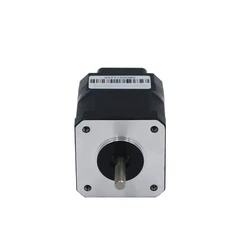
Before diving into the synchronization techniques, it's essential to have a basic understanding of integrated stepper motors. These motors combine a stepper motor, a driver, and often a controller into a single unit. This integration simplifies the installation process and reduces the overall system complexity. Integrated stepper motors are widely used in applications such as robotics, 3D printing, CNC machines, and automated manufacturing lines.
Importance of Synchronization
In applications where multiple stepper motors are used, synchronization is necessary to ensure coordinated movement and accurate positioning. For example, in a multi - axis robotic arm, all the motors need to move in harmony to perform complex tasks. Without proper synchronization, the robotic arm may experience jerky movements, inaccurate positioning, and even mechanical failures.
Methods for Synchronizing Multiple Integrated Stepper Motors
1. Using a Common Controller
One of the most straightforward methods is to use a common controller to drive all the integrated stepper motors. The controller sends synchronized control signals to each motor, ensuring that they move at the same time and with the same step rate. This method is relatively simple and cost - effective, especially for small - scale applications.
The advantage of using a common controller is that it provides a centralized control mechanism. You can easily adjust the speed, direction, and step size of all the motors simultaneously. However, the controller's capacity may limit the number of motors that can be synchronized. If you need to control a large number of motors, you may need to use a more powerful controller or a distributed control system.
2. Master - Slave Configuration
In a master - slave configuration, one motor is designated as the master, and the other motors act as slaves. The master motor sets the pace, and the slave motors follow its movements. The master motor sends synchronization signals to the slave motors, which adjust their movements accordingly.
This configuration is useful when you need to synchronize motors with different characteristics or when you want to have a hierarchical control structure. For example, in a conveyor system, the master motor can control the overall speed of the conveyor, while the slave motors can control the movement of individual sections.
3. Communication Protocols
Using communication protocols is another effective way to synchronize multiple integrated stepper motors. There are several communication protocols available, such as CAN bus and Modbus RS485.
- CAN Bus Control Integrated Stepper Motor: The CAN (Controller Area Network) bus is a serial communication protocol that allows multiple devices to communicate with each other on a single network. CAN Bus Control Integrated Stepper Motor can be connected to a CAN bus network, and the controller can send synchronization commands to all the motors simultaneously. The CAN bus is known for its high - speed communication, reliability, and ability to handle a large number of nodes.
- Modbus RS485 Integrated Motor: Modbus RS485 is a widely used communication protocol in industrial automation. Modbus RS485 Integrated Motor can be configured to communicate with each other using the Modbus protocol. The master device can send commands to the slave motors, and the slave motors can respond with their status information. This protocol is relatively simple to implement and is compatible with many industrial controllers and devices.
4. Closed - Loop Control
Closed - loop control can also be used to improve the synchronization of multiple integrated stepper motors. In a closed - loop system, feedback sensors such as encoders are used to monitor the actual position and speed of the motors. The controller compares the actual values with the desired values and adjusts the control signals accordingly.
Closed Loop Stepper Integrated Motor provides more accurate control and can compensate for errors caused by load variations, mechanical backlash, and other factors. By using closed - loop control, you can ensure that all the motors move in a more precise and synchronized manner.


Considerations for Synchronization
1. Motor Characteristics
When synchronizing multiple integrated stepper motors, it's important to consider the motor characteristics such as torque, speed, and step resolution. Motors with different characteristics may require different control parameters to achieve synchronization. For example, if one motor has a higher torque rating than the others, it may need a different acceleration and deceleration profile to move in sync with the other motors.
2. Load Balancing
Uneven loads on the motors can also affect synchronization. You need to ensure that the loads on all the motors are balanced as much as possible. If one motor has a heavier load than the others, it may slow down or stall, causing synchronization issues. You can use mechanical components such as gears, belts, or pulleys to distribute the load evenly among the motors.
3. Electrical Wiring
Proper electrical wiring is crucial for reliable synchronization. You need to ensure that the power supply and control signals are properly connected to all the motors. Poor wiring can cause signal interference, voltage drops, and other issues that can affect the performance of the motors. Use high - quality cables and follow the wiring guidelines provided by the motor manufacturer.
Conclusion
Synchronizing multiple integrated stepper motors is a complex but achievable task. By understanding the basic principles, choosing the right synchronization method, and considering the motor characteristics and other factors, you can ensure that your motors work together in a coordinated and efficient manner.
As a supplier of integrated stepper motors, we offer a wide range of products with different features and communication options. Whether you need a simple common - controller solution or a more advanced closed - loop control system, we can provide you with the right motors and support. If you are interested in purchasing integrated stepper motors or have any questions about synchronization, please feel free to contact us for further discussion and procurement negotiation.
References
- "Stepper Motor Control Handbook", published by a leading motor manufacturer.
- "Industrial Automation Communication Protocols", a technical guide on communication protocols used in industrial applications.
- Various research papers on multi - motor synchronization in academic journals.


