
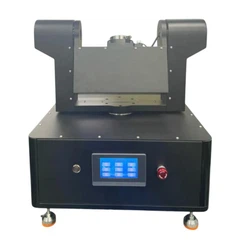
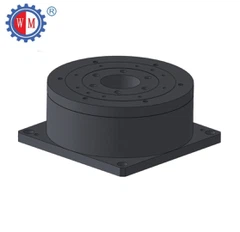
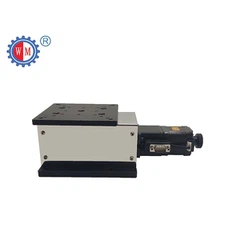
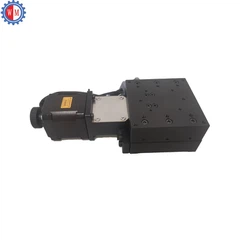
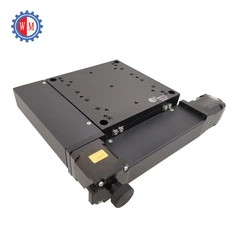
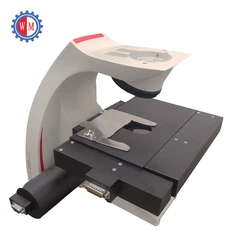
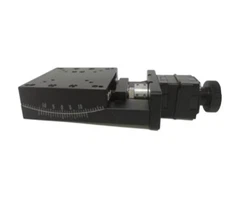
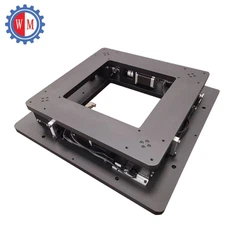
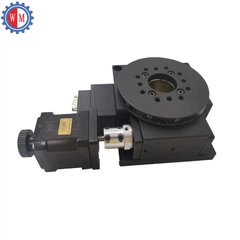
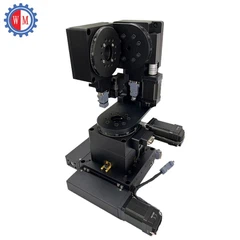
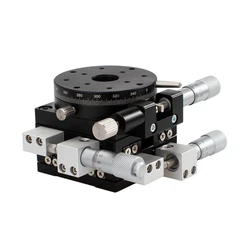
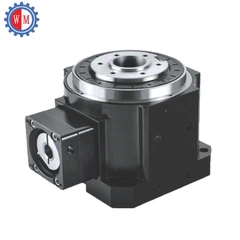


Hey there! As a supplier of Manual Rotary Stages, I've seen firsthand how crucial it is to select the right bearing for these nifty devices. A manual rotary stage is a handy tool used in various applications, from precision machining to optical alignment. And the bearing you choose can make or break its performance. So, let's dive into how you can pick the appropriate bearing for a manual rotary stage.
Understanding the Basics of Bearings in Manual Rotary Stages
First off, let's talk about what bearings do in a manual rotary stage. Simply put, bearings support the rotating parts of the stage and reduce friction, allowing for smooth and precise rotation. There are different types of bearings, each with its own set of characteristics, and choosing the right one depends on several factors.
Types of Bearings for Manual Rotary Stages
Ball Bearings
Ball bearings are one of the most common types used in manual rotary stages. They consist of small metal balls held in place by a cage. These balls roll between two races, reducing friction and enabling smooth rotation. Ball bearings are great for applications that require high-speed rotation and low friction. They're also relatively inexpensive and easy to find.
One of the key advantages of ball bearings is their ability to handle both radial and axial loads. Radial loads act perpendicular to the axis of rotation, while axial loads act parallel to it. Ball bearings can handle a combination of these loads, making them versatile for different types of manual rotary stage applications.
Roller Bearings
Roller bearings, as the name suggests, use cylindrical or tapered rollers instead of balls. They can handle heavier loads than ball bearings, making them a good choice for applications that require high load capacity. Roller bearings are often used in industrial settings where the manual rotary stage needs to support large or heavy objects.
However, roller bearings typically have higher friction than ball bearings, which can affect the smoothness of rotation. They're also more expensive and may require more maintenance.
Thrust Bearings
Thrust bearings are designed to handle axial loads specifically. They're used when the main load on the manual rotary stage is parallel to the axis of rotation. Thrust bearings are commonly found in applications where the stage needs to support a heavy load in one direction, such as in a vertical rotary stage.
Factors to Consider When Selecting a Bearing
Load Capacity
The load capacity of the bearing is one of the most important factors to consider. You need to know how much weight the manual rotary stage will be supporting and in what direction. If the load is primarily radial, a ball or roller bearing may be suitable. If it's mainly axial, a thrust bearing might be the way to go.
For example, if you're using the manual rotary stage to hold a small optical component, a ball bearing with a relatively low load capacity may be sufficient. But if you're using it to support a large machining tool, you'll need a bearing with a high load capacity, like a roller bearing.
Speed Requirements
The speed at which the manual rotary stage will rotate is another crucial factor. Ball bearings are generally better for high-speed applications because they have lower friction. Roller bearings, on the other hand, are better suited for lower-speed applications due to their higher friction.
If you need the manual rotary stage to rotate quickly and smoothly, a ball bearing is likely the better choice. But if the rotation speed is relatively slow and the load is heavy, a roller bearing may be more appropriate.
Precision and Accuracy
In many applications, precision and accuracy are of the utmost importance. The bearing you choose can significantly affect the precision of the manual rotary stage. Ball bearings are known for their high precision and can provide smooth, accurate rotation. Roller bearings can also offer good precision, but they may require more careful alignment.
If your application requires extremely precise positioning, such as in a microscopy setup, you'll want to choose a high-quality ball bearing with tight tolerances.
Environmental Conditions
The environment in which the manual rotary stage will operate can also impact the bearing selection. If the stage will be used in a dirty or dusty environment, you'll need a bearing that's resistant to contamination. Sealed bearings are a good option in these cases, as they can prevent dirt and debris from entering and damaging the bearing.
If the stage will be exposed to high temperatures or corrosive chemicals, you'll need to choose a bearing made from materials that can withstand these conditions. For example, stainless steel bearings are corrosion-resistant and can be used in harsh environments.
Our Manual Rotating Stage Offerings
At our company, we offer a wide range of Manual Rotating Stage options, each designed to meet different needs and requirements. We understand that choosing the right bearing is crucial for the performance of the manual rotary stage, and we're here to help you make the best decision.
Our manual rotating stages come with high-quality bearings that are carefully selected based on the application. Whether you need a ball bearing for high-speed rotation, a roller bearing for heavy loads, or a thrust bearing for axial loads, we have the right solution for you.
Making the Right Choice
Selecting the appropriate bearing for a manual rotary stage is a process that requires careful consideration of several factors. By understanding the different types of bearings, their characteristics, and the specific requirements of your application, you can make an informed decision.


If you're still unsure which bearing is right for your manual rotary stage, don't hesitate to reach out to us. Our team of experts is always ready to assist you in choosing the best bearing and manual rotary stage for your needs. We can provide you with detailed information, technical support, and even help you with the installation and maintenance of your manual rotary stage.
Contact Us for Procurement
If you're interested in purchasing a manual rotary stage or have any questions about bearing selection, we'd love to hear from you. Contact us today to start the procurement process and get the best manual rotary stage for your application.
References
- "Bearing Handbook" - A comprehensive guide to different types of bearings and their applications.
- Industry standards and guidelines for manual rotary stage design and bearing selection.


