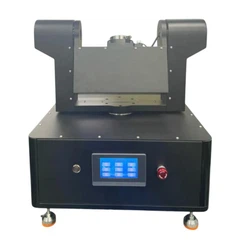
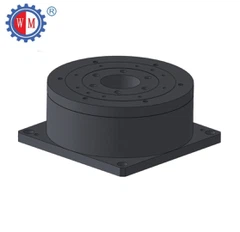
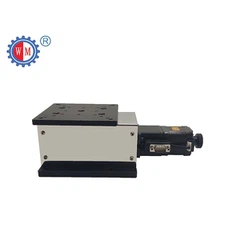
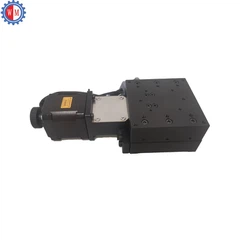
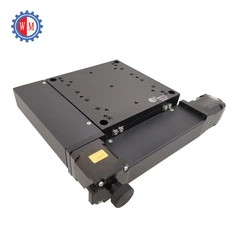
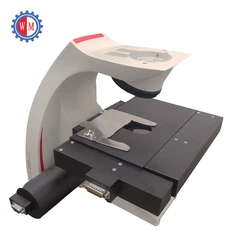
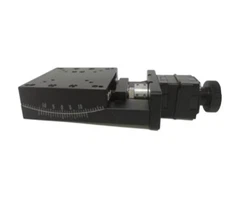
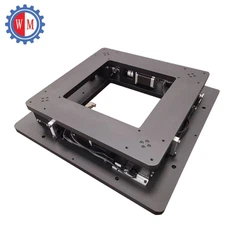
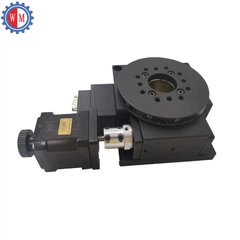
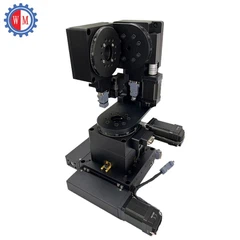
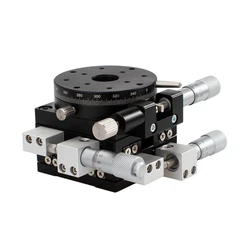


In the realm of precision engineering, manual rotary stages play a crucial role in a wide range of applications, from microscopy and photonics to semiconductor manufacturing and quality control. As a supplier of Manual Rotary Stages, I've witnessed firsthand the importance of optimizing their design to meet the ever - evolving demands of our customers. In this blog, I'll share some key strategies on how to optimize the design of a manual rotary stage.
Understanding the Requirements
Before diving into the design optimization process, it's essential to have a clear understanding of the specific requirements of the application. Different industries and tasks may have unique needs in terms of rotation range, angular resolution, load capacity, and repeatability. For example, in a microscopy application, high angular resolution and smooth rotation are often required to precisely position specimens for observation. On the other hand, in a semiconductor manufacturing environment, the stage may need to handle heavy loads and maintain high repeatability over long - term use.
We can conduct in - depth consultations with our customers to gather detailed information about their applications. This helps us tailor the design of the manual rotary stage to their exact needs. By understanding the working conditions, such as temperature, vibration, and the presence of contaminants, we can also make appropriate material and structural choices to ensure the stage's performance and reliability.
Material Selection
The choice of materials significantly impacts the performance and durability of a manual rotary stage. For the main body of the stage, aluminum alloys are often a popular choice due to their lightweight, good machinability, and corrosion resistance. They can be easily fabricated into complex shapes, which is beneficial for optimizing the internal structure of the stage.
For the rotating components, such as the bearing and the shaft, high - quality steel or ceramic materials are preferred. Steel bearings offer high load - carrying capacity and good wear resistance. Ceramic bearings, on the other hand, have advantages in terms of lower friction, higher stiffness, and better resistance to corrosion and high - temperature environments. These properties can improve the rotational smoothness and accuracy of the stage.
The surface treatment of the materials is also crucial. For example, anodizing the aluminum body can enhance its hardness and corrosion resistance, while a proper coating on the steel components can reduce friction and prevent rusting.
Structural Design
The structural design of a manual rotary stage is a key factor in determining its performance. One of the primary considerations is the bearing arrangement. A well - designed bearing system can ensure smooth and stable rotation. For example, a double - bearing design can provide better support for the rotating shaft, reducing the risk of deflection and improving the load - carrying capacity.


The gear mechanism, if present, also needs to be carefully designed. The gear ratio should be optimized to achieve the desired angular resolution. A high - precision gear can minimize backlash, which is the amount of free movement between the gear teeth. Backlash can cause inaccuracies in positioning, especially when the direction of rotation is reversed.
Another important aspect of the structural design is the housing of the stage. The housing should be rigid enough to protect the internal components from external impacts and vibrations. At the same time, it should be designed in a way that allows for easy access to the internal parts for maintenance and adjustment.
Precision Machining
Precision machining is essential for achieving the high accuracy and performance required in a manual rotary stage. Advanced machining techniques, such as CNC (Computer Numerical Control) machining, can ensure tight tolerances in the manufacturing process. For example, the diameter and roundness of the rotating shaft need to be precisely controlled to ensure smooth rotation and accurate positioning.
The surface finish of the machined parts also matters. A smooth surface finish can reduce friction between the moving components, improving the overall efficiency and lifespan of the stage. Additionally, precision machining can ensure that the different parts of the stage fit together perfectly, minimizing any gaps or misalignments that could affect the performance.
Ergonomic Design
In addition to the technical aspects, the ergonomic design of a manual rotary stage is also important. Since the stage is operated manually, it should be easy to use and comfortable for the operator. The handwheel, for example, should have a proper size and grip surface to allow for easy rotation. The markings on the stage should be clear and easy to read, enabling the operator to accurately position the stage.
The overall layout of the stage should also be user - friendly. Controls and adjustment mechanisms should be within easy reach of the operator, and the stage should be stable and secure when placed on a workbench.
Testing and Validation
Once the design of the manual rotary stage is optimized, it's crucial to conduct thorough testing and validation. We can use a variety of testing equipment, such as angular encoders, to measure the angular resolution, repeatability, and accuracy of the stage. Load - testing can also be performed to ensure that the stage can handle the specified load without significant deformation or loss of performance.
We can also simulate real - world working conditions during the testing process. For example, subjecting the stage to temperature variations, vibrations, and humidity changes can help us identify any potential issues and make further improvements to the design.
Cost - Benefit Analysis
While optimizing the design of a manual rotary stage, we also need to consider the cost - benefit ratio. Using high - end materials and advanced manufacturing processes can undoubtedly improve the performance of the stage, but it may also increase the cost. We need to strike a balance between performance and cost to provide our customers with a product that meets their requirements at a reasonable price.
We can explore different design options and material combinations to find the most cost - effective solution. For example, instead of using all - ceramic bearings, we can consider a hybrid design that combines ceramic and steel components to achieve a good balance between performance and cost.
Conclusion
Optimizing the design of a manual rotary stage is a multi - faceted process that involves understanding the application requirements, selecting the right materials, designing a robust structure, using precision machining techniques, considering ergonomics, and conducting thorough testing. By following these strategies, we can develop high - quality manual rotary stages that meet the diverse needs of our customers.
If you're interested in our Manual Rotating Stage products or have any specific requirements for your application, please feel free to contact us for further discussion and procurement negotiation. We're committed to providing you with the best solutions in the field of manual rotary stages.
References
- Smith, J. (2018). Precision Engineering Handbook. New York: Wiley.
- Jones, A. (2020). Materials for High - Performance Mechanical Components. London: Elsevier.
- Brown, C. (2019). Design and Testing of Rotational Mechanisms. Chicago: Springer.


