

Can manual multi - axis stages be used in high - precision applications?
In the realm of precision engineering and scientific research, the question of whether manual multi - axis stages can be employed in high - precision applications is a topic of significant interest. As a supplier of manual multi - axis stages, I have witnessed firsthand the diverse uses and capabilities of these devices, and I am eager to share insights on this matter.
Understanding Manual Multi - Axis Stages
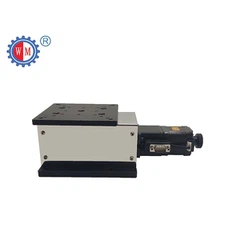
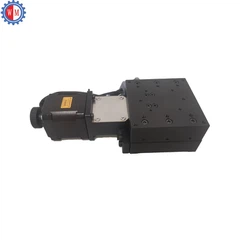
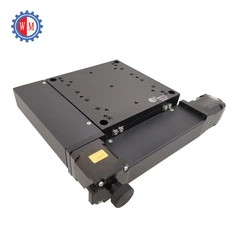
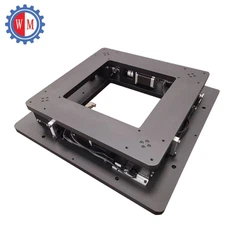
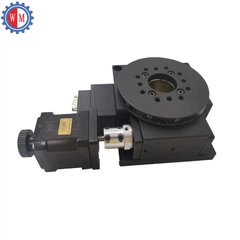
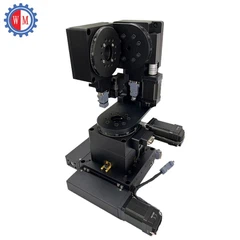
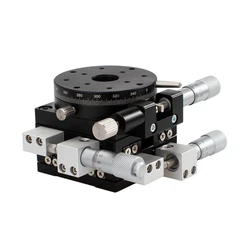
Manual multi - axis stages are mechanical devices that allow for precise positioning of an object along multiple axes. These stages typically come in configurations such as XYZ (three - axis), XYZR (four - axis with rotation), and XZ (two - axis). For instance, our Manual Linear XYZ Translation Stage offers smooth and accurate movement along the X, Y, and Z axes, enabling users to position samples or components with a high degree of control.
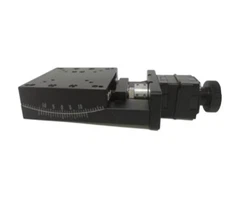
The operation of manual multi - axis stages is based on mechanical screw drives, which convert rotational motion into linear motion. The precision of these stages is determined by factors such as the lead of the screw, the quality of the bearings, and the material of the stage components. High - quality manual stages are designed with fine - pitched screws and low - friction bearings to ensure smooth and accurate movement.
Advantages of Manual Multi - Axis Stages in High - Precision Applications
Cost - Effectiveness
One of the primary advantages of manual multi - axis stages in high - precision applications is their cost - effectiveness. Compared to motorized or automated stages, manual stages are generally more affordable. This makes them an attractive option for research laboratories, small - scale manufacturing facilities, and educational institutions with limited budgets. For example, a university research lab conducting experiments on a tight budget can use our Manual XZ Translation Stage to achieve the necessary precision without incurring the high costs associated with automated systems.
Simplicity and Ease of Use
Manual multi - axis stages are relatively simple to operate. They do not require complex programming or electrical connections, which makes them accessible to users with limited technical expertise. This simplicity also reduces the risk of system failures and maintenance requirements. A technician in a manufacturing plant can quickly learn to use a manual stage to position components for assembly, without the need for extensive training.
High Precision in Small - Scale Movements
Manual stages can provide high precision in small - scale movements. The fine - pitched screws used in these stages allow for incremental adjustments as small as a few micrometers. This level of precision is sufficient for many high - precision applications, such as microscopy, optical alignment, and micro - machining. In a microscopy setup, a researcher can use a manual stage to precisely position a sample under the microscope objective, ensuring clear and accurate imaging.
Limitations of Manual Multi - Axis Stages in High - Precision Applications
Limited Speed and Productivity
One of the main limitations of manual multi - axis stages is their limited speed. Since the movement is controlled manually, it can be time - consuming to make large - scale adjustments or perform repetitive positioning tasks. In a high - volume manufacturing environment, the slow speed of manual stages can significantly reduce productivity. For example, in a semiconductor manufacturing process where thousands of components need to be positioned quickly, manual stages may not be the most suitable option.
Human Error
Manual operation introduces the potential for human error. Factors such as fatigue, inconsistent hand movement, and misjudgment can affect the accuracy of positioning. In applications where high - precision and repeatability are critical, such as in the production of medical devices, human error can lead to defective products.
Lack of Automation
Manual multi - axis stages lack the automation capabilities of motorized or computer - controlled stages. They cannot perform complex motion profiles or be integrated into automated production lines. This limits their use in applications that require high - speed, continuous operation and real - time feedback control.
Applications Where Manual Multi - Axis Stages Excel in High - Precision
Microscopy and Imaging
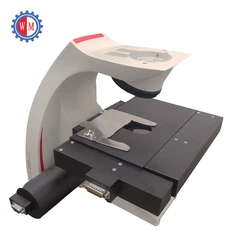
In microscopy and imaging applications, manual multi - axis stages are widely used for sample positioning. The high precision of these stages allows for accurate focusing and alignment of the sample, ensuring clear and detailed images. For example, in fluorescence microscopy, a manual stage can be used to precisely position a fluorescently labeled sample under the microscope objective, enabling researchers to study cellular structures and molecular interactions.


Optical Alignment
Optical alignment is another area where manual multi - axis stages are highly effective. In the assembly of optical components such as lenses, mirrors, and lasers, precise positioning is crucial for achieving optimal performance. Our XYZR Axis Manual Stage can be used to align optical elements with high precision, ensuring proper beam propagation and focusing.
Micro - Machining
In micro - machining applications, manual multi - axis stages can be used to position workpieces for precision machining operations. The high precision of these stages allows for the production of small - scale components with tight tolerances. For example, in the manufacturing of micro - needles for medical applications, a manual stage can be used to position the workpiece for drilling and cutting operations, ensuring accurate dimensions and surface finish.
Overcoming the Limitations
While manual multi - axis stages have their limitations, there are ways to overcome them in high - precision applications. For example, to reduce human error, operators can use magnifying tools or digital readouts to improve the accuracy of positioning. Additionally, for applications that require high - speed and repetitive positioning, manual stages can be combined with semi - automated systems, such as motorized actuators for large - scale movements and manual control for fine - tuning.
Conclusion
In conclusion, manual multi - axis stages can be used in high - precision applications, especially in situations where cost - effectiveness, simplicity, and high precision in small - scale movements are required. While they have limitations in terms of speed, productivity, and automation, these limitations can be mitigated through careful application design and the use of complementary technologies.
If you are considering using manual multi - axis stages for your high - precision applications, I encourage you to contact us for more information. Our team of experts can help you select the right stage for your specific needs and provide technical support throughout the purchasing process. Whether you are a researcher, a manufacturer, or an educator, we are committed to providing you with high - quality manual multi - axis stages that meet your requirements.
References
- Smith, J. (2018). Precision Positioning: A Guide to Linear and Rotary Stages. Springer.
- Jones, A. (2020). Manual vs. Automated Stages in High - Precision Applications. Journal of Precision Engineering, 45(2), 123 - 132.
- Brown, C. (2019). The Role of Manual Multi - Axis Stages in Microscopy and Imaging. Microscopy Today, 27(3), 45 - 50.


