

Hey there! As a supplier of Integrated Stepper Motors, I've gotten a ton of questions about how to increase the holding torque of these motors. Today, I'm gonna share some tips and tricks that can help you boost that all - important holding torque.
First off, let's understand what holding torque is. Holding torque is the maximum torque that a stepper motor can exert when it's stationary and powered. It's like the motor's ability to stay put and resist any external forces trying to move it. This is super crucial in applications where you need precise positioning and stability, like in 3D printers, CNC machines, and robotic arms.
1. Choose the Right Motor Size
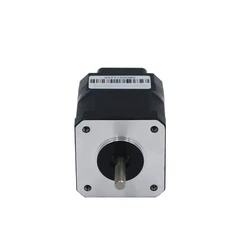
One of the simplest ways to increase holding torque is to pick the right - sized motor for your application. In general, larger motors have more windings and a bigger magnetic core, which means they can generate more torque. When you're shopping for an Integrated Stepper Motor, don't just go for the smallest one you can find. Think about the load you'll be dealing with and choose a motor that's up to the task.


For example, if you're building a small 3D printer, a motor with a lower torque might work. But if you're working on a heavy - duty CNC machine, you'll need a beefier motor. Our Closed Loop Stepper Integrated Motor comes in different sizes, so you can select the one that best fits your requirements.
2. Optimize the Power Supply
The power supply you use can have a huge impact on the holding torque of your motor. Stepper motors need a certain amount of current to generate torque. If your power supply can't provide enough current, the motor won't be able to reach its full torque potential.
Make sure your power supply has a high enough voltage and current rating. You can also use a constant - current driver. These drivers are designed to maintain a steady current through the motor windings, which helps to keep the torque consistent. Our Modbus RS485 Integrated Motor is compatible with a variety of power supplies and drivers, so you can find the perfect combination for your setup.
3. Adjust the Microstepping Settings
Microstepping is a technique that allows you to divide each full step of the motor into smaller steps. This not only improves the smoothness of the motor's movement but can also increase the holding torque. When you use microstepping, the motor can generate more torque at lower speeds.
Most modern Integrated Stepper Motors support microstepping, and you can usually adjust the microstepping settings through the motor driver. Start by experimenting with different microstepping values to see what works best for your application. Just keep in mind that as you increase the microstepping level, the motor might draw more current, so make sure your power supply can handle it.
4. Use a Gearbox
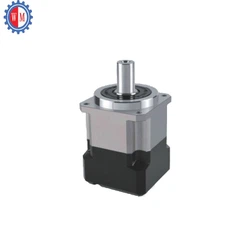
Adding a gearbox to your motor is another effective way to increase the holding torque. A gearbox reduces the speed of the motor while increasing the torque. It's like using a lever to multiply your force.
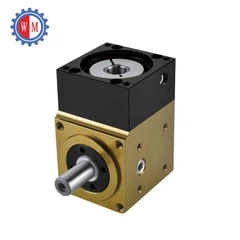
There are different types of gearboxes available, such as planetary gearboxes and spur gearboxes. Each type has its own advantages and disadvantages, so choose the one that suits your needs. Keep in mind that adding a gearbox will also add some weight and cost to your setup, but the increase in torque can be well worth it.
5. Improve the Motor Cooling
Stepper motors generate heat when they're in use. If the motor gets too hot, its performance can suffer, and the holding torque can decrease. That's why it's important to make sure your motor is properly cooled.
You can use a heatsink or a fan to dissipate the heat. A heatsink is a passive cooling device that absorbs and radiates the heat away from the motor. A fan, on the other hand, is an active cooling device that blows air over the motor to cool it down. Our CAN Bus Control Integrated Stepper Motor is designed to be efficient, but proper cooling can still help to maintain its performance over time.
6. Select the Right Motor Windings
Stepper motors come with different types of windings, such as bipolar and unipolar windings. Bipolar motors generally have more torque than unipolar motors because they use both directions of current flow in the windings.
When you're choosing an Integrated Stepper Motor, consider the type of windings. Bipolar motors might be a better choice if you need high torque, but they also require a more complex driver. Make sure you understand the requirements of your application and choose the motor with the appropriate windings.
7. Reduce the Friction in the System
Friction can eat away at the holding torque of your motor. Any resistance in the system, such as in the bearings or the drive mechanism, will make the motor work harder to maintain its position.
To reduce friction, use high - quality bearings and lubricate them regularly. You can also make sure that all the moving parts are properly aligned. A well - maintained system with low friction will allow the motor to use its torque more efficiently.
8. Firmware and Control Algorithm Tweaks
Some Integrated Stepper Motors come with firmware that can be customized. By tweaking the control algorithms in the firmware, you can optimize the motor's performance and increase the holding torque.
For example, you might be able to adjust the acceleration and deceleration profiles of the motor. This can help the motor start and stop more smoothly, which can improve its overall torque output. Check with the manufacturer to see if your motor has any firmware updates or customization options available.
In conclusion, increasing the holding torque of an Integrated Stepper Motor involves a combination of choosing the right components, optimizing the power supply, and making some smart adjustments to the system. By following these tips, you can get the most out of your motor and ensure that it performs at its best.
If you're interested in purchasing an Integrated Stepper Motor or have any questions about how to increase the holding torque, feel free to reach out to us. We're here to help you find the perfect solution for your application.
References
- "Stepper Motor Handbook" by Walter Karas
- "Motion Control Basics" by Peter Nachtwey


