

In the dynamic realm of 3D printing, technological advancements are constantly reshaping the boundaries of what's possible. One question that often surfaces among enthusiasts and professionals alike is whether manual XY - axis stages can be effectively employed in 3D printing. As a supplier of Manual XY - Axis Stages, I'm excited to delve into this topic and explore the potential of our products in the 3D printing landscape.


Understanding Manual XY - Axis Stages
Before we dive into their applicability in 3D printing, let's first understand what manual XY - axis stages are. These stages are mechanical devices that allow for precise movement along two perpendicular axes, typically labeled as the X and Y axes. They are commonly used in a variety of scientific, industrial, and research applications where accurate positioning is required.
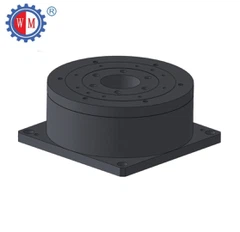
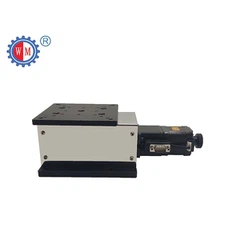
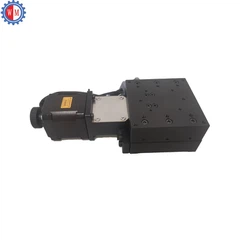
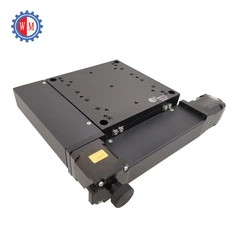
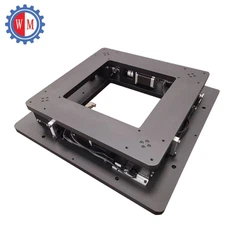
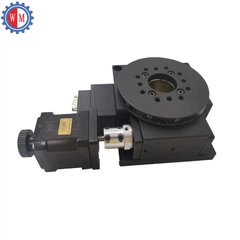
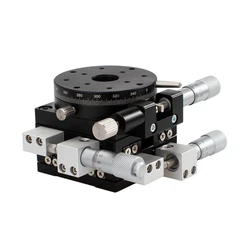
Manual XY - axis stages come in different forms and configurations, each designed to meet specific needs. For instance, the XY Translation Stage offers a straightforward and reliable solution for basic positioning tasks. It features smooth and precise linear motion, allowing users to adjust the position of an object with high accuracy.
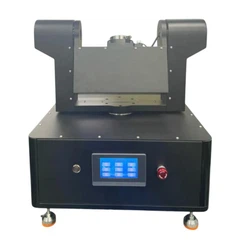
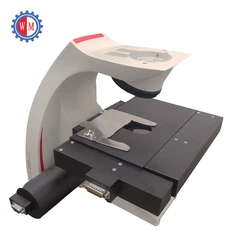
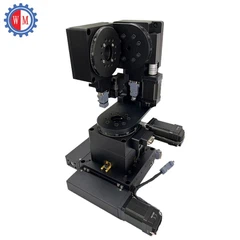
On the other hand, the Manual Optical Alignment Stage is specifically designed for applications where optical components need to be aligned with extreme precision. It often incorporates fine adjustment mechanisms and high - resolution scales to ensure accurate alignment of lenses, mirrors, and other optical elements.
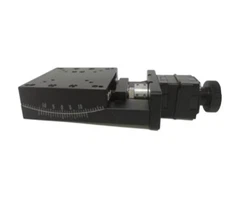
The Manual Laboratory Translation Stage is another type of manual XY - axis stage commonly used in laboratory settings. It is built to withstand the rigors of scientific experiments and provides stable and repeatable positioning for various laboratory equipment.
The Basics of 3D Printing
3D printing, also known as additive manufacturing, is a process of creating three - dimensional objects from a digital model by depositing material layer by layer. The most common types of 3D printing technologies include fused deposition modeling (FDM), stereolithography (SLA), and selective laser sintering (SLS).
In a typical 3D printing setup, the printer head moves along three axes: the X, Y, and Z axes. The X and Y axes are responsible for moving the printer head horizontally, while the Z axis controls the vertical movement, allowing the printer to build up the object layer by layer.
Can Manual XY - Axis Stages be Used in 3D Printing?
The short answer is yes, manual XY - axis stages can be used in 3D printing, but there are several factors to consider.
Advantages of Using Manual XY - Axis Stages in 3D Printing
- Cost - Effectiveness: Manual XY - axis stages are generally more affordable than their motorized counterparts. For hobbyists or small - scale 3D printing operations with a limited budget, using manual stages can be a cost - effective alternative.
- Simplicity and Ease of Use: Manual stages are relatively simple to operate. They do not require complex control systems or programming, making them accessible to users with limited technical knowledge. This simplicity can also reduce the risk of technical failures and maintenance requirements.
- Precision Control: Manual XY - axis stages offer precise control over the movement of the printer head. With fine - adjustment mechanisms, users can make small and accurate adjustments to the position of the printer head, which can be beneficial for achieving high - quality prints, especially in applications where fine details are required.
- Customization and Flexibility: Manual stages can be easily customized to fit specific 3D printing setups. They can be integrated with different types of 3D printers and modified to meet the unique requirements of individual projects.
Limitations of Using Manual XY - Axis Stages in 3D Printing
- Limited Speed: One of the main drawbacks of using manual XY - axis stages in 3D printing is the limited speed. Manual adjustment of the stages is a time - consuming process, which can significantly slow down the printing speed compared to motorized stages. This can be a major limitation for large - scale or high - volume 3D printing applications.
- Lack of Automation: Manual stages require constant user intervention to adjust the position of the printer head. This lack of automation can be a significant disadvantage, especially for complex 3D printing projects that require continuous and precise movement of the printer head.
- Human Error: Since manual adjustment is based on human operation, there is a risk of human error. Small mistakes in adjusting the stages can lead to misaligned prints or other quality issues.
Applications Where Manual XY - Axis Stages Can Shine in 3D Printing
Despite their limitations, there are several applications where manual XY - axis stages can be effectively used in 3D printing.
Prototyping and Small - Scale Production
For prototyping and small - scale production, where speed is not the primary concern, manual XY - axis stages can be a viable option. The precision control offered by manual stages can be particularly useful for creating high - quality prototypes with fine details.
Educational Purposes
In educational settings, manual XY - axis stages can be used to teach students the basics of 3D printing and mechanical positioning. Their simplicity and ease of use make them suitable for hands - on learning experiences, allowing students to gain a better understanding of the 3D printing process.
Artistic and Jewelry Making
In the field of artistic and jewelry making, 3D printing is often used to create unique and intricate designs. Manual XY - axis stages can provide the precision needed to create detailed and high - quality prints, making them a popular choice among artists and jewelers.
Considerations for Using Manual XY - Axis Stages in 3D Printing
If you're considering using manual XY - axis stages in your 3D printing setup, here are some important considerations:
- Compatibility: Ensure that the manual XY - axis stages are compatible with your 3D printer. Consider factors such as the size, weight, and mounting requirements of the stages and the printer.
- Print Quality Requirements: Evaluate the print quality requirements of your 3D printing projects. If high - speed and large - scale printing are required, manual stages may not be the best choice. However, if precision and fine details are more important, manual stages can offer a suitable solution.
- User Skill Level: Consider the skill level of the users. Manual stages require a certain level of manual dexterity and precision to operate effectively. Make sure that the users are trained and comfortable using the manual stages.
Conclusion
In conclusion, manual XY - axis stages can be a valuable addition to a 3D printing setup, especially for applications where cost - effectiveness, simplicity, and precision control are important. While they have some limitations in terms of speed and automation, they offer unique advantages that make them suitable for certain types of 3D printing projects.
If you're interested in exploring the possibilities of using manual XY - axis stages in your 3D printing operations, we invite you to contact us for more information. Our team of experts is ready to assist you in selecting the right manual XY - axis stages for your specific needs and provide you with the support and guidance you need to achieve successful 3D printing results.
References
- Gibson, I., Rosen, D. W., & Stucker, B. (2010). Additive Manufacturing Technologies: Rapid Prototyping to Direct Digital Manufacturing. Springer.
- Hopkinson, N., Hague, R., & Dickens, P. M. (2006). Rapid Manufacturing: An Industrial Revolution for the Digital Age. Wiley.


