
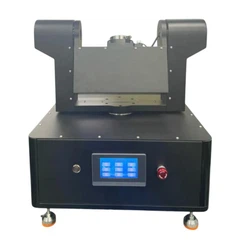
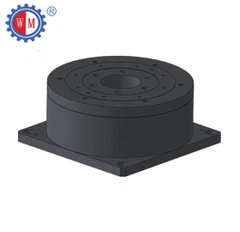
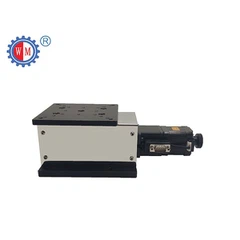
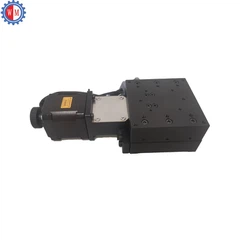


Can manual multi - axis stages be used in microscopy? That's a question I get asked a lot as a supplier of Manual Multi - Axis Stages. And the answer is a resounding yes! In this blog, I'll explain why manual multi - axis stages are a great fit for microscopy and share some of the products we offer.
First off, let's talk about what manual multi - axis stages are. These are devices that allow for precise movement in multiple directions. They typically come in configurations like XYZ (for movement along the X, Y, and Z axes) or even with additional rotational axes like XYZR. The "manual" part means that the movement is controlled by hand, usually through knobs or screws, which gives the user a high level of tactile control.
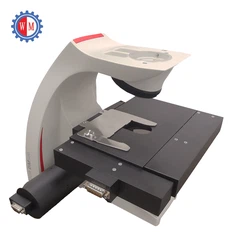
Now, why are they so useful in microscopy? Well, microscopy often requires the user to precisely position the sample under the lens. Whether you're looking at a tiny cell or a complex tissue sample, you need to be able to move it around in all three dimensions to get the best view. Manual multi - axis stages are perfect for this because they offer fine - tuned control. You can make small, incremental adjustments to the position of the sample, which is crucial for getting clear and detailed images.


One of the big advantages of manual multi - axis stages is their simplicity. Unlike automated stages, which can be complex to set up and operate, manual stages are straightforward. You don't need to worry about programming or dealing with software glitches. All you have to do is turn the knobs, and you're good to go. This simplicity also means that they're generally more affordable, which is great for labs on a budget.
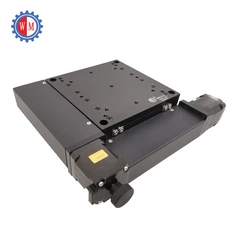
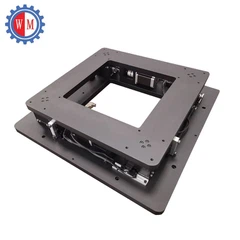
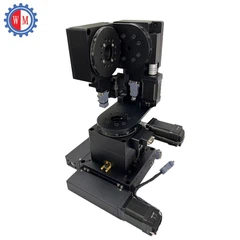
Let's take a look at some of the specific products we offer. Our XYZR Axis Manual Stage is a real workhorse. With four axes of movement (X, Y, Z, and R for rotation), it gives you a ton of flexibility. You can move the sample horizontally (X and Y axes), vertically (Z axis), and even rotate it (R axis). This is incredibly useful when you're trying to view a sample from different angles or when you need to align it precisely with the microscope's optics.
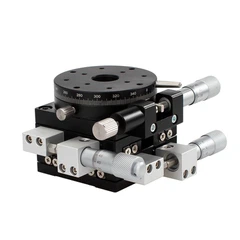
Another popular option is our Manual Linear XYZ Translation Stage. This stage is designed for linear movement along the X, Y, and Z axes. It's very stable and offers smooth, precise motion. The linear design makes it easy to understand and operate, and it's great for applications where you need to move the sample in a straight line.
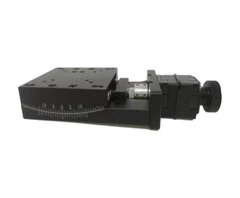
If you're looking for something a bit more compact, our Manual XZ Translation Stage might be the right choice. This stage allows for movement along the X and Z axes, which is often sufficient for many microscopy applications. It's smaller and more lightweight than some of the other options, making it a good fit for setups where space is limited.
In addition to the precision and simplicity, manual multi - axis stages also offer a high level of durability. They're built to last, with high - quality materials and solid construction. This means that you can rely on them for years of use without having to worry about frequent repairs or replacements.
Of course, manual multi - axis stages aren't without their limitations. They do require the user to be physically present to make adjustments, which might not be ideal for some high - throughput or automated microscopy applications. But for most research labs, educational institutions, and small - scale microscopy setups, the benefits far outweigh the drawbacks.
When it comes to choosing the right manual multi - axis stage for your microscopy needs, there are a few things to consider. First, think about the range of motion you need. Different stages offer different travel distances along each axis, so make sure you choose one that can cover the area you need to view. Second, consider the precision of the stage. Higher precision means you can make smaller, more accurate adjustments, which is important for getting detailed images.
Also, think about the size and weight of the stage. If you have a small microscope or a limited amount of space, you'll want a compact and lightweight stage. On the other hand, if you need to support heavy samples or if you're working with a large - scale microscope, you might need a more robust and heavy - duty stage.
In conclusion, manual multi - axis stages are a great option for microscopy. They offer precise control, simplicity, affordability, and durability. Whether you're a student just starting out in microscopy or a seasoned researcher, our manual multi - axis stages can help you get the best results.
If you're interested in learning more about our products or if you're ready to make a purchase, don't hesitate to get in touch. We're here to help you find the perfect manual multi - axis stage for your microscopy needs. Contact us today to start the conversation!
References
- General knowledge in the field of microscopy and stage technology.
- Product specifications and features of our Manual Multi - Axis Stages.


