


The coefficient of friction is a critical parameter when it comes to the performance of manual Z - Axis stages. As a supplier of Manual Z - Axis Stages, I understand the importance of this technical detail and its implications for our customers. In this blog, we will delve into what the coefficient of friction of the moving parts in manual Z - Axis stages is, why it matters, and how it affects the overall functionality of these stages.
Understanding the Coefficient of Friction
The coefficient of friction is a dimensionless quantity that represents the ratio of the force of friction between two objects in contact to the normal force pressing them together. In the context of manual Z - Axis stages, the moving parts typically include the slide, the guide rails, and the adjustment mechanisms. The coefficient of friction can be further classified into two types: static and kinetic.
The static coefficient of friction ($\mu_s$) is relevant when the stage is at rest and an external force is applied to initiate movement. It determines the minimum force required to overcome the initial resistance and start the motion of the stage. For example, if you are using a manual Z - Axis stage to position a delicate optical component, a high static coefficient of friction might make it difficult to precisely start the movement, as a relatively large force would be needed to break the static friction.
On the other hand, the kinetic coefficient of friction ($\mu_k$) comes into play once the stage is in motion. It represents the resistance encountered during continuous movement. A lower kinetic coefficient of friction generally means that the stage can move more smoothly with less force applied. This is crucial for applications where precise and effortless positioning is required, such as in microscopy or semiconductor testing.


Factors Affecting the Coefficient of Friction in Manual Z - Axis Stages
Several factors influence the coefficient of friction in the moving parts of manual Z - Axis stages.
Material Compatibility: The choice of materials for the slide and the guide rails has a significant impact on the coefficient of friction. For instance, if the slide is made of a hard steel material and the guide rails are made of a lubricious polymer, the coefficient of friction will be different compared to a combination of two metallic materials. Some materials have naturally low friction properties, which can improve the smoothness of the stage movement.
Surface Finish: The surface finish of the moving parts also plays a role. A smooth surface finish will generally result in a lower coefficient of friction compared to a rough surface. During the manufacturing process of manual Z - Axis stages, precision machining techniques are used to achieve a high - quality surface finish on the slide and guide rails. This reduces the microscopic irregularities that can cause friction and wear.
Lubrication: Lubrication is an effective way to reduce the coefficient of friction. By applying a suitable lubricant between the moving parts, a thin film is created that separates the surfaces and reduces direct contact. This not only lowers the friction but also helps to prevent wear and extends the lifespan of the stage. However, the type of lubricant used must be carefully selected to be compatible with the materials of the stage and the operating environment.
Importance of the Coefficient of Friction in Manual Z - Axis Stages
The coefficient of friction directly affects the performance and usability of manual Z - Axis stages.
Precision Positioning: A low coefficient of friction is essential for achieving precise positioning. With less friction, it is easier to make small, incremental adjustments to the position of the stage. This is particularly important in applications where sub - micron level positioning accuracy is required. For example, in microelectronics manufacturing, where components are extremely small, even the slightest error in positioning can lead to product defects.
Effort Required for Operation: The coefficient of friction also determines the amount of force that the user needs to apply to move the stage. A high - friction stage can be difficult and tiring to operate, especially if frequent adjustments are required. On the other hand, a stage with a low coefficient of friction can be easily manipulated, improving the user experience and productivity.
Wear and Durability: High friction can cause excessive wear on the moving parts of the stage over time. This can lead to a decrease in the accuracy and performance of the stage, as well as an increased risk of mechanical failure. By maintaining a low coefficient of friction through proper material selection and lubrication, the lifespan of the stage can be significantly extended.
Our Manual Z - Axis Stages and Coefficient of Friction
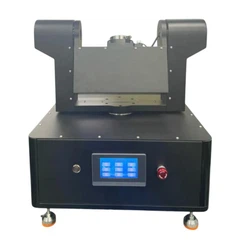
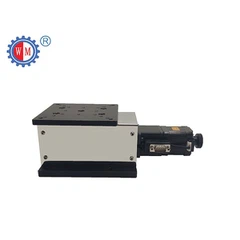
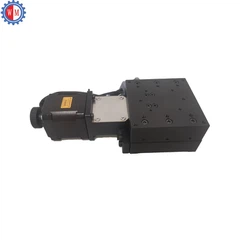
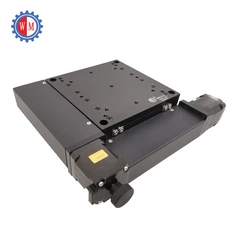
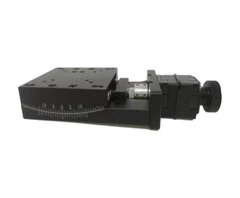
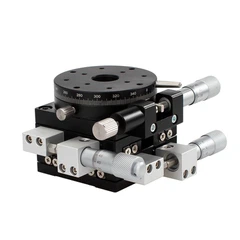
As a supplier of Manual Z - Axis Stages, we pay close attention to the coefficient of friction of the moving parts. Our Manual Vertical Stage is designed using high - quality materials with excellent friction properties. We use advanced manufacturing techniques to ensure a smooth surface finish on all moving components. In addition, we provide a suitable lubrication option for our stages to further reduce the coefficient of friction and enhance the overall performance.
Our engineering team conducts rigorous testing on each stage to measure the coefficient of friction and ensure that it meets the specifications. We understand that every application has unique requirements, and we are committed to providing stages that offer the best possible balance between precision, ease of use, and durability.
Contact Us for Your Manual Z - Axis Stage Needs
If you are in the market for a high - quality manual Z - Axis stage, we invite you to contact us for more information. Whether you need a stage for a specific research project, industrial application, or any other purpose, our technical experts can help you choose the right stage based on your requirements. We are eager to have a discussion with you about how our Manual Z - Axis Stages can meet your needs and contribute to the success of your operations.
References
- Callister, W. D., & Rethwisch, D. G. (2015). Materials Science and Engineering: An Introduction. Wiley.
- Shigley, J. E., Mischke, C. R., & Budynas, R. G. (2004). Mechanical Engineering Design. McGraw - Hill.
- Norton, R. L. (2006). Machine Design: An Integrated Approach. Pearson Prentice Hall.


