


Hey there! As a supplier of motorized gimbal stages, I often get asked if these nifty devices can be used for virtual reality (VR). Well, buckle up, because we're about to dive deep into this topic and find out if a motorized gimbal stage can be the secret sauce to take your VR experience to the next level.
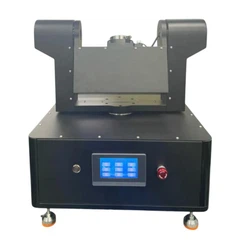
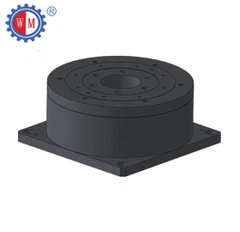
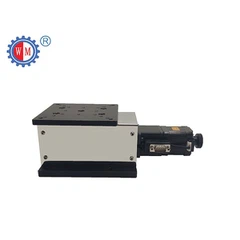
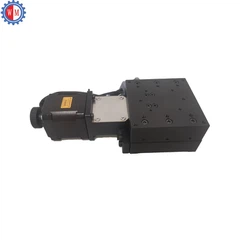
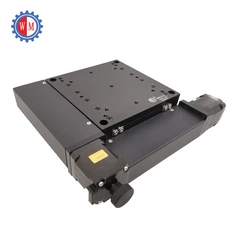
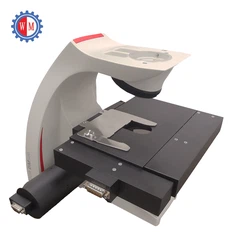
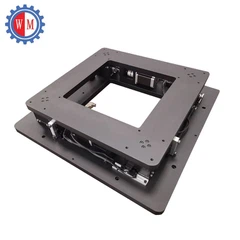
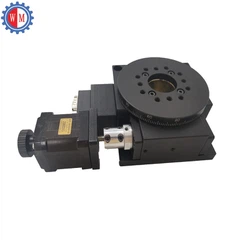
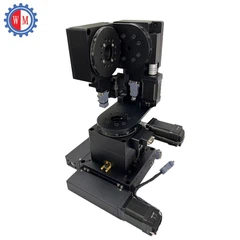
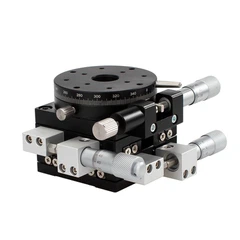
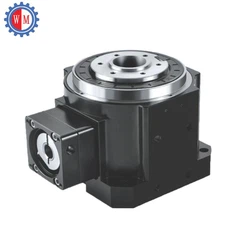
First off, let's quickly break down what a motorized gimbal stage is. It's a device that uses motors to control the movement of a platform in multiple axes. This allows for precise and smooth motion, which can be super useful in a variety of applications. We offer two main types of motorized gimbal stages: the Dual-Axis Inertial Navigation Test Bench and the Three-Axis Motorized Gimbal Stage.


Now, let's talk about VR. Virtual reality is all about creating an immersive experience that makes you feel like you're in a different world. To achieve this, VR systems rely on a combination of hardware and software to track your movements and adjust the virtual environment accordingly. This is where motorized gimbal stages come in.
One of the key benefits of using a motorized gimbal stage in VR is the ability to provide more realistic and immersive motion. Most VR systems use sensors to track your head and hand movements, but they often struggle to replicate the full range of motion that you would experience in the real world. A motorized gimbal stage can help bridge this gap by providing smooth and precise motion in multiple axes.
For example, let's say you're playing a VR game where you're flying a plane. With a traditional VR setup, you might be able to tilt your head and move your hands to control the plane, but you won't feel the full sensation of flight. However, if you use a motorized gimbal stage, the platform can move in sync with your movements, giving you a more realistic sense of acceleration, deceleration, and turning. This can make the VR experience much more engaging and immersive.
Another advantage of using a motorized gimbal stage in VR is the ability to reduce motion sickness. Motion sickness is a common problem in VR, especially for people who are new to the technology. It occurs when there is a disconnect between what your eyes are seeing and what your body is feeling. By providing more realistic and smooth motion, a motorized gimbal stage can help reduce this disconnect and make the VR experience more comfortable.
In addition to providing more realistic motion and reducing motion sickness, a motorized gimbal stage can also be used to enhance the interactivity of VR experiences. For example, you could use the platform to create haptic feedback, which is the sensation of touch. By vibrating or applying pressure to the platform, you can make the virtual objects in the VR environment feel more real. This can add an extra layer of immersion and make the VR experience even more engaging.
However, it's important to note that using a motorized gimbal stage in VR also has some challenges. One of the main challenges is the cost. Motorized gimbal stages can be quite expensive, especially if you're looking for a high-quality model that can provide smooth and precise motion. In addition, you'll also need to factor in the cost of the VR system and any additional hardware or software that you'll need to integrate the two.
Another challenge is the space requirements. Motorized gimbal stages can be quite large and bulky, which means you'll need to have enough space in your room to set them up. This can be a problem for people who live in small apartments or have limited space.
Finally, it's important to make sure that the motorized gimbal stage is compatible with your VR system. Not all motorized gimbal stages are designed to work with VR, so you'll need to do your research and make sure that the model you choose is compatible with your specific VR setup.
Despite these challenges, I believe that the benefits of using a motorized gimbal stage in VR outweigh the drawbacks. If you're serious about taking your VR experience to the next level, then investing in a motorized gimbal stage could be a great option.
So, if you're interested in learning more about how our motorized gimbal stages can be used for VR, or if you have any questions about our products, please don't hesitate to get in touch. We're always happy to help and can provide you with more information about our products and how they can be integrated into your VR setup.
Whether you're a VR enthusiast, a game developer, or a professional in the entertainment industry, we're confident that our motorized gimbal stages can help you create more realistic, immersive, and engaging VR experiences. So, what are you waiting for? Contact us today to learn more and take the first step towards revolutionizing your VR setup.
References
- "Virtual Reality: A New Medium with New Expressive Potential" by Jaron Lanier
- "Motion Sickness in Virtual Reality: Causes, Symptoms, and Solutions" by Mark Bolas et al.
- "The Future of Virtual Reality: Trends and Technologies" by Tom Furness III


