
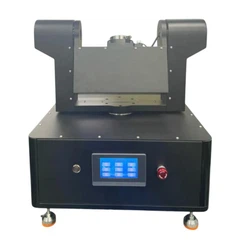
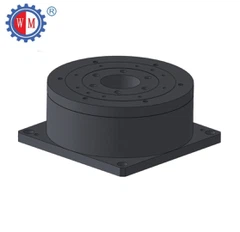



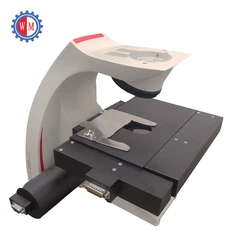
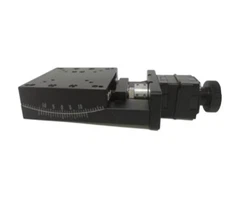

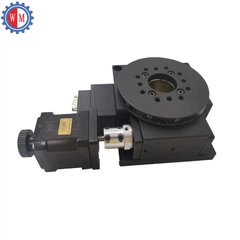
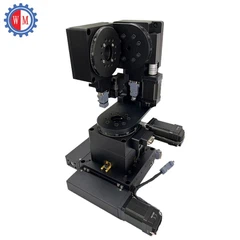
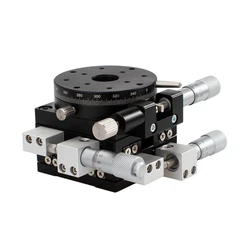
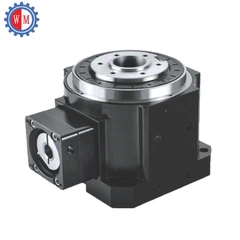





A manual rotary stage is a precision mechanical device that allows for controlled rotation around a central axis. It is commonly used in various scientific and industrial applications where accurate angular positioning is required. In the context of microscopy, the question arises: Can a manual rotary stage be used in a microscopy setup? The answer is a resounding yes, and in this blog post, we'll explore the reasons, applications, and benefits of integrating a manual rotary stage into a microscopy system.
Compatibility with Microscopy Systems
Microscopy setups come in various forms, from basic light microscopes to advanced confocal and electron microscopes. Manual rotary stages are designed to be versatile and can be easily integrated with most types of microscopes. They typically feature a flat mounting surface that can accommodate microscope slides, sample holders, or other accessories. The stage can be attached to the microscope base or a custom mounting plate, providing a stable and precise platform for sample rotation.
One of the key advantages of using a manual rotary stage in a microscopy setup is its simplicity. Unlike motorized stages, which require complex control systems and power sources, manual rotary stages are operated by hand. This makes them easy to use, especially for novice microscopists or in situations where a high degree of automation is not required. The user can simply turn a knob or handle to rotate the sample, allowing for quick and intuitive adjustments.
Applications in Microscopy
There are several applications in microscopy where a manual rotary stage can be extremely useful. One common application is in the study of biological samples. Many biological specimens, such as cells and tissues, have a three-dimensional structure that can be better visualized by rotating the sample. By using a manual rotary stage, the microscopist can view the sample from different angles, providing a more comprehensive understanding of its morphology and internal structure.
Another application is in materials science and engineering. When examining materials such as metals, polymers, and ceramics, it is often necessary to analyze the sample from multiple orientations. A manual rotary stage allows the researcher to rotate the sample to align specific features or crystal planes with the microscope's optical axis, enabling more accurate measurements and analysis.
In addition, manual rotary stages are also useful in educational settings. They provide a hands-on way for students to learn about microscopy and the importance of sample orientation. By allowing students to manipulate the sample themselves, they can gain a better understanding of how the microscope works and how to obtain high-quality images.
Benefits of Using a Manual Rotary Stage
There are several benefits to using a manual rotary stage in a microscopy setup. One of the main benefits is cost. Manual rotary stages are generally less expensive than motorized stages, making them a more affordable option for many laboratories and research facilities. They also require less maintenance and have a longer lifespan, which can further reduce the overall cost of ownership.
Another benefit is precision. Manual rotary stages are designed to provide high levels of angular accuracy and repeatability. They typically have a fine adjustment mechanism that allows for precise positioning of the sample, ensuring that the microscopist can obtain accurate and reproducible results. In addition, manual stages are not subject to the same electrical noise and interference as motorized stages, which can improve the quality of the images.
Finally, manual rotary stages offer greater flexibility. They can be used in a variety of microscopy setups, including both upright and inverted microscopes. They can also be easily customized to meet the specific needs of the user, such as adding additional mounting holes or accessories. This flexibility makes them a versatile tool for a wide range of microscopy applications.
Our Manual Rotary Stages
As a [Manual Rotary Stage supplier], we offer a wide range of high-quality manual rotary stages that are suitable for use in microscopy setups. Our stages are designed and manufactured to the highest standards of precision and reliability, ensuring that they can meet the demanding requirements of scientific research and industrial applications.


Our Manual Rotating Stage feature a smooth and precise rotation mechanism, allowing for easy and accurate positioning of the sample. They are available in a variety of sizes and configurations to accommodate different types of microscopes and samples. In addition, our stages are made from high-quality materials, such as aluminum and stainless steel, to ensure durability and long-term performance.
We also offer a range of accessories and options for our manual rotary stages, such as graduated scales, locking mechanisms, and custom mounting plates. These accessories can further enhance the functionality and versatility of the stages, allowing users to customize them to their specific needs.
Conclusion
In conclusion, a manual rotary stage can be a valuable addition to a microscopy setup. It offers a simple, cost-effective, and precise way to rotate samples, providing a more comprehensive view of the specimen and enabling more accurate analysis. Whether you are a researcher, educator, or student, a manual rotary stage can help you to obtain better results and gain a deeper understanding of the samples you are studying.
If you are interested in learning more about our manual rotary stages or would like to discuss your specific microscopy needs, please contact us. Our team of experts is available to provide you with more information and to help you choose the right stage for your application. We look forward to hearing from you and working with you to achieve your microscopy goals.
References
- Smith, J. D., & Jones, A. B. (2018). Microscopy: A Practical Approach. Oxford University Press.
- Brown, C. E., & Green, D. F. (2019). Introduction to Materials Science and Engineering. Wiley.
- White, E. M., & Black, F. G. (2020). Biological Microscopy: Techniques and Applications. Cambridge University Press.


