

The mining industry is a sector that demands high - performance and reliable equipment to ensure efficient and safe operations. In recent years, the application of various advanced mechanical components has been explored to optimize mining processes. One such component is the hollow rotary table. As a supplier of hollow rotary tables, I will delve into the question of whether a hollow rotary table can be used in the mining industry.
Understanding the Hollow Rotary Table
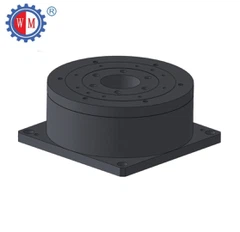
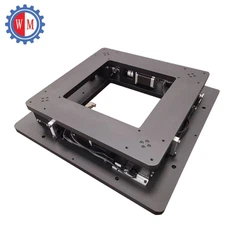
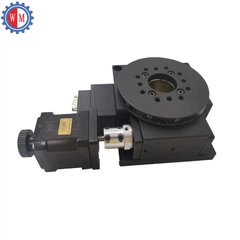
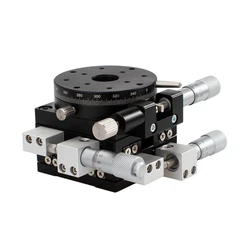
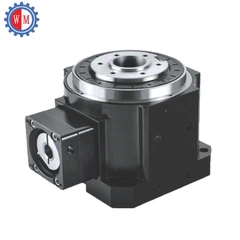
Before discussing its applicability in the mining industry, let's first understand what a hollow rotary table is. A hollow rotary table is a precision device designed to provide accurate rotary motion. It typically consists of a large - diameter central hole, which allows for the passage of cables, pipes, or other components. This unique design feature makes it suitable for a wide range of applications where space - saving and integration of additional elements are required.
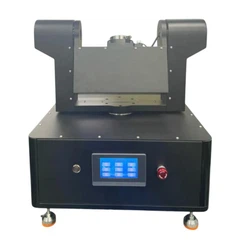
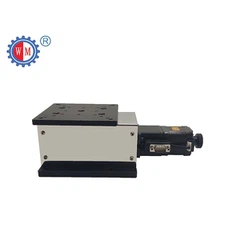
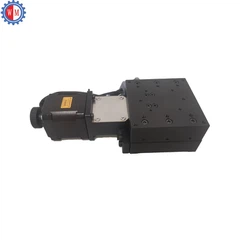
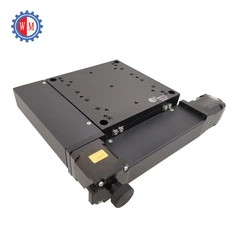
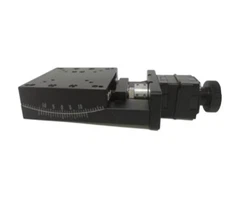
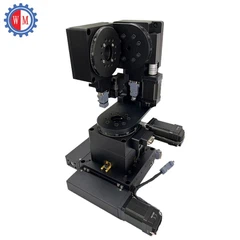
There are different types of hollow rotary tables available in the market. For instance, the Hollow Rotary Stage is a high - precision version often used in applications that demand accurate angular positioning. It is equipped with high - quality bearings and a precise drive system to ensure smooth and accurate rotation.
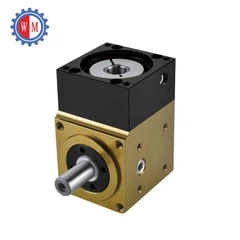
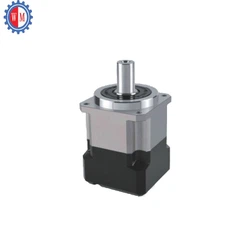
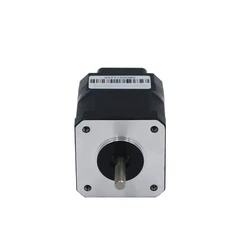
On the other hand, the Hollow Rotary Gearbox for Servo Motor and Hollow Rotary Gearbox for Stepper Motor are designed to work in conjunction with servo and stepper motors respectively. These gearboxes can provide high torque and precise speed control, which are essential for many industrial applications.
Potential Applications in the Mining Industry
Mineral Processing
In mineral processing plants, there are numerous operations that require accurate rotation and positioning. For example, in the process of ore sorting, sensors are used to detect the quality and composition of the ore. A hollow rotary table can be used to rotate the ore samples in front of the sensors, ensuring that all sides of the ore are scanned accurately. The central hole in the hollow rotary table can be used to pass cables for power supply and data transmission, reducing the clutter of wires and making the system more organized.
Moreover, in the grinding and milling processes, a hollow rotary table can be integrated into the equipment to rotate the grinding media or the ore. This can help to achieve a more uniform grinding effect, as the rotation ensures that all parts of the ore are exposed to the grinding force. The precise angular control provided by the hollow rotary table can also optimize the grinding process, improving the efficiency and quality of the final product.
Drilling and Exploration
In drilling operations, a hollow rotary table can be used in the drilling rigs. The central hole of the table can accommodate the drill pipe, allowing for a more compact and efficient design. As the drill pipe rotates, the hollow rotary table can provide stable support and accurate rotation control. This is particularly important in directional drilling, where precise control of the drill bit's orientation is crucial for reaching the target location underground.
During exploration activities, such as core sampling, a hollow rotary table can be used to rotate the core barrel. This helps to obtain a more complete and representative core sample, as the rotation ensures that the core barrel cuts through the rock layers evenly.
Material Handling
In the mining industry, large quantities of materials need to be transported and sorted. A hollow rotary table can be integrated into conveyor systems or sorting machines. For example, it can be used to rotate the conveyor belts at specific angles to direct the flow of materials to different processing lines. The central hole can be used to pass cables or pneumatic tubes for controlling the movement of the conveyor or the sorting mechanism.
Advantages of Using Hollow Rotary Tables in Mining
Precision and Accuracy
The mining industry requires high - precision equipment to ensure the quality and efficiency of operations. Hollow rotary tables are known for their precise angular control, which can be adjusted to within a few arc - minutes or even arc - seconds. This level of precision is crucial in applications such as ore sorting and directional drilling, where small errors in positioning can lead to significant losses in productivity or the quality of the final product.


Space - Saving Design
The central hole in the hollow rotary table allows for the integration of cables, pipes, and other components within the table itself. This reduces the need for additional space for routing these elements, making the overall equipment more compact. In a mining environment where space is often limited, this space - saving design can be a significant advantage.
Durability and Reliability
Mining operations are often carried out in harsh environments, with high levels of dust, vibration, and temperature variations. Our hollow rotary tables are designed to withstand these harsh conditions. They are made of high - quality materials, such as hardened steel and high - performance bearings, which can resist wear and corrosion. The robust construction ensures long - term reliability, reducing the downtime and maintenance costs associated with equipment failures.
Challenges and Considerations
Harsh Environmental Conditions
As mentioned earlier, the mining environment is extremely harsh. The high levels of dust and debris can contaminate the bearings and the drive system of the hollow rotary table, leading to premature wear and reduced performance. To address this issue, proper sealing and protection mechanisms need to be implemented. For example, the use of dust - proof covers and sealed bearings can help to prevent the ingress of dust and debris.
High - Load Requirements
In many mining applications, the hollow rotary table needs to support heavy loads. For example, in drilling rigs, the table needs to support the weight of the drill pipe and the drill bit. This requires the hollow rotary table to have a high load - carrying capacity. Our engineering team can design custom - made hollow rotary tables with reinforced structures and high - capacity bearings to meet these high - load requirements.
Cost
The initial cost of a high - quality hollow rotary table can be relatively high. However, when considering the long - term benefits, such as increased productivity, improved product quality, and reduced maintenance costs, the investment in a hollow rotary table can be justified. We offer a range of hollow rotary tables at different price points to meet the diverse needs and budgets of our customers in the mining industry.
Conclusion
In conclusion, a hollow rotary table has significant potential for use in the mining industry. Its precision, space - saving design, durability, and the ability to integrate with other components make it suitable for various mining applications, including mineral processing, drilling, and material handling. Although there are challenges associated with the harsh mining environment and high - load requirements, these can be overcome through proper design and engineering solutions.
As a leading supplier of hollow rotary tables, we are committed to providing high - quality products and customized solutions to meet the specific needs of the mining industry. If you are interested in exploring the use of hollow rotary tables in your mining operations, we invite you to contact us for further discussions and procurement negotiations. Our team of experts will be happy to assist you in selecting the most suitable hollow rotary table for your application and provide you with comprehensive technical support.
References
- Smith, J. (2018). Advanced Mechanical Components in the Mining Industry. Mining Journal, 45(2), 78 - 85.
- Johnson, A. (2019). Precision Equipment for Mineral Processing. Mineral Processing Review, 32(3), 120 - 128.
- Brown, C. (2020). Drilling and Exploration Technologies in Mining. Exploration and Mining Science, 55(4), 180 - 188.


