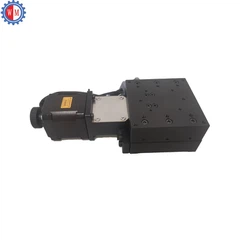
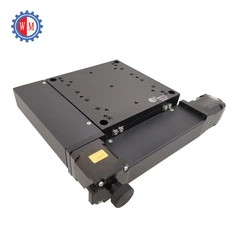
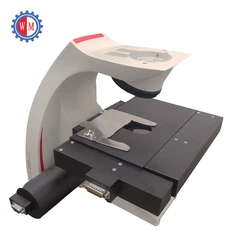
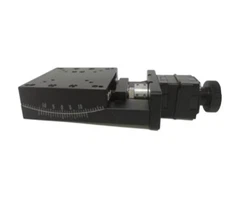
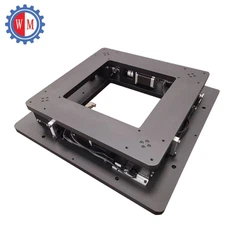
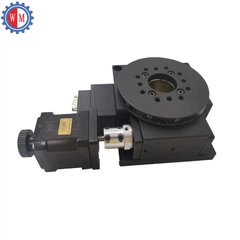
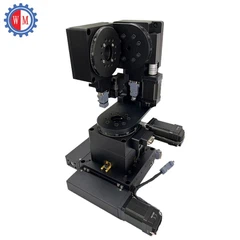
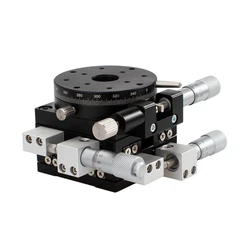
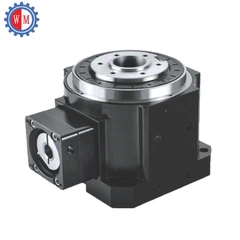
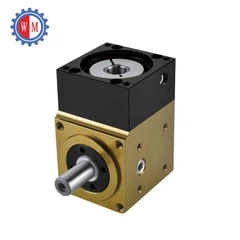


The Critical Role and Application of High-Precision Motorized Rotary Stages in Modern Industries
Enabling precision, automation, and innovation across high-tech sectors worldwide

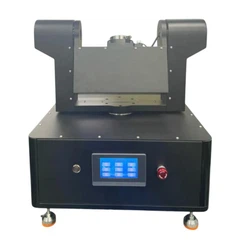
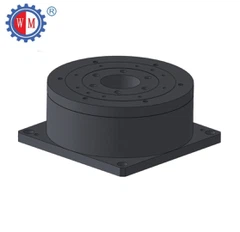
In the landscape of advanced manufacturing and precision engineering, the motorized rotary stage stands as an indispensable component that bridges the gap between design intent and operational accuracy. This specialized device, engineered to deliver precise rotational movement around a single axis, has become the backbone of countless high-tech applications where even the smallest angular deviation can compromise product quality or operational efficiency. From semiconductor fabrication to aerospace testing, the motorized rotary stage enables automated, repeatable positioning that manual operations simply cannot match.
Understanding the Core Mechanics of a Motorized Rotary Stages
At its essence, a motorized rotary stage is a precision positioning system that converts electrical energy into controlled mechanical rotation. Its functionality relies on a synergistic combination of key components, each playing a vital role in ensuring optimal performance.
Key Components
- Motor: Driving force (stepper or brushless DC) selected for speed, torque, and precision
- Bearing System: Supports rotation with minimal friction (crossed roller or air bearings)
- Encoder: Provides real-time position feedback for closed-loop control
- Control System: Enables programmable motion and system integration

 Together, these components define the three core performance parameters of a motorized rotary stage:
A critical element of any motorized rotary stage is the encoder, a sensor that provides real-time feedback on the platform's angular position. This feedback loop is essential for closed-loop control, allowing the system to correct deviations and maintain the desired position with exceptional accuracy. The control system, meanwhile, serves as the "brain" of the stage, enabling programmable motion profiles, automated positioning sequences, and integration with larger manufacturing systems.
Accuracy: How closely the actual position matches the commanded position
Repeatability: Ability to consistently return to a set position
Resolution: Smallest incremental rotation achievabl
Customization Process of Multi-Axis Motorized Rotary Stages: A Comprehensive Guide
Motorized rotary stages are precision-engineered components that play a critical role in numerous industrial, scientific, and research applications, enabling accurate angular positioning and rotation with automated control. When standard off-the-shelf solutions fail to meet the unique requirements of specialized systems-such as high load capacity, ultra-precise positioning, multi-axis synchronization, or compatibility with extreme operating conditions-customizing multi-axis motorized rotary stages becomes a necessary and strategic choice. This article provides a detailed, step-by-step overview of the customization process for multi-axis motorized rotary stages, covering key stages from requirement definition to post-delivery support, and highlighting critical considerations to ensure the final product aligns with performance expectations and application needs.
1. Requirement Definition: The Foundation of Customization
The success of any multi-axis motorized rotary stage customization project begins with a clear and comprehensive definition of requirements. This phase requires close collaboration between the customer and the manufacturer, as vague or incomplete specifications can lead to misaligned outcomes, delays, or costly revisions. Key elements to articulate during this stage include:
1.1 Application Context and Operational Environment
First, customers must communicate the specific application where the multi-axis motorized rotary stages will be deployed. Common use cases include semiconductor wafer processing, aerospace component testing, medical imaging equipment, robotics, laser machining, and metrology systems-each with distinct operational demands. For example, a rotary stage used in semiconductor lithography requires nanometer-level precision and high repeatability, while one for heavy-duty industrial automation may prioritize load capacity and durability over extreme precision.
Equally critical is detailing the operational environment. Factors such as temperature range (from cryogenic -40°C to high-temperature 85°C or above), humidity levels, presence of dust, chemicals, or vibrations, and vacuum or cleanroom requirements (e.g., ISO Class 5 cleanroom compatibility) directly influence material selection, sealing design, and motor integration. For instance, stages used in vacuum environments must use low-outgassing materials and lubricants to prevent contamination, while those in harsh industrial settings may require IP65-rated protection against dust and water ingress.
1.2 Performance Specifications
Performance parameters are the core of multi-axis motorized rotary stage customization, as they determine the stage's functional capabilities. Key specifications to define include:
Angular Range: The total rotation angle required for each axis (e.g., 360° continuous rotation, ±180°, or a limited range like 0-90°). For multi-axis systems, this may vary across axes-for example, a 3-axis stage might include one axis with continuous rotation and two axes with limited angular travel.
Positioning Accuracy and Repeatability: Accuracy refers to the difference between the commanded position and the actual achieved position, while repeatability is the consistency of returning to a set position. These are typically measured in arcseconds (″) or arcminutes (′), with high-precision applications demanding accuracy of <5″ and repeatability of <1″.
Resolution: The smallest incremental angular movement the stage can achieve, often determined by the motor and feedback system. Microstepping motors or piezoelectric actuators can deliver resolution down to 0.01″.
Load Capacity: The maximum static and dynamic load (in kg or N) the stage must support, including the weight of the payload and any external forces. Multi-axis stages must account for load distribution across axes to avoid mechanical stress or performance degradation.
Speed and Acceleration: The maximum rotational speed (in rpm or degrees per second) and acceleration/deceleration rates required for the application. High-speed applications, such as automated inspection systems, may need speeds exceeding 100 rpm, while precision positioning may prioritize slow, smooth motion.
Settling Time: The time required for the stage to reach and stabilize at the commanded position after movement, critical for high-throughput applications where cycle time is a priority.


