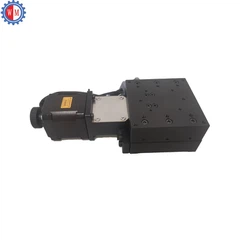
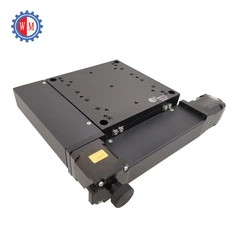
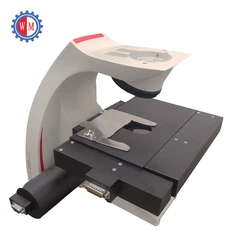
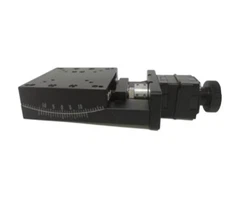
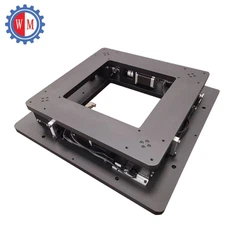
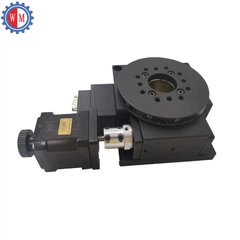
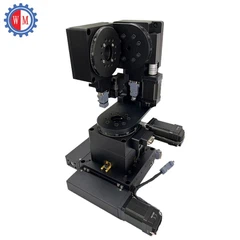
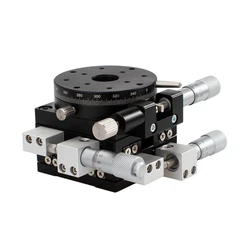


Hey there! As a supplier of motorized lift stages, I often get asked about the types of motors used in these nifty devices. So, I thought I'd sit down and write this blog to break it all down for you.
First off, let's understand what motorized lift stages are. They're essentially platforms that can move up and down, left and right, or in other directions with the help of motors. These stages are used in a wide range of applications, from scientific research to industrial manufacturing. They offer precise control over movement, which is super important in many fields.
Now, let's dive into the different types of motors commonly used in motorized lift stages.
Stepper Motors
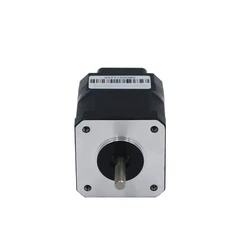
Stepper motors are one of the most popular choices for motorized lift stages. They work by dividing a full rotation into a number of steps. For example, a typical stepper motor might have 200 steps per revolution. This allows for very precise control over the movement of the stage.
One of the big advantages of stepper motors is their open - loop control. That means you don't need a feedback device like an encoder to know where the motor is. You can simply send a series of pulses to the motor, and it will move in a corresponding number of steps. This makes stepper motors relatively simple and cost - effective.
However, stepper motors do have some limitations. They can lose steps if they're overloaded or if the speed is too high. And they can get pretty hot, which might require additional cooling in some applications.
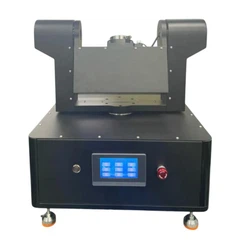
In our High Precision Motorized Z Stage, stepper motors are often used when high precision is needed at a reasonable cost. They're great for applications where you need to move the stage in small, incremental steps, like in microscopy or semiconductor testing.
Servo Motors
Servo motors are another common option for motorized lift stages. Unlike stepper motors, servo motors use a closed - loop control system. That means they have a feedback device, usually an encoder, that constantly tells the controller where the motor is.
This feedback allows servo motors to provide very high accuracy and repeatability. They can also handle higher loads and speeds compared to stepper motors. If you need to move a heavy load quickly and precisely, a servo motor is a great choice.
But servo motors come at a higher cost. The feedback system and the more complex control electronics make them pricier than stepper motors. And they require more sophisticated programming to operate correctly.
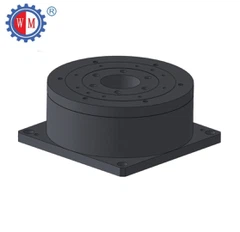
Our Short Travel Motor Elevating Stage sometimes uses servo motors when customers need high - speed and high - precision movement over a short distance. For example, in some automated assembly lines where parts need to be quickly and accurately positioned.
DC Motors
DC motors are also used in motorized lift stages, especially in some simpler and more cost - sensitive applications. DC motors are relatively easy to control. You can adjust the speed and direction of a DC motor by changing the voltage applied to it.
They're lightweight and have a simple design, which makes them suitable for portable or small - scale motorized lift stages. However, DC motors typically don't offer the same level of precision as stepper or servo motors. They can also be affected by changes in load and voltage, which might require additional control circuitry.
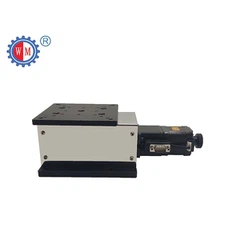
In some of our entry - level products, like certain versions of the Motor Z Translation Stage, DC motors are used to keep the cost down while still providing basic up - and - down movement capabilities.
Linear Motors
Linear motors are a bit different from the other types. Instead of rotating, they produce linear motion directly. This eliminates the need for mechanical components like ball screws or belts, which can introduce backlash and reduce accuracy.
Linear motors offer extremely high speed, high acceleration, and high precision. They're ideal for applications where you need fast and precise linear movement, such as in high - speed pick - and - place machines or high - end semiconductor manufacturing equipment.
But linear motors are expensive. The cost of the motor itself and the associated control system is quite high. And they require a lot of power, which can lead to heat generation and the need for proper cooling.


When it comes to choosing the right motor for a motorized lift stage, there are several factors to consider.
Load Capacity
The weight of the load that the stage needs to move is a crucial factor. If you have a heavy load, you'll need a motor with enough torque to move it. Servo motors and linear motors are usually better for heavy loads, while DC motors might struggle.
Precision Requirements
How accurate does the movement of the stage need to be? If you're doing something like atomic force microscopy, you'll need a motor that can provide extremely high precision. Stepper motors and servo motors are good for high - precision applications, while DC motors are more suitable for less precise tasks.
Speed
The required speed of the stage also matters. If you need to move the stage quickly, servo motors and linear motors are the way to go. Stepper motors can be used for moderate speeds, but they have limitations at high speeds.
Cost
Cost is always a consideration. If you're on a tight budget, stepper motors or DC motors might be more appropriate. But if you need the best performance, you might have to invest in servo motors or linear motors.
We, as a motorized lift stage supplier, understand that every customer has unique needs. That's why we offer a variety of motorized lift stages with different motor options. Whether you need a high - precision, high - speed stage or a simple, cost - effective one, we've got you covered.
If you're in the market for a motorized lift stage, we'd love to have a chat with you. We can help you figure out which motor and stage combination is right for your specific application. Just reach out to us, and we'll guide you through the process.
References
- "Motion Control Handbook" by Peter Nachtwey
- "Electric Motors and Drives: Fundamentals, Types, and Applications" by Austin Hughes and Bill Drury


