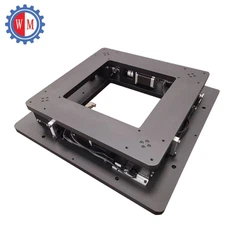
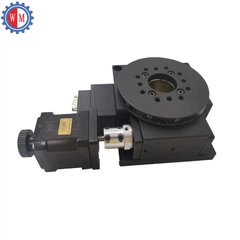
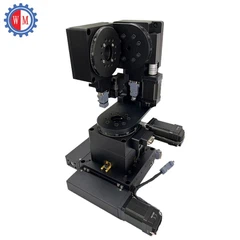
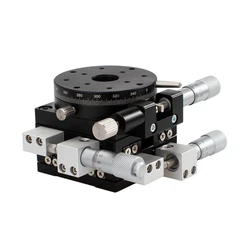


When it comes to the world of precision motion control, motorized vertical stages play a crucial role. As a trusted supplier of motorized vertical stages, I've had the privilege of working closely with various industries and customers, helping them understand and select the right equipment for their specific needs. One of the most frequently asked questions I encounter is about the travel range of a typical motorized vertical stage. In this blog post, I'll delve into this topic, exploring the factors that influence travel range, common ranges available in the market, and how to choose the right travel range for your application.
Understanding Motorized Vertical Stages
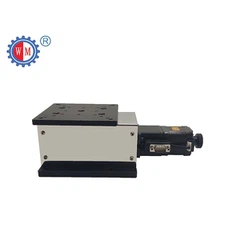
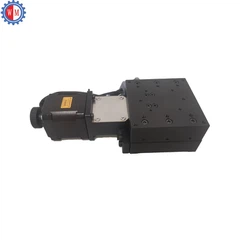
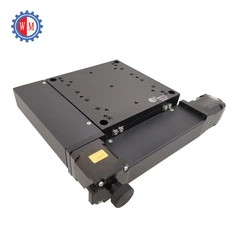
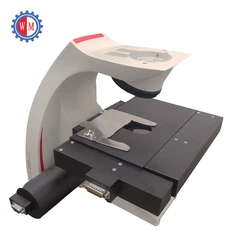
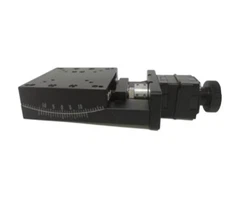
Before we dive into the travel range, let's briefly understand what a motorized vertical stage is. A motorized vertical stage is a precision device designed to move an object vertically with high accuracy and repeatability. It typically consists of a base, a moving platform, a drive mechanism (such as a stepper motor or a servo motor), and a control system. These stages are widely used in various applications, including microscopy, semiconductor manufacturing, optical inspection, and laser processing.
Factors Influencing the Travel Range
The travel range of a motorized vertical stage refers to the maximum distance the stage can move vertically. Several factors influence this range, and understanding them is essential for selecting the right stage for your application.
1. Application Requirements
The first and most important factor is the specific requirements of your application. Different applications have different vertical movement needs. For example, in microscopy, a small travel range of a few millimeters may be sufficient to focus on different layers of a sample. On the other hand, in semiconductor manufacturing, where large wafers need to be processed, a travel range of several centimeters or even more may be required.
2. Mechanical Design
The mechanical design of the stage also plays a significant role in determining the travel range. Stages with a simple design and fewer moving parts tend to have a shorter travel range. In contrast, more complex designs with advanced guide systems and support structures can accommodate longer travel distances. For example, a stage with a ball screw drive mechanism may have a different travel range compared to a stage with a linear motor drive.
3. Load Capacity
The load capacity of the stage is another crucial factor. A stage that needs to support a heavy load may have a limited travel range due to the mechanical stress and stability requirements. As the load increases, the stage may require more robust components and a stronger support structure, which can limit the maximum travel distance.
4. Precision Requirements
High-precision applications often require a shorter travel range to maintain accuracy and repeatability. As the travel distance increases, it becomes more challenging to control the movement precisely. Therefore, applications that demand extremely high precision may opt for stages with a relatively short travel range.
Common Travel Ranges in the Market
Motorized vertical stages are available in a wide range of travel distances to meet the diverse needs of different applications. Here are some common travel ranges you can find in the market:
1. Short Travel Range (Up to 10 mm)
Stages with a short travel range are typically used in applications where only a small vertical adjustment is required. These stages are often found in microscopy, optical alignment, and small-scale testing applications. They are known for their high precision and fast response times. For example, a High Precision Motorized Z Stage with a travel range of up to 10 mm can provide sub-micron accuracy, making it ideal for high-resolution microscopy.
2. Medium Travel Range (10 mm - 100 mm)
Medium travel range stages are more versatile and can be used in a variety of applications. They are suitable for tasks such as sample positioning in semiconductor inspection, small component assembly, and general laboratory work. These stages offer a good balance between precision and travel distance. A Motorized Lab Jack with a travel range in this category can provide reliable and accurate vertical movement for laboratory experiments.
3. Long Travel Range (Over 100 mm)
Stages with a long travel range are designed for applications that require significant vertical movement. These applications include large-scale manufacturing, material handling, and industrial automation. For example, in a laser cutting machine, a long travel range stage can move the workpiece vertically to achieve the desired cutting depth. A Motorized Lift Stage with a travel range over 100 mm can handle heavy loads and provide stable and precise movement over a long distance.
Choosing the Right Travel Range for Your Application
Selecting the right travel range for your motorized vertical stage is crucial to ensure optimal performance and efficiency. Here are some steps to help you make the right decision:
1. Define Your Application Requirements
Start by clearly defining the specific requirements of your application. Consider factors such as the maximum and minimum vertical movement needed, the precision required, and the load capacity. This will help you narrow down the range of suitable stages.


2. Evaluate the Available Options
Once you have defined your requirements, evaluate the different stages available in the market. Look for stages that offer the appropriate travel range, precision, and load capacity. Consider the reputation of the manufacturer and the quality of the components used.
3. Consider Future Expansion
If there is a possibility of future expansion or changes in your application, it's advisable to choose a stage with a slightly larger travel range than your current needs. This will provide some flexibility and save you from having to replace the stage in the future.
4. Consult with an Expert
If you're unsure about which travel range is right for your application, don't hesitate to consult with an expert. As a supplier of motorized vertical stages, I have extensive experience in helping customers select the right equipment. I can provide you with detailed information and recommendations based on your specific requirements.
Conclusion
The travel range of a typical motorized vertical stage is influenced by several factors, including application requirements, mechanical design, load capacity, and precision requirements. By understanding these factors and choosing the right travel range for your application, you can ensure optimal performance and efficiency. As a trusted supplier of motorized vertical stages, I offer a wide range of products with different travel ranges to meet the diverse needs of my customers. Whether you need a short travel range stage for high-precision microscopy or a long travel range stage for large-scale manufacturing, I can provide you with the right solution.
If you're interested in learning more about our motorized vertical stages or have any questions about choosing the right travel range for your application, please feel free to contact me. I'm here to help you make the best decision for your business.
References
- Precision Motion Control Handbook
- Industrial Automation and Robotics Textbook
- Journal of Microscopy and Precision Engineering


