

Hey there! As a supplier of Integrated BLDC Motors, I'm super stoked to chat with you about one of the coolest features of these motors: regenerative braking ability. It's a game - changer in the world of motors, and I can't wait to break it down for you.
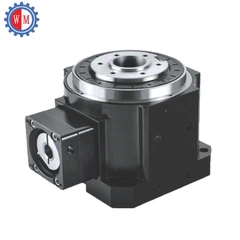
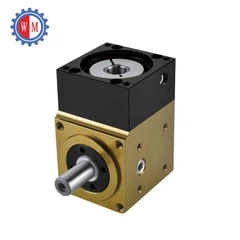
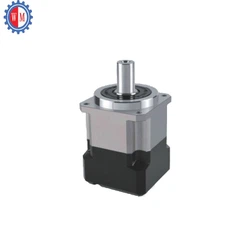
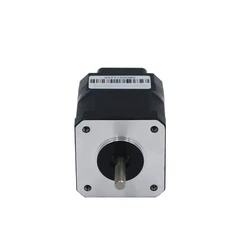
First off, let's understand what an Integrated BLDC Motor is. An Integrated BLDC Motor, also known as an Integrated Brushless Motor, combines the motor and its controller into a single unit. This design offers a bunch of advantages like compactness, ease of installation, and improved performance. And when it comes to a Brushless Dc Motor with Integrated Drive, it takes things a step further by integrating the drive electronics, making it even more efficient and user - friendly.
Now, let's dive into regenerative braking. Regenerative braking is a technology that allows the motor to act as a generator when the vehicle or equipment it's powering is decelerating or braking. Instead of just wasting the energy as heat like traditional braking systems do, the motor converts the kinetic energy of the moving object back into electrical energy.
How does it work in an Integrated BLDC Motor? Well, when you apply the brakes or the motor is required to slow down, the magnetic fields within the motor are adjusted. The motor then starts to generate electricity as the rotor continues to spin due to the inertia of the moving load. This generated electricity is then fed back into the power supply or stored in a battery for later use.
One of the biggest benefits of regenerative braking in an Integrated BLDC Motor is energy efficiency. By recovering and reusing the energy that would otherwise be lost, it can significantly reduce the overall energy consumption of the system. This is especially important in applications where energy conservation is a top priority, like in electric vehicles or battery - powered equipment.
Let's take electric vehicles as an example. In an electric car with an Integrated BLDC Motor, every time you step on the brake pedal, the motor goes into regenerative braking mode. It captures the energy from the vehicle's motion and stores it back in the battery. This not only extends the vehicle's range but also reduces the frequency of charging. Over time, this can lead to substantial cost savings for the vehicle owner.
Another advantage is the wear and tear reduction. Traditional braking systems rely on friction between brake pads and rotors to slow down the vehicle. This friction causes the brake pads and rotors to wear out over time, and they need to be replaced regularly. With regenerative braking in an Integrated BLDC Motor, a large portion of the braking is done through the electrical generation process. This means less stress on the mechanical braking components, resulting in longer - lasting brakes and lower maintenance costs.


In industrial applications, regenerative braking in Integrated BLDC Motors can also be a huge plus. For instance, in conveyor systems, when the conveyor needs to stop or slow down, the motor can recover the energy and use it to power other parts of the system. This can lead to significant energy savings in a large - scale industrial setup.
But it's not all sunshine and rainbows. There are some challenges associated with regenerative braking in Integrated BLDC Motors. One of the main challenges is the control of the regenerative process. The motor controller needs to be able to accurately sense when to switch into regenerative mode and how much energy to recover. If the control is not precise, it can lead to inefficient energy recovery or even damage to the motor or the power supply.
Another challenge is the energy storage. Storing the recovered energy efficiently is crucial. If the battery or energy storage system is not properly designed, it may not be able to handle the sudden influx of energy during regenerative braking. This can lead to overcharging, reduced battery life, or even safety hazards.
However, at our company, we've been working hard to overcome these challenges. Our team of engineers has developed advanced control algorithms that ensure precise and efficient regenerative braking. We also offer a range of energy storage solutions that are optimized for use with our Integrated BLDC Motors.
In conclusion, the regenerative braking ability of an Integrated BLDC Motor is a fantastic feature that offers numerous benefits in terms of energy efficiency, cost savings, and reduced maintenance. Whether you're in the automotive industry, industrial manufacturing, or any other field that uses electric motors, this technology can make a big difference in your operations.
If you're interested in learning more about our Integrated BLDC Motors and how their regenerative braking ability can benefit your business, we'd love to hear from you. Just reach out to us, and we can have a detailed discussion about your specific needs and how our products can meet them. We're always ready to help you make the most of this amazing technology.
References
- "Electric Motor Handbook", Second Edition, By John Hendershot and Torbjörn Miller
- "Power Electronics: Converters, Applications, and Design", Third Edition, By Ned Mohan, Tore M. Undeland, and William P. Robbins


