

Hey there! As a supplier of right angle reducers, I often get asked about the overload capacity of these nifty pieces of equipment. So, I thought I'd sit down and write a little something about it to clear up any confusion.
First off, let's talk about what a right angle reducer is. In simple terms, it's a type of gearbox that changes the direction of the input shaft by 90 degrees. These reducers are used in a wide range of applications, from industrial machinery to automotive systems. They're designed to reduce the speed of the input shaft while increasing the torque, which is super useful in many situations.
Now, onto the main topic: overload capacity. The overload capacity of a right angle reducer refers to its ability to handle loads that are greater than its rated load for a short period of time. It's important to understand this concept because in real - world applications, equipment often experiences sudden spikes in load.
There are a few factors that affect the overload capacity of a right angle reducer. One of the most significant factors is the gear design. Different gear types, such as helical gears, bevel gears, and worm gears, have different load - carrying capabilities. For example, helical gears are known for their smooth operation and high load - carrying capacity. They distribute the load over multiple teeth, which reduces stress on individual teeth and allows the reducer to handle higher loads.
Another factor is the material used in the construction of the reducer. High - quality materials like alloy steels can significantly increase the overload capacity. These materials have better strength and durability compared to regular steels, which means they can withstand higher stresses without deforming or breaking.
The lubrication system also plays a crucial role. Proper lubrication reduces friction between the gears, which in turn reduces wear and tear. A well - lubricated reducer can handle higher loads because the lubricant helps to dissipate heat and prevent overheating, which can weaken the gears and reduce the overload capacity.
Let's take a closer look at how the overload capacity is measured. Usually, it's expressed as a multiple of the rated load. For example, a reducer with an overload capacity of 200% means it can handle twice its rated load for a short period. However, it's important to note that this short period is usually limited. Exceeding the overload capacity for too long can cause permanent damage to the reducer.
In practical applications, understanding the overload capacity is essential for ensuring the reliable operation of the equipment. For instance, in a conveyor system, there might be times when a large item is placed on the conveyor suddenly. The right angle reducer driving the conveyor needs to be able to handle this sudden increase in load without failing. If the overload capacity is not sufficient, the reducer might break down, which can lead to costly downtime.
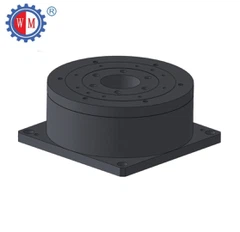
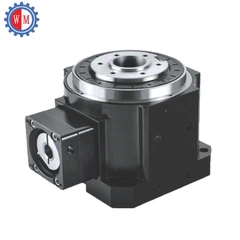
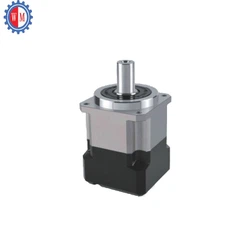
Now, let me introduce you to some of the right angle reducers we offer. We have the Gear Head Speed Reducer. This type of reducer is known for its high efficiency and excellent overload capacity. It's designed with precision - cut gears and a robust housing, which allows it to handle heavy loads with ease.
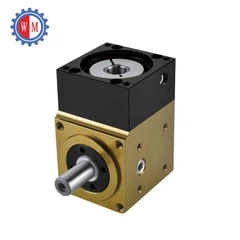
Another great option is our Hollow Solid Shaft Right Angle Reducer. This reducer offers a unique combination of flexibility and strength. The hollow shaft design allows for easy installation and connection to other components, while the solid shaft provides excellent torque transmission. It also has a good overload capacity, making it suitable for a variety of applications.
When choosing a right angle reducer, it's important to consider the specific requirements of your application. You need to know the expected load, the operating environment, and the required speed reduction ratio. Based on these factors, you can select a reducer with the appropriate overload capacity.
If you're not sure which reducer is right for you, don't worry. Our team of experts is here to help. We can analyze your application and recommend the best reducer based on your needs. We understand that every customer is different, and we're committed to providing personalized solutions.
In conclusion, the overload capacity of a right angle reducer is a critical factor that can't be ignored. It determines the reliability and performance of the equipment in real - world applications. By choosing a reducer with the right overload capacity and taking proper care of it, you can ensure long - term, trouble - free operation.
If you're in the market for a right angle reducer or have any questions about overload capacity, feel free to reach out. We're always happy to have a chat and help you find the perfect solution for your needs. Let's work together to get your equipment running at its best!


References
- Gear Technology Handbook
- Industrial Gearbox Design Manual


