


Can a Manual Goniometer Table be used for measuring angles of elastic materials?
Hey there! I'm a supplier of Manual Goniometer Tables, and I often get asked if these nifty devices can be used for measuring angles of elastic materials. Well, let's dive right into it and find out.
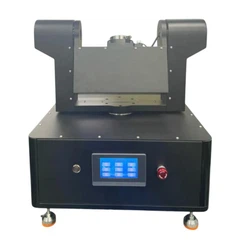
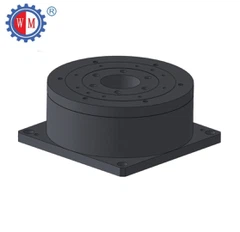
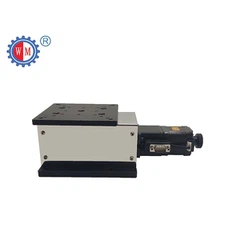
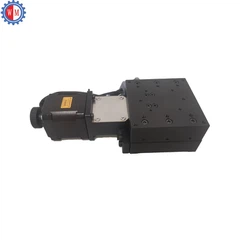
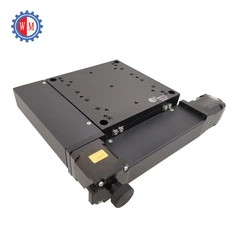
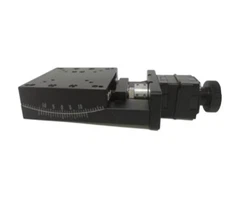
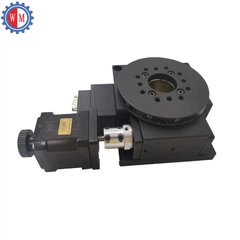
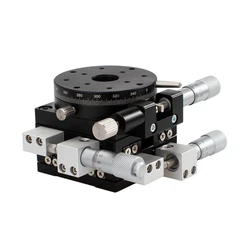
First off, what's a Manual Goniometer Table? It's a precision instrument designed to measure and adjust angles. You can find more about our Manual Goniometer Stage on our website. It's got a solid build and is pretty user - friendly. With a Manual Goniometer Table, you can make accurate angular measurements in various applications.
Now, let's talk about elastic materials. Elastic materials are those that can deform under stress and then return to their original shape when the stress is removed. Think of things like rubber bands, silicone, and some types of polymers. Measuring the angles of these materials can be a bit tricky because they're so flexible.
One of the main challenges when using a Manual Goniometer Table to measure elastic materials is the deformation. When you try to place an elastic material on the goniometer table, the act of positioning it can cause it to stretch or bend. For example, if you're trying to measure the angle of a rubber strip, just holding it in place might make it change shape, which will affect the accuracy of your measurement.
However, that doesn't mean it's impossible. In some cases, if the elastic material has a relatively low elasticity or if you can control the deformation carefully, a Manual Goniometer Table can still be useful. For instance, if you're dealing with a semi - rigid elastic material like a thin plastic sheet with some elastic properties, you might be able to get a fairly accurate measurement.
Let's consider the measurement process. When using a Manual Goniometer Table for elastic materials, you need to be extra careful about how you set up the material. You should try to minimize any external forces that could cause unnecessary deformation. One way to do this is by using gentle clamping mechanisms. Instead of squeezing the elastic material too tightly, you can use soft clamps that hold it in place without distorting its shape too much.
Another factor to consider is the stability of the measurement. Elastic materials can vibrate or move slightly due to their internal elasticity. This can make it difficult to get a stable reading on the goniometer table. To address this, you might need to wait for the material to settle down after placing it on the table. You can also use damping techniques, such as placing a small weight on the material to reduce any vibrations.
Now, let's look at the accuracy of the measurements. The accuracy of a Manual Goniometer Table depends on its design and the quality of its components. Generally, high - quality goniometer tables can provide accurate measurements within a certain tolerance. But when it comes to elastic materials, the accuracy might be affected by the deformation and movement of the material.
In some applications, a slight error in the measurement of the angle of an elastic material might not be a big deal. For example, in a prototype development of a simple rubber component, an approximate angle measurement could be sufficient. But in more critical applications, such as in the aerospace or medical industries, high - accuracy measurements are crucial. In these cases, you might need to use additional techniques or equipment to ensure the accuracy of your measurement.
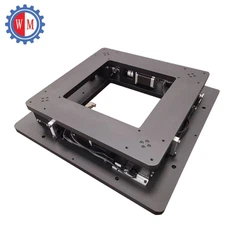
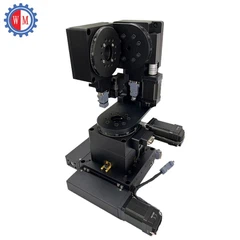
Our Pitch Yaw Roll Manual Tilt Stage can also be an option when dealing with elastic materials. This stage allows for more complex angular adjustments and can provide better control over the positioning of the material. It can be especially useful if you need to measure angles from multiple directions or if the elastic material has an irregular shape.
To sum it up, a Manual Goniometer Table can be used for measuring angles of elastic materials, but it comes with its challenges. The key is to understand the limitations and take appropriate measures to minimize the effects of deformation and movement. With careful handling and the right techniques, you can get useful angle measurements for elastic materials.
If you're in the market for a Manual Goniometer Table or have any questions about using it for measuring elastic materials, don't hesitate to reach out. We're here to help you find the best solution for your needs. Whether you're a researcher, an engineer, or a manufacturer, we can provide you with the right equipment and advice. Start a conversation with us and let's see how we can work together to meet your measurement requirements.
References


- "Measurement Techniques for Elastic Materials", Journal of Material Science, Volume 25, Issue 3
- "Precision Angle Measurement Devices", Handbook of Metrology, Second Edition


