
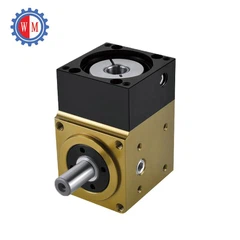
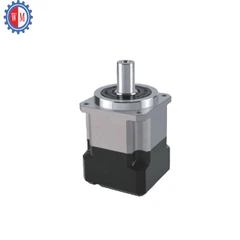
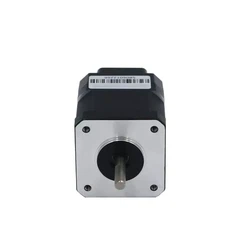


Hey there! As a supplier of Planetary Actuators, I often get asked about the overload capacity of these nifty devices. So, I thought I'd take a moment to break it down for you.
First off, let's talk about what a Planetary Actuator is. In simple terms, it's a type of gearbox that uses a system of gears arranged in a planetary configuration. You've got a central sun gear, planetary gears that revolve around the sun gear, and an outer ring gear. This setup allows for some pretty efficient power transmission and speed reduction, which is why Planetary Actuators are used in a wide range of applications, from industrial machinery to robotics.
Now, onto the main topic: overload capacity. Overload capacity refers to the ability of a Planetary Actuator to handle loads that are higher than its rated capacity for a short period of time. This is an important factor to consider because in real-world applications, actuators often encounter sudden spikes in load. For instance, in a manufacturing plant, a machine might hit a snag, causing a temporary increase in the load on the actuator.
There are several factors that affect the overload capacity of a Planetary Actuator. One of the key factors is the materials used in its construction. High-quality materials can withstand more stress and wear and tear, which means they can handle higher loads without getting damaged. For example, if the gears are made from a strong alloy steel, they'll be able to handle more force before they start to deform or break.
The design of the actuator also plays a big role. A well-designed Planetary Actuator will have components that are properly sized and optimized for the intended application. This includes things like the number of teeth on the gears, the pitch diameter, and the contact ratio. A good design ensures that the load is distributed evenly across the gears, which helps to increase the overload capacity.
Another important factor is the lubrication system. Proper lubrication reduces friction between the moving parts, which in turn reduces wear and heat generation. This allows the actuator to operate more efficiently and handle higher loads. If the lubrication system fails or is not maintained properly, it can lead to premature wear and a decrease in the overload capacity.
Now, let me give you an example to illustrate the importance of overload capacity. Imagine you're using a Solid Shaft Planetary Actuator in a conveyor system. The actuator is rated to handle a certain load, but during operation, a large package gets jammed on the conveyor. This causes a sudden increase in the load on the actuator. If the actuator has a high overload capacity, it will be able to handle this temporary spike in load without getting damaged. However, if the overload capacity is low, the actuator might break down, leading to costly downtime and repairs.
So, how do you determine the overload capacity of a Planetary Actuator? Well, most manufacturers provide this information in their product specifications. They'll usually list the rated torque and the maximum allowable overload torque. The maximum allowable overload torque is the highest torque that the actuator can handle for a short period of time without getting damaged.
It's important to note that the overload capacity is not infinite. Even if an actuator has a high overload capacity, it can still be damaged if it's subjected to excessive loads for too long. That's why it's crucial to choose an actuator with an appropriate overload capacity for your application.
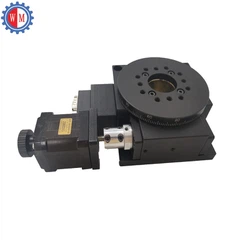
At our company, we offer a wide range of Planetary Actuators with different overload capacities to meet the needs of various applications. For example, our IP65 Planetary Gearbox is designed to be dust-tight and water-resistant, making it suitable for harsh environments. It also has a high overload capacity, which means it can handle sudden spikes in load without getting damaged.
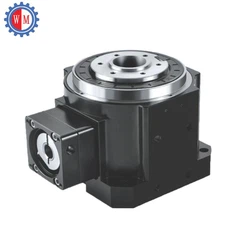
Another product we offer is the High Precision Spiral Gear Planetary Reducer. This reducer is known for its high precision and smooth operation. It also has a good overload capacity, thanks to its well-designed gear system and high-quality materials.
If you're in the market for a Planetary Actuator, it's important to consider the overload capacity along with other factors such as torque, speed, and efficiency. You should also make sure to choose a reliable supplier who can provide you with accurate information and support.
We're here to help you find the right Planetary Actuator for your application. Whether you're working on a small robotics project or a large industrial installation, we've got the expertise and the products to meet your needs. If you have any questions or need more information, don't hesitate to reach out. We'd be more than happy to discuss your requirements and help you make an informed decision.
In conclusion, the overload capacity of a Planetary Actuator is an important factor to consider when choosing an actuator for your application. It determines the actuator's ability to handle sudden spikes in load without getting damaged. By understanding the factors that affect overload capacity and choosing an actuator with an appropriate capacity, you can ensure the reliable and efficient operation of your equipment.
So, if you're looking for a high-quality Planetary Actuator with a good overload capacity, give us a shout. We're ready to assist you in finding the perfect solution for your needs.
References


- "Planetary Gearbox Design Handbook", Industry Press, 2022
- "Mechanical Engineering Principles", John Bird, 2023


