
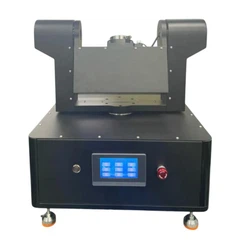
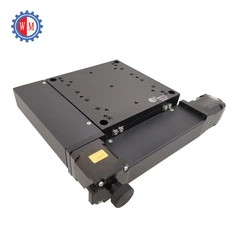
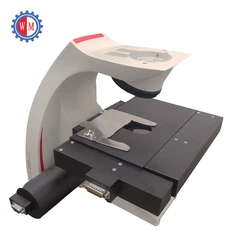
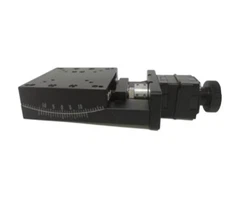
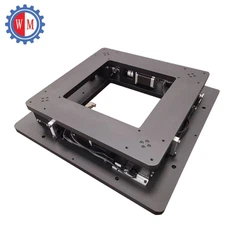
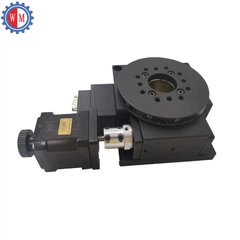
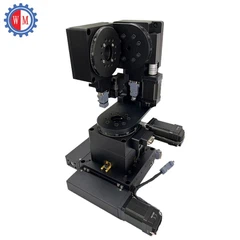
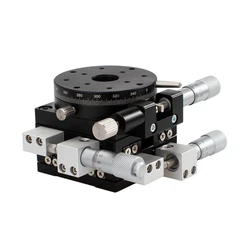
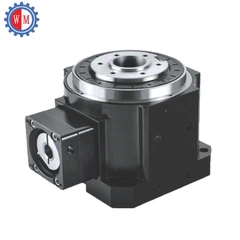


Illumination plays a crucial role in various precision engineering applications, especially in the Visual Alignment Stage. As a leading supplier of high - quality alignment stages, including the XYY Alignment Stage, Visual Alignment Stage, and Motorized UVW Alignment Stage, I have witnessed firsthand the significant impact of illumination on the performance of these stages.
1. Basics of Visual Alignment Stage
Visual Alignment Stages are designed to provide precise positioning and alignment of components in a wide range of industries, such as semiconductor manufacturing, photonics, and microscopy. These stages typically use optical systems to observe and adjust the position of objects with high accuracy. The alignment process often involves the use of cameras, microscopes, or other visual inspection tools to detect the relative position of components and make fine adjustments.
2. Impact of Illumination on Image Quality
2.1. Contrast
One of the most important aspects of illumination in the Visual Alignment Stage is its effect on image contrast. Good contrast is essential for accurately identifying the edges and features of the objects being aligned. Insufficient illumination can result in a low - contrast image, where the details of the object are difficult to distinguish. For example, in semiconductor wafer alignment, a low - contrast image may make it challenging to detect the alignment marks accurately, leading to misalignment and potential production errors.
On the other hand, excessive illumination can cause over - exposure, which also degrades the image quality. Over - exposed areas in the image appear as white blobs, obscuring important details. By carefully controlling the intensity and direction of illumination, we can optimize the contrast of the image, making it easier to perform accurate alignment.
2.2. Uniformity
Illumination uniformity is another critical factor. Non - uniform illumination can create shadows and uneven brightness across the image, which can mislead the alignment algorithm. In a Visual Alignment Stage, where precision is of the utmost importance, even small variations in illumination can lead to significant alignment errors. For instance, if the illumination is brighter on one side of the object, the alignment system may incorrectly perceive the object as being misaligned, resulting in unnecessary adjustments.
3. Influence on Alignment Accuracy
3.1. Feature Detection
Accurate feature detection is the foundation of successful alignment. Illumination directly affects the ability of the vision system to detect and measure the features of the objects. Well - illuminated objects have clearly defined edges and features, which can be easily recognized by the alignment software. In contrast, poor illumination can cause features to blend together or become invisible, reducing the accuracy of the alignment process.
For example, in the alignment of optical fibers, proper illumination is required to clearly identify the core and cladding of the fibers. If the illumination is not optimal, the alignment system may misinterpret the position of the fibers, leading to high coupling losses.
3.2. Measurement Precision
The precision of the measurement of object positions is also affected by illumination. In a Visual Alignment Stage, the vision system measures the position of objects based on the images it captures. Any distortion or noise in the image due to improper illumination can introduce errors in these measurements. High - quality illumination can minimize these errors, allowing for more precise alignment.


4. Different Types of Illumination and Their Effects
4.1. Backlighting
Backlighting is a common illumination technique in Visual Alignment Stages. It involves placing the light source behind the object being aligned. Backlighting is particularly useful for highlighting the silhouette of the object, making it easy to detect the outer edges. This is very effective in applications where the alignment is based on the shape of the object, such as in the alignment of mechanical parts.
However, backlighting may not be suitable for applications where internal features need to be detected. Since the light passes through the object, internal details may be obscured, and the image may lack sufficient contrast for accurate feature identification.
4.2. Frontlighting
Frontlighting, where the light source is placed in front of the object, can be used to illuminate the surface features of the object. It is useful for highlighting surface textures, scratches, or other surface - related features. Frontlighting can provide good contrast for objects with complex surface geometries.
But frontlighting can also cause reflections, especially on shiny surfaces. These reflections can create bright spots in the image, which can interfere with the alignment process.
4.3. Ring Lighting
Ring lighting is a circular light source that surrounds the camera lens. It provides uniform illumination from all directions, reducing shadows and improving the overall image quality. Ring lighting is often used in applications where high - quality, uniform illumination is required, such as in the alignment of small components.
5. Considerations for Selecting Illumination in Visual Alignment Stages
5.1. Object Characteristics
The type of object being aligned is an important consideration when selecting illumination. Different objects have different optical properties, such as transparency, reflectivity, and surface roughness. For example, transparent objects may require backlighting to be clearly visible, while reflective objects may need diffused lighting to reduce glare.
5.2. Alignment Requirements
The specific alignment requirements also play a role in illumination selection. If high - precision alignment of small features is required, a high - intensity, well - focused illumination source may be necessary. On the other hand, if the alignment is based on the overall shape of the object, a more general illumination method may be sufficient.
5.3. Compatibility with the Vision System
The illumination system must be compatible with the vision system used in the Visual Alignment Stage. The spectral characteristics of the light source should match the sensitivity of the camera or other visual inspection tools. For example, some cameras are more sensitive to certain wavelengths of light, and using a light source with the appropriate wavelength can improve the image quality.
6. Conclusion and Call to Action
In conclusion, illumination has a profound impact on the performance of the Visual Alignment Stage. It affects image quality, alignment accuracy, and the overall efficiency of the alignment process. As a supplier of advanced alignment stages, we understand the importance of proper illumination and offer solutions that can be customized to meet the specific illumination needs of our customers.
If you are in the market for a high - quality Visual Alignment Stage or need advice on optimizing the illumination for your alignment application, we are here to help. Our team of experts can provide you with in - depth technical support and guidance to ensure that you achieve the best possible alignment results. Contact us today to start a discussion about your requirements and explore how our products can enhance your alignment processes.
References
- Smith, J. (2018). Precision Alignment Techniques in Manufacturing. Springer.
- Johnson, A. (2019). Vision - Based Alignment Systems: Principles and Applications. CRC Press.
- Brown, C. (2020). Illumination Design for Machine Vision Systems. Wiley.


