

Hey there! As a supplier of Manual Multi - Axis Stages, I often get asked about the difference between manual and motorized multi - axis stages. So, I thought I'd break it down for you in this blog post.
Let's start with the basics. Multi - axis stages are devices that allow for movement along multiple axes, typically in X, Y, Z, and sometimes rotation (R). They're used in a wide range of applications, from microscopy and semiconductor manufacturing to photonics and laser processing.
Manual Multi - Axis Stages
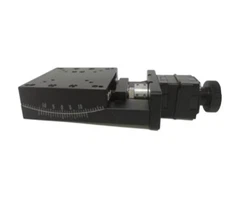
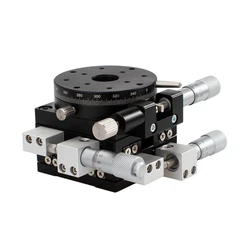
Manual multi - axis stages are, well, manually operated. You use handwheels or knobs to control the movement of the stage along each axis. It's like driving a stick - shift car; you're in full control of every little movement.
One of the biggest advantages of manual stages is their simplicity. They're easy to understand and operate. You don't need to deal with complex software or programming. If you're just doing some basic positioning or adjustment work, a manual stage can get the job done quickly. For example, in a teaching lab where students are learning about basic optical alignment, a manual stage is a great choice. It allows them to physically feel the movement and get a better understanding of how the stage works.
Another benefit is cost. Manual stages are generally more affordable than their motorized counterparts. If you're on a tight budget but still need a reliable multi - axis positioning solution, a manual stage can be a great option.
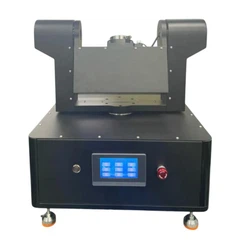
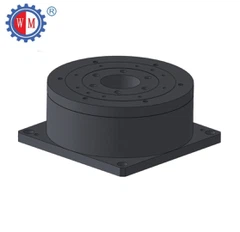
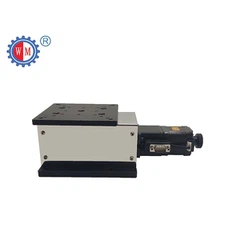
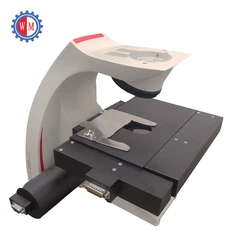
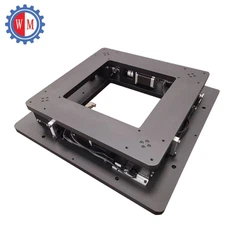
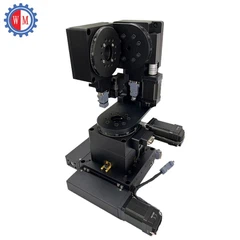
Let's talk about some of our products. We offer a variety of manual multi - axis stages, such as the XYZR Axis Manual Stage. This stage provides movement along the X, Y, Z axes as well as rotation, giving you a high degree of flexibility in positioning your sample or equipment. The Manual XZ Translation Stage is perfect for applications where you only need movement in the X and Z directions, like in some simple microscopy setups. And if you need movement in all three linear directions, our Manual Linear XYZ Translation Stage is a solid choice.


However, manual stages do have their limitations. Precision can be an issue, especially when you need very fine adjustments. It can be difficult to achieve extremely accurate positioning by hand, as human error can come into play. Also, they're not very suitable for high - throughput applications. If you need to perform a large number of repetitive positioning tasks, using a manual stage can be time - consuming and tiring.
Motorized Multi - Axis Stages
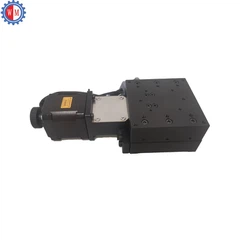
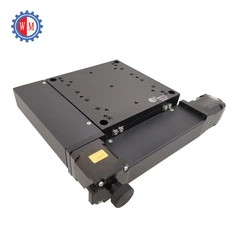
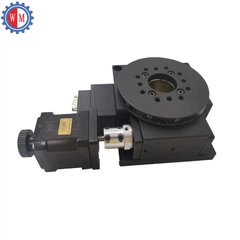
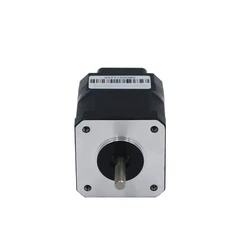
Motorized multi - axis stages, on the other hand, are driven by motors. These motors can be controlled using software, which allows for precise and automated movement. It's like having a self - driving car; the system takes care of the movement for you.
Precision is one of the main advantages of motorized stages. They can achieve extremely high levels of accuracy, often down to the micrometer or even nanometer level. This makes them ideal for applications where precise positioning is crucial, such as in semiconductor lithography or high - resolution microscopy.
Automation is another big plus. With a motorized stage, you can program a sequence of movements and let the stage run the program automatically. This is great for high - throughput applications. For example, in a large - scale manufacturing process where you need to perform the same positioning task hundreds or thousands of times, a motorized stage can save a lot of time and labor.
But motorized stages also come with some drawbacks. They're more expensive than manual stages, not just in terms of the initial purchase price but also in terms of maintenance and operation. You need to have the right software and hardware to control the motors, and if something goes wrong, it can be more difficult and costly to fix. They're also more complex to set up and operate. You need to have some technical knowledge to program the movements and troubleshoot any issues that may arise.
Comparing the Two
When it comes to choosing between a manual and a motorized multi - axis stage, it really depends on your specific needs. If you're working on a small - scale project with a limited budget and don't need extremely high precision or automation, a manual stage is probably the way to go. You can get a good amount of control and flexibility without breaking the bank.
On the other hand, if you're in a high - tech industry where precision and automation are essential, a motorized stage is the better choice. It may cost more upfront, but the increased efficiency and accuracy can pay off in the long run.
In terms of speed, motorized stages are generally faster when it comes to repetitive movements. They can move quickly and accurately between different positions, while manual stages are slower as you have to turn the handwheels or knobs for each adjustment.
In terms of ease of use, manual stages are more intuitive for beginners. You don't need to learn how to program or operate complex software. But as your requirements become more advanced, the learning curve for motorized stages can be worth it.
Conclusion
So, there you have it! The difference between manual and motorized multi - axis stages boils down to precision, automation, cost, and ease of use. As a supplier of manual multi - axis stages, I believe that our products offer a great balance of functionality and affordability. But I also understand that in some cases, a motorized stage is the better option.
If you're interested in learning more about our manual multi - axis stages or have any questions about which type of stage is right for your application, don't hesitate to reach out. We're here to help you make the best choice for your needs. Whether you're a researcher, a manufacturer, or an educator, we've got the right stage for you. Let's have a chat and see how we can work together to meet your positioning requirements.
References
- "Precision Motion Control: A Guide to Linear and Rotary Stages" by Peter H. Siegel
- "Optical Engineering: Design, Fabrication, and Testing" by Douglas C. Sinclair


