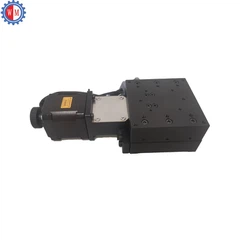
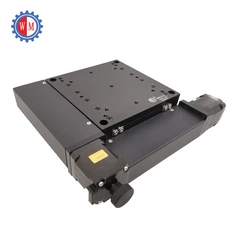
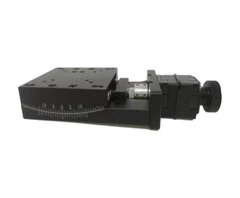


As a supplier of Motorized 2 Axis Stages, I often encounter inquiries from customers about the control accuracy in different operating modes of these stages. In this blog, I will delve into this topic to provide a comprehensive understanding of how control accuracy varies across various operating scenarios.
Understanding Motorized 2 Axis Stages
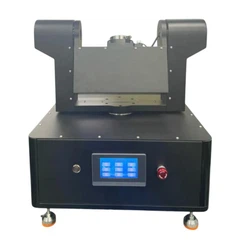
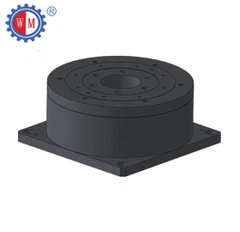
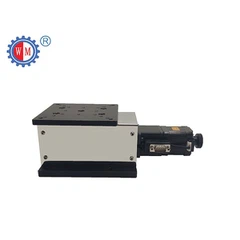
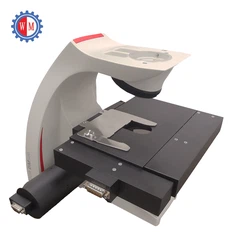
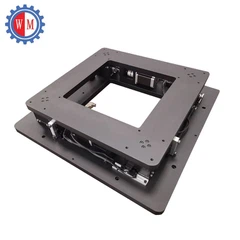
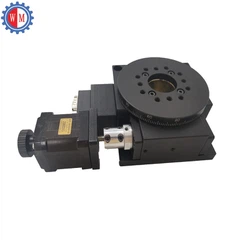
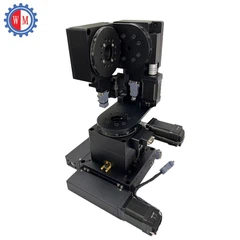
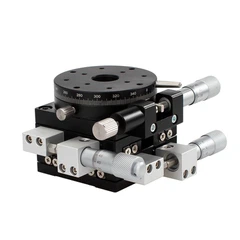
Motorized 2 Axis Stages, also known as Motorized Xy Linear Stage, are essential components in many precision engineering applications. They offer precise positioning in two orthogonal directions (X and Y), enabling accurate movement and alignment of objects. These stages are commonly used in industries such as microscopy, semiconductor manufacturing, and laser processing, where high precision is crucial.
Operating Modes and Their Impact on Control Accuracy
1. Open - Loop Control Mode
In open - loop control mode, the motorized 2 axis stage operates without feedback from the actual position of the stage. The controller sends a series of pulses to the motor, and the motor moves a certain number of steps based on these pulses. This mode is relatively simple and cost - effective, but it has limitations in terms of control accuracy.
One of the main factors affecting accuracy in open - loop control is step loss. If the load on the stage is too high or the acceleration is too rapid, the motor may miss steps, leading to a deviation from the intended position. Additionally, variations in the motor's performance due to temperature changes or mechanical wear can also impact the accuracy. In general, the control accuracy in open - loop control mode is typically in the range of several micrometers to tens of micrometers, depending on the quality of the motor and the mechanical design of the stage.
2. Closed - Loop Control Mode
Closed - loop control mode addresses the limitations of open - loop control by incorporating a position feedback device, such as an encoder. The encoder continuously measures the actual position of the stage and sends this information back to the controller. The controller then compares the actual position with the desired position and adjusts the motor's movement accordingly.
This feedback mechanism significantly improves the control accuracy. By constantly correcting for any deviations, the stage can achieve a much higher level of precision. In closed - loop control, the control accuracy can be as high as a few tenths of a micrometer or even better, depending on the resolution of the encoder and the quality of the control algorithm. However, closed - loop control systems are more complex and expensive than open - loop systems, as they require additional hardware and more sophisticated control software.
3. Servo Control Mode
Servo control mode is a more advanced form of closed - loop control. It uses a servo motor, which is designed to provide high torque and precise control. In servo control, the controller not only monitors the position but also the speed and torque of the motor.
This mode offers excellent dynamic performance and high control accuracy. It can quickly respond to changes in the load or the desired position, making it suitable for applications that require rapid and precise movements. The control accuracy in servo control mode can be extremely high, often in the sub - micrometer range. However, servo control systems are the most expensive and complex of the three modes, requiring high - end motors, encoders, and controllers.
Factors Affecting Control Accuracy in Different Modes
1. Mechanical Design
The mechanical design of the motorized 2 axis stage plays a crucial role in determining the control accuracy. Factors such as the quality of the linear guides, the backlash in the drive system, and the stiffness of the stage structure can all affect how accurately the stage can move. For example, a stage with high - quality linear guides will have less friction and better repeatability, leading to improved accuracy.


2. Motor Performance
The type and performance of the motor also have a significant impact on control accuracy. Stepper motors are commonly used in open - loop control systems, while servo motors are preferred for closed - loop and servo control modes. Servo motors generally offer better torque characteristics, higher speed, and more precise control, resulting in higher accuracy.
3. Control Algorithm
The control algorithm used in the controller is another important factor. A well - designed control algorithm can compensate for various disturbances and errors, improving the overall control accuracy. Advanced algorithms can also adapt to changes in the operating conditions, such as load variations or temperature changes, to maintain high accuracy.
4. Environmental Conditions
Environmental conditions, such as temperature, humidity, and vibration, can affect the control accuracy of motorized 2 axis stages. Temperature changes can cause thermal expansion or contraction of the stage components, leading to dimensional changes and position errors. Vibration can also cause the stage to move unexpectedly, affecting the accuracy. To minimize the impact of environmental conditions, it is often necessary to use temperature - controlled enclosures or vibration - isolation mounts.
Applications and the Required Control Accuracy
1. Microscopy
In microscopy applications, high control accuracy is essential for precise positioning of the sample. For example, in confocal microscopy, where the sample needs to be scanned in a precise grid pattern, the control accuracy of the motorized 2 axis stage should be in the sub - micrometer range. Closed - loop or servo control modes are typically used in these applications to achieve the required accuracy.
2. Semiconductor Manufacturing
Semiconductor manufacturing processes, such as photolithography and wafer inspection, require extremely high precision. The control accuracy of the motorized 2 axis stages used in these processes can be as high as a few nanometers. Servo control mode is almost always used in semiconductor manufacturing to meet these stringent accuracy requirements.
3. Laser Processing
Laser processing applications, such as laser cutting and engraving, also require high control accuracy. The stage needs to move the workpiece precisely under the laser beam to ensure accurate processing. Depending on the application, the control accuracy can range from a few micrometers to sub - micrometer levels. Closed - loop or servo control modes are commonly used to achieve the desired accuracy.
Conclusion
In conclusion, the control accuracy of motorized 2 axis stages varies significantly depending on the operating mode. Open - loop control mode offers a simple and cost - effective solution but has limited accuracy, while closed - loop and servo control modes provide much higher accuracy at the cost of increased complexity and expense. When selecting a motorized 2 axis stage, it is important to consider the specific requirements of the application, including the required control accuracy, the budget, and the environmental conditions.
If you are in need of a high - quality Motorized 2 Axis Stages or Motorized XY Tables Built - in Controllers for your application, please feel free to contact us. Our team of experts can help you choose the right stage and operating mode to meet your specific needs. We look forward to discussing your project and providing you with the best solutions.
References
- "Precision Motion Control: Principles and Applications" by John J. Craig
- "Motion Control Handbook" by Peter A. Gutmann
- Technical documents from leading motorized stage manufacturers


