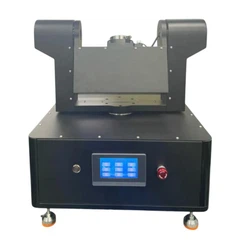
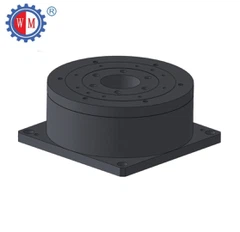
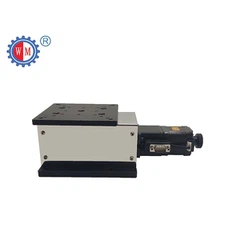
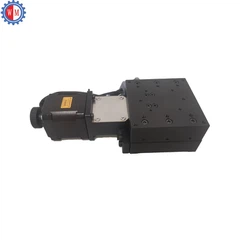
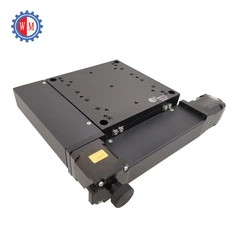
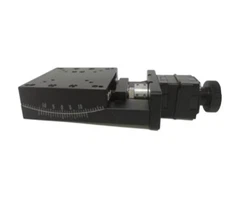
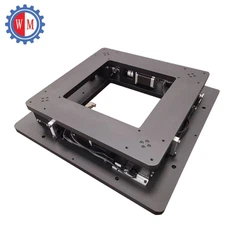
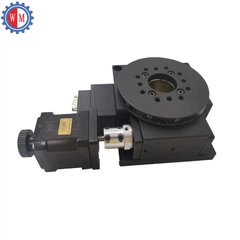
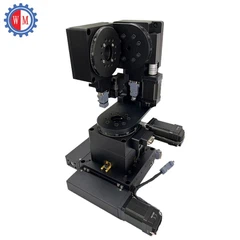
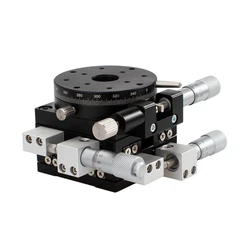


Hey there! As a supplier of UVW Align Stages, I'm super stoked to chat with you about all the awesome customization options available for these bad boys. Whether you're in the manufacturing, research, or any other industry that requires precise alignment, understanding these customization choices can make a huge difference in getting the perfect stage for your specific needs.
Motorized vs. Manual Control
Let's kick things off with one of the most fundamental customization options: the control mechanism. You've got two main choices here: motorized and manual.
The Motorized UVW Alignment Stage is a game - changer if you need high - precision and repeatable movements. With motorized control, you can program the stage to move in specific increments, angles, and sequences. This is ideal for automated manufacturing processes where you need to align components quickly and accurately every single time. It also allows for remote operation, which can be a huge plus in environments where direct access to the stage might be difficult or dangerous.
On the other hand, a manual UVW Align Stage gives you hands - on control. It's a great option if you're doing small - scale projects, prototyping, or if you prefer the tactile feel of adjusting the alignment yourself. Manual stages are often more affordable and can be a good starting point for those new to alignment technology.
Travel Range
Another crucial customization option is the travel range of the stage. The travel range refers to how far the stage can move in the X, Y, and Z directions, as well as how much it can rotate (U, V, and W axes).
If you're working with large components, you'll need a stage with a wide travel range. For example, in the aerospace industry, where you might be aligning large panels or parts, a stage with a travel range of several inches or even feet could be necessary. On the flip side, if you're dealing with micro - scale components like microchips or optical fibers, a stage with a very small travel range, perhaps in the millimeter or even micrometer range, will be more appropriate.
Load Capacity
Load capacity is something you definitely can't overlook. It's all about how much weight the stage can support without sacrificing its alignment accuracy.
If you're using heavy equipment or large components, you'll need a stage with a high load capacity. For instance, in the automotive industry, when aligning engine parts or large chassis components, a stage that can handle hundreds or even thousands of pounds might be required. On the other hand, if you're working with lightweight materials like thin films or small sensors, a stage with a lower load capacity will do the trick.
Precision and Resolution
Precision and resolution are key factors when it comes to UVW Align Stages. Precision refers to how closely the stage can position itself to the desired location, while resolution is the smallest increment of movement that the stage can achieve.
For applications that demand extremely high precision, like semiconductor manufacturing or high - end optical alignment, you'll want a stage with a high - resolution encoder and precise motion control. These stages can achieve positioning accuracies in the nanometer or sub - nanometer range. However, if your application doesn't require such extreme precision, a stage with a lower resolution might be more cost - effective.
Mounting Options
Mounting options are another area where customization comes into play. You need to make sure that the UVW Align Stage can be easily integrated into your existing setup.
Some stages come with standard mounting holes that allow for easy installation on optical tables or other equipment. Others can be customized with special mounting brackets or adapters to fit specific machinery or workspaces. For example, if you're using a custom - built manufacturing rig, you might need a stage that can be mounted in a non - standard orientation or with a unique mounting pattern.


Specialized Configurations
There are also some specialized configurations available for UVW Align Stages.
The XYY Alignment Stage is a variation that offers different degrees of freedom and movement patterns compared to the standard UVW setup. This can be useful in applications where you need to align components in a specific way that the standard stage can't accommodate.
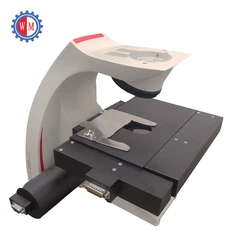
The Visual Alignment Stage is another interesting option. It comes with built - in cameras or vision systems that allow you to visually monitor the alignment process. This is especially helpful in applications where precise visual alignment is required, such as in microscopy or optical assembly.
Material and Finish
The material and finish of the UVW Align Stage can also be customized. The choice of material affects the stage's durability, weight, and resistance to environmental factors.
Aluminum is a popular choice because it's lightweight, corrosion - resistant, and has good thermal properties. Stainless steel, on the other hand, is more robust and can withstand harsh environments. The finish of the stage can also be customized. For example, a black anodized finish can provide better protection against scratches and corrosion, while also reducing glare in optical applications.
Compatibility with Other Equipment
Finally, it's important to consider the compatibility of the UVW Align Stage with other equipment in your setup. This includes things like controllers, sensors, and software.
You'll want to make sure that the stage can communicate effectively with your existing control system. Some stages come with open - source software interfaces that allow for easy integration with third - party software. Others can be customized to work with specific sensors, such as laser displacement sensors or force sensors, depending on your application requirements.
In conclusion, there are a ton of customization options available for UVW Align Stages. From the control mechanism to the material and finish, each option can be tailored to meet your specific needs. Whether you're a small - scale researcher or a large - scale manufacturer, there's a UVW Align Stage out there that's perfect for you.
If you're interested in learning more about our UVW Align Stages or want to discuss your specific customization requirements, don't hesitate to reach out. We're here to help you find the best solution for your alignment needs.
References
- "Precision Motion Control Handbook"
- Industry reports on alignment stage technology


