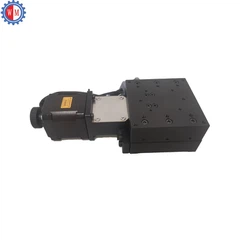
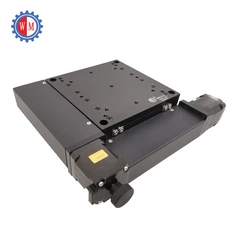
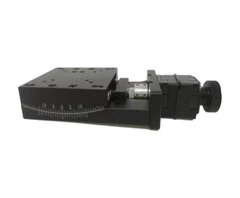


As a supplier of Integrated Motor Drives, I've had the privilege of working closely with these advanced systems and witnessing their widespread adoption across various industries. Integrated Motor Drives, which combine a motor and its drive electronics into a single unit, offer numerous advantages such as compact design, simplified installation, and reduced wiring. However, like any technology, they also come with their own set of disadvantages. In this blog post, I'll delve into some of the key drawbacks of Integrated Motor Drives that potential users should be aware of.
1. Limited Customization
One of the primary disadvantages of Integrated Motor Drives is the limited scope for customization. Since these units are pre - engineered to combine the motor and drive electronics, it can be challenging to modify specific components according to unique application requirements. For example, if a particular industrial process demands a motor with a very specific torque - speed characteristic or a drive with custom control algorithms, it may be difficult to achieve this with an off - the - shelf Integrated Motor Drive.
In contrast, traditional motor - drive setups allow for more flexibility. Users can select a motor based on its mechanical specifications and then pair it with a drive that can be programmed to meet the exact control needs. This level of customization is often restricted in Integrated Motor Drives, which are designed to serve a broad range of general applications. As a result, some users may find that they have to compromise on performance to fit their application into the capabilities of an available integrated unit.
2. Higher Initial Cost
Integrated Motor Drives typically come with a higher initial cost compared to separate motor and drive systems. The integration of the motor and drive electronics into a single unit involves additional engineering and manufacturing processes, which contribute to the increased price. Moreover, the development of these integrated systems often requires significant research and development investment, which is reflected in the final product cost.
For small - scale projects or applications with budget constraints, the higher upfront cost of Integrated Motor Drives can be a major deterrent. In such cases, users may opt for traditional motor - drive combinations, which can be more cost - effective in the short term. Even for larger projects, the cost difference can be substantial, and companies may need to carefully evaluate whether the benefits of integration justify the additional expense.
3. Complex Troubleshooting and Maintenance
Troubleshooting and maintaining Integrated Motor Drives can be more complex than dealing with separate motor and drive systems. When a problem occurs in an integrated unit, it can be difficult to isolate whether the issue lies in the motor, the drive electronics, or the interface between them. Since the components are closely integrated, accessing and testing individual parts can be challenging, often requiring specialized tools and expertise.
In a traditional setup, technicians can easily test the motor and the drive independently. If the motor fails, it can be replaced or repaired without affecting the drive, and vice versa. However, in an Integrated Motor Drive, a fault in one component may require the entire unit to be replaced or sent back to the manufacturer for repair, which can result in longer downtime and higher maintenance costs.
4. Heat Dissipation Challenges
Heat is a significant concern in any motor - drive system, and Integrated Motor Drives are no exception. In fact, the integration of the motor and drive electronics in a single unit can exacerbate heat dissipation problems. The motor generates heat during operation, and the drive electronics also produce heat when converting electrical energy into mechanical energy. When these heat - generating components are placed in close proximity, the overall heat density increases.
Efficient heat dissipation is crucial for the reliable operation of both the motor and the drive electronics. Excessive heat can lead to reduced component lifespan, decreased performance, and even system failures. To address this issue, Integrated Motor Drives often require more sophisticated cooling mechanisms, such as heat sinks or fans. These additional cooling components add to the cost and complexity of the system and may also increase the overall size of the unit.
5. Compatibility Issues
Integrated Motor Drives may face compatibility issues with other equipment in a system. For example, they may not be fully compatible with existing control systems, sensors, or communication protocols. This can be a problem when integrating an Integrated Motor Drive into an existing industrial automation setup.
If a company wants to upgrade its motor - drive system to an integrated unit, it may find that the new drive does not communicate properly with the existing programmable logic controller (PLC) or other control devices. This can require additional programming, the installation of interface modules, or even the replacement of other equipment, all of which add to the cost and complexity of the upgrade.
6. Limited Upgradeability
As technology advances, there is often a need to upgrade motor - drive systems to improve performance, add new features, or meet changing industry standards. However, Integrated Motor Drives can be more difficult to upgrade compared to separate motor and drive systems.
Since the motor and drive are integrated, upgrading one component may require upgrading the entire unit. For example, if a new and more efficient drive technology becomes available, it may not be possible to simply replace the drive electronics in an Integrated Motor Drive without also replacing the motor. This lack of upgradeability can be a drawback for companies that want to keep their systems up - to - date with the latest technology.
Potential Solutions and Our Offerings
Despite these disadvantages, Integrated Motor Drives still have a lot to offer in terms of convenience and performance in many applications. At our company, we understand the challenges associated with these systems, and we strive to minimize their impact.
We offer a range of Integrated Motor Drives, such as the Modbus RS485 Stepper Driver for Nema 23 and the Programmable Modbus RS485 Motor Drive, which are designed to provide a good balance between performance and flexibility. Our technical support team is always available to assist customers with customization, troubleshooting, and maintenance. We also work closely with customers to ensure compatibility with their existing systems and provide guidance on upgrade options.
If you are considering an Integrated Motor Drive for your application, we encourage you to contact us for a detailed discussion. Our experts can help you evaluate whether an integrated solution is the right choice for you and provide solutions to address any potential challenges. Whether you are looking for a cost - effective solution, high - performance drive, or seamless integration with your existing equipment, we are here to help. Let's start a conversation and find the best Integrated Motor Drive solution for your needs.


References
- “Motor and Drive System Design Handbook,” by various industry experts.
- Technical papers on Integrated Motor Drives published in leading electrical engineering journals.


