
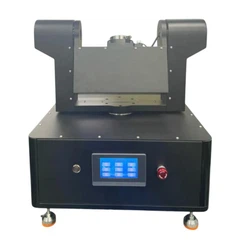
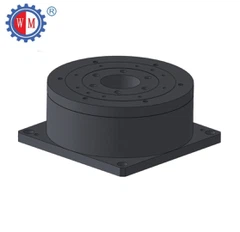
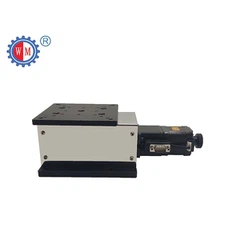
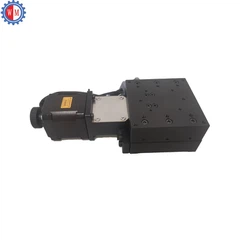
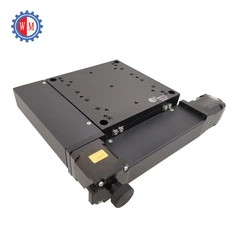
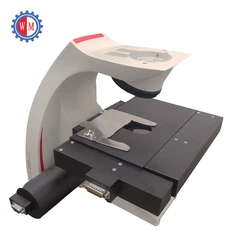
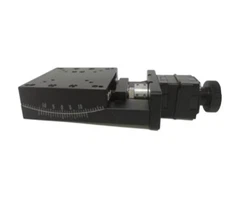
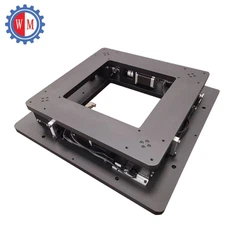
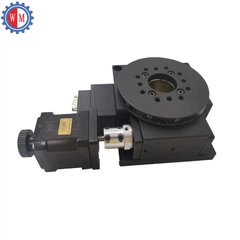
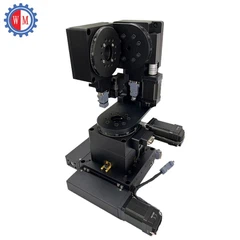
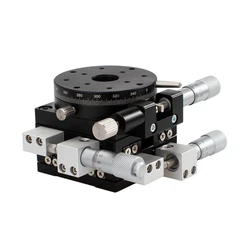
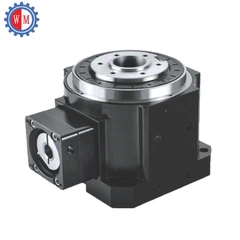


Hey there! As a supplier of Manual Goniometer Tables, I often get asked how to select the right one for a specific application. It's not as straightforward as it might seem, but with the right knowledge, you can make an informed decision. In this blog, I'll walk you through the key factors to consider when choosing a Manual Goniometer Table.
Understand Your Application Requirements
First things first, you need to have a clear idea of what your application demands. Are you working in a research lab, an industrial setting, or perhaps an educational environment? Each context comes with its own unique set of requirements.
For instance, in a research lab, precision is often paramount. You might be conducting experiments that require extremely accurate angular measurements and adjustments. On the other hand, in an industrial setting, durability and ease of use could be more important, especially if the table will be used frequently or in a harsh environment.
Consider the Range of Motion
The range of motion is a crucial factor when selecting a Manual Goniometer Table. Different applications may require different angles of rotation or tilt. You need to determine the minimum and maximum angles you'll need to achieve for your specific task.
Some applications may only need a limited range of motion, while others may require a full 360 degrees of rotation or a significant tilt angle. For example, if you're working on a project that involves aligning optical components, you'll likely need a table with a fine and precise range of motion. Check out our Pitch Yaw Roll Manual Tilt Stage for a wide range of motion options.
Evaluate the Accuracy and Resolution
Accuracy and resolution are closely related to the precision of your work. The accuracy of a Manual Goniometer Table refers to how close the actual angle of rotation or tilt is to the desired angle. Resolution, on the other hand, is the smallest increment by which you can adjust the angle.
In applications where high precision is required, such as in semiconductor manufacturing or microscopy, you'll need a table with high accuracy and resolution. Look for tables that offer a resolution of at least 0.01 degrees or better. Our Manual Goniometer Stage is known for its excellent accuracy and resolution, making it a great choice for precision applications.
Assess the Load Capacity
Another important consideration is the load capacity of the table. You need to know how much weight the table can support without compromising its performance. This is especially important if you'll be placing heavy equipment or samples on the table.
Overloading the table can lead to inaccurate measurements, reduced stability, and even damage to the table. To determine the appropriate load capacity, consider the weight of the equipment or samples you'll be using, as well as any additional forces that may be applied during operation.
Look at the Construction and Materials
The construction and materials of the Manual Goniometer Table can have a significant impact on its performance and durability. High-quality materials and a robust construction will ensure that the table can withstand the rigors of your application and provide reliable service over time.
Look for tables made from strong and stable materials such as aluminum or stainless steel. These materials are resistant to corrosion and wear, making them suitable for a wide range of environments. Additionally, pay attention to the design of the table, including the quality of the bearings and the smoothness of the movement.
Check the Ease of Use and Adjustment
A Manual Goniometer Table should be easy to use and adjust, even by operators with limited experience. Look for tables that have intuitive controls and clear markings, making it easy to set and read the angles.
Some tables may offer features such as quick-lock mechanisms or fine-adjustment knobs, which can make the adjustment process faster and more precise. Consider how easy it will be to integrate the table into your existing setup and whether it will require any special tools or training to operate.
Compare Prices and Features
Of course, price is always a consideration when making a purchase. However, it's important to not just focus on the price alone but also on the features and quality of the table. You want to get the best value for your money, so compare the prices and features of different models before making a decision.
Keep in mind that a higher-priced table may offer better accuracy, resolution, and durability, which can be worth the investment in the long run. On the other hand, if you have a limited budget, there are still many options available that can meet your basic requirements.
Seek Customer Reviews and Recommendations
One of the best ways to get an idea of the performance and reliability of a Manual Goniometer Table is to read customer reviews and seek recommendations from others in your industry. Look for reviews on online platforms, industry forums, or ask colleagues and peers for their experiences.
Customer reviews can provide valuable insights into the strengths and weaknesses of a particular model, as well as any issues or challenges that users have encountered. Additionally, recommendations from others who have used the table in similar applications can help you make a more informed decision.


Conclusion
Selecting the right Manual Goniometer Table for a specific application requires careful consideration of several factors, including your application requirements, range of motion, accuracy and resolution, load capacity, construction and materials, ease of use, price, and customer reviews. By taking the time to evaluate these factors and compare different models, you can find a table that meets your needs and provides reliable performance.
If you have any questions or need further assistance in selecting the right Manual Goniometer Table for your application, don't hesitate to reach out. We're here to help you make the best choice for your project. Contact us today to start the conversation and explore our range of Manual Goniometer Tables.
References
- General knowledge in the field of precision measurement equipment
- Industry standards and guidelines for goniometer tables


