
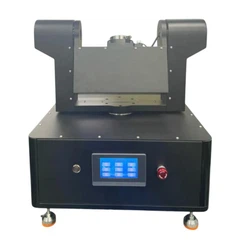
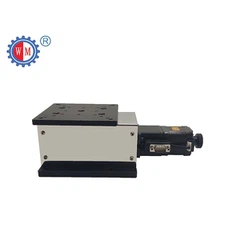
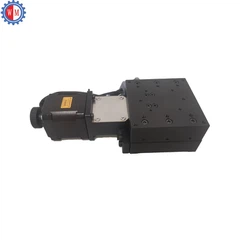
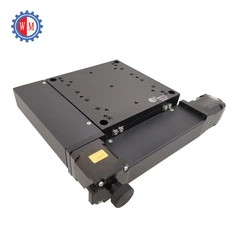
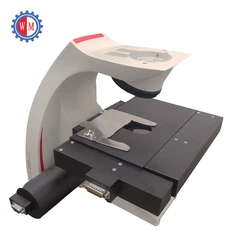
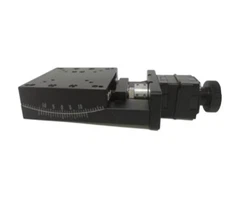
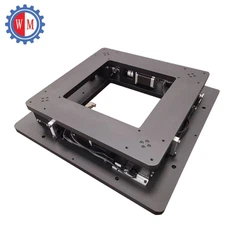


As a supplier of Manual XY - Axis Stages, ensuring that our products meet high - performance standards is of utmost importance. In this blog, I will share some key methods on how to check the performance of Manual XY - Axis Stages.
1. Mechanical Structure Inspection
The mechanical structure is the foundation of Manual XY - Axis Stages. First, we need to check the overall build quality. Look for any visible signs of damage, such as cracks or dents on the stage body. A well - built stage should be made of high - quality materials, usually with a rigid and stable frame. For example, aluminum alloy is a common material due to its good strength - to - weight ratio.
Inspect the linear guides. The linear guides are crucial for the smooth movement of the stage in the X and Y directions. They should be clean, free of debris, and have a proper lubrication. Any rough or jerky movement along the guides indicates a problem. You can move the stage slowly by hand and feel for any irregularities. If there are any sticking points or excessive play, it may be a sign of worn - out guides or improper alignment.
The mounting holes on the stage also need to be checked. They should be accurately drilled and have the correct thread size. This ensures that the stage can be easily and securely mounted on other equipment. Incorrectly sized or misaligned mounting holes can lead to installation difficulties and affect the overall performance of the stage.
2. Positioning Accuracy Testing
Positioning accuracy is one of the most important performance indicators of Manual XY - Axis Stages. To measure the positioning accuracy, you can use a high - precision measuring instrument, such as a micrometer or a laser interferometer.
Start by setting a reference point on the stage. Then, move the stage to a specific position in the X and Y directions using the manual adjustment knobs. Measure the actual position of the stage using the measuring instrument. Compare the actual position with the intended position. The difference between the two is the positioning error.
Repeat this process at multiple points across the working range of the stage. Calculate the maximum and average positioning errors. For high - quality Manual XY - Axis Stages, the positioning accuracy should be within a very small tolerance, usually in the order of micrometers. If the positioning error is too large, it may affect the performance of applications that require precise positioning, such as microscopy, optical alignment, or precision machining.
3. Repeatability Testing
Repeatability refers to the ability of the stage to return to the same position repeatedly. It is a measure of the consistency of the stage's movement. To test the repeatability, again, set a reference position on the stage. Move the stage away from the reference position and then back to it multiple times (e.g., 10 - 20 times).
Measure the position of the stage each time it returns to the reference position. Calculate the standard deviation of these measured positions. A lower standard deviation indicates better repeatability. Good Manual XY - Axis Stages should have high repeatability, ensuring that the same position can be accurately reproduced in multiple operations.


4. Load - Bearing Capacity Assessment
The load - bearing capacity of Manual XY - Axis Stages is another important factor to consider. You need to determine the maximum load that the stage can support without significantly affecting its performance.
Select a set of known weights. Gradually increase the load on the stage while observing its movement. Check for any signs of deformation, excessive play, or reduced positioning accuracy. The stage should be able to maintain its normal operation within its rated load - bearing capacity.
If the stage is intended for applications with heavy loads, additional reinforcement may be required. For example, some stages may have thicker frames or more robust linear guides to handle higher loads.
5. Smoothness of Movement
The smoothness of movement in both the X and Y directions is essential for the proper functioning of Manual XY - Axis Stages. You can perform a simple test by manually turning the adjustment knobs. The movement should be smooth and free of any jerks or irregularities.
Listen for any unusual noises during the movement. Grinding, clicking, or rattling sounds may indicate problems with the linear guides, bearings, or other moving parts. If there are noises, it is necessary to further inspect and diagnose the source of the problem.
6. Backlash Measurement
Backlash is the amount of play or free movement in the mechanical system when the direction of movement is reversed. To measure the backlash, move the stage in one direction (e.g., in the X - axis) until it reaches a certain position. Then, slowly reverse the direction of movement and observe the distance the stage moves before it starts to move in the new direction.
This distance is the backlash. Excessive backlash can lead to inaccuracies in positioning, especially when there are frequent changes in the direction of movement. For high - precision applications, the backlash should be minimized.
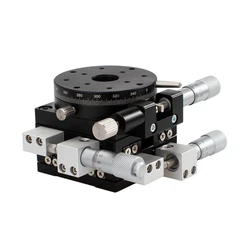
As a supplier of Manual XY - Axis Stages, we are committed to providing products with excellent performance. Our Manual XY Axis Positioning Stage, XY Manual Linear Translation Stage, and Manual Linear Positioning Slide are designed and manufactured to meet the highest quality standards.
If you are interested in our Manual XY - Axis Stages or have any questions about their performance, please feel free to contact us for further discussion and potential procurement. We are always ready to provide you with the best solutions for your specific needs.
References
- "Precision Motion Control: Technology and Applications" by Peter R. Schofield.
- "Mechanical Engineering Design" by Joseph E. Shigley and Charles R. Mischke.
- Industry standards and guidelines for linear motion systems.


