
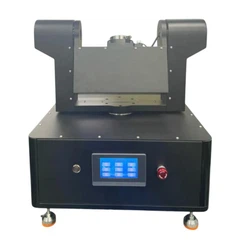
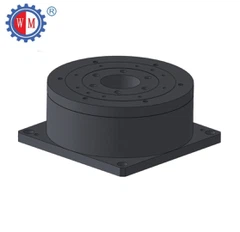
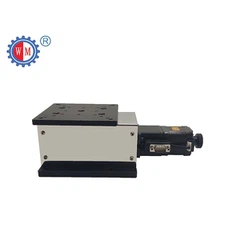
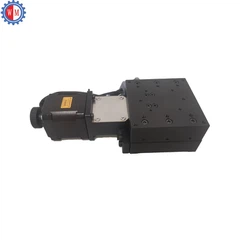
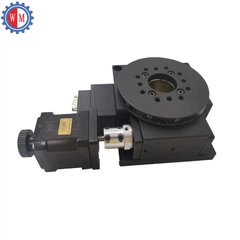
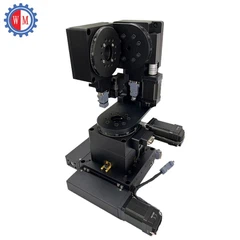
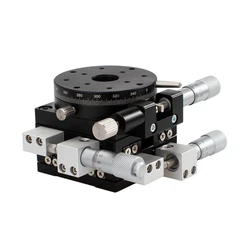
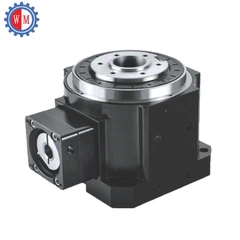


Hey there! As a supplier of Manual Goniometer Tables, I'm super stoked to share with you how these nifty devices work. Manual Goniometer Tables are essential tools in a wide range of industries, from research labs to manufacturing plants. They offer precise angular positioning, which is crucial for many applications.
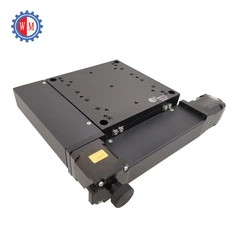
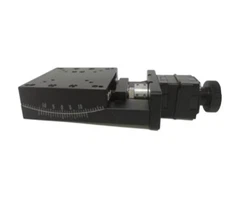
Let's start with the basics. A Manual Goniometer Table, also known as a Manual Goniometer Stage, is a mechanical device that allows you to adjust the angle of an object with high precision. It typically consists of a base, a rotating platform, and a mechanism for adjusting the angle.
The base of the Manual Goniometer Table is usually made of a sturdy material like aluminum or steel. It provides a stable foundation for the device and ensures that it remains firmly in place during use. The rotating platform is mounted on top of the base and can be rotated around a central axis. This rotation allows you to change the angle of the object placed on the platform.
So, how do you actually adjust the angle? Well, most Manual Goniometer Tables use a screw mechanism or a worm gear system. These mechanisms allow you to make small, incremental adjustments to the angle. You simply turn a knob or a screw, and the platform rotates accordingly. The scale on the side of the table indicates the angle, so you can easily see the exact position.
One of the key advantages of a Manual Goniometer Table is its simplicity. Unlike automated systems, which can be complex and expensive, manual goniometers are easy to use and require minimal training. You don't need to be a technical expert to operate one. Just a basic understanding of how the screw or worm gear system works, and you're good to go.
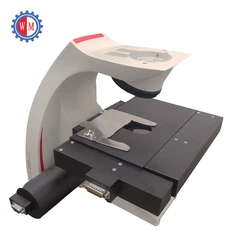
Another great thing about Manual Goniometer Tables is their precision. They can achieve very high levels of accuracy, often within a fraction of a degree. This makes them ideal for applications where precise angular positioning is critical, such as optical alignment, microscopy, and semiconductor manufacturing.
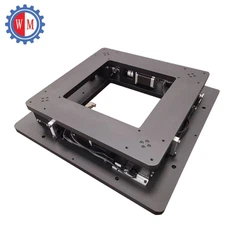
Now, let's talk about some of the different types of Manual Goniometer Tables. One popular type is the Pitch Yaw Roll Manual Tilt Stage. This type of stage allows you to adjust the pitch (tilt up and down), yaw (side - to - side rotation), and roll (rotation around the axis) of an object. It's like having three different goniometers in one device, giving you even more flexibility in positioning your sample.
In a Pitch Yaw Roll Manual Tilt Stage, each axis has its own adjustment mechanism. You can independently control the pitch, yaw, and roll using separate knobs or screws. This is extremely useful when you need to align an object in multiple directions. For example, in a microscopy setup, you might need to adjust the pitch and yaw to get the best view of a sample, and then use the roll to fine - tune the orientation.
When it comes to using a Manual Goniometer Table, there are a few things to keep in mind. First, make sure the table is properly installed and leveled. An uneven surface can affect the accuracy of the angle measurements. Second, always handle the device with care. Avoid applying excessive force to the adjustment knobs or screws, as this can damage the mechanism.
Also, it's a good idea to clean the table regularly. Dust and debris can accumulate on the rotating parts and the scale, which can interfere with the smooth operation of the device. You can use a soft, dry cloth to wipe down the table and remove any dirt.
In many industries, the demand for Manual Goniometer Tables is high. In the research field, scientists use them to study the properties of materials at different angles. For example, in materials science, you might want to measure the reflectivity or refractive index of a sample at various angles. A Manual Goniometer Table allows you to do this accurately and efficiently.
In the manufacturing industry, these tables are used for quality control and assembly. When assembling small components, you need to ensure that they are positioned at the correct angle. Manual Goniometer Tables can help you achieve this level of precision, reducing the likelihood of errors and improving the overall quality of the product.
If you're in the market for a Manual Goniometer Table, there are a few factors to consider. First, think about the range of angles you need to cover. Different tables have different angular ranges, so make sure you choose one that meets your specific requirements. Second, consider the accuracy and resolution of the device. Higher accuracy and resolution will give you more precise positioning, but they may also come at a higher cost.
You should also look at the load capacity of the table. If you need to place heavy objects on the platform, you'll need a table with a higher load capacity. Otherwise, the table may not be able to support the weight, and it could affect the accuracy of the angle adjustments.
As a supplier of Manual Goniometer Tables, I can attest to the fact that these devices are incredibly useful. We've seen our customers use them in all sorts of creative and innovative ways. Whether you're a small research lab or a large manufacturing plant, a Manual Goniometer Table can be a valuable addition to your equipment.
If you're interested in learning more about our Manual Goniometer Tables or have any questions about how they work, feel free to reach out. We're always happy to have a chat and help you find the right solution for your needs. Whether you're looking for a basic Manual Goniometer Stage or a more advanced Pitch Yaw Roll Manual Tilt Stage, we've got you covered.
In conclusion, Manual Goniometer Tables are simple yet powerful tools for precise angular positioning. Their ease of use, high precision, and versatility make them a popular choice in many industries. If you think a Manual Goniometer Table could benefit your work, don't hesitate to get in touch. We're here to assist you with your procurement and answer any questions you might have.
References:


- Handbook of Precision Engineering and Nanotechnology
- Optics and Photonics: An Introduction


